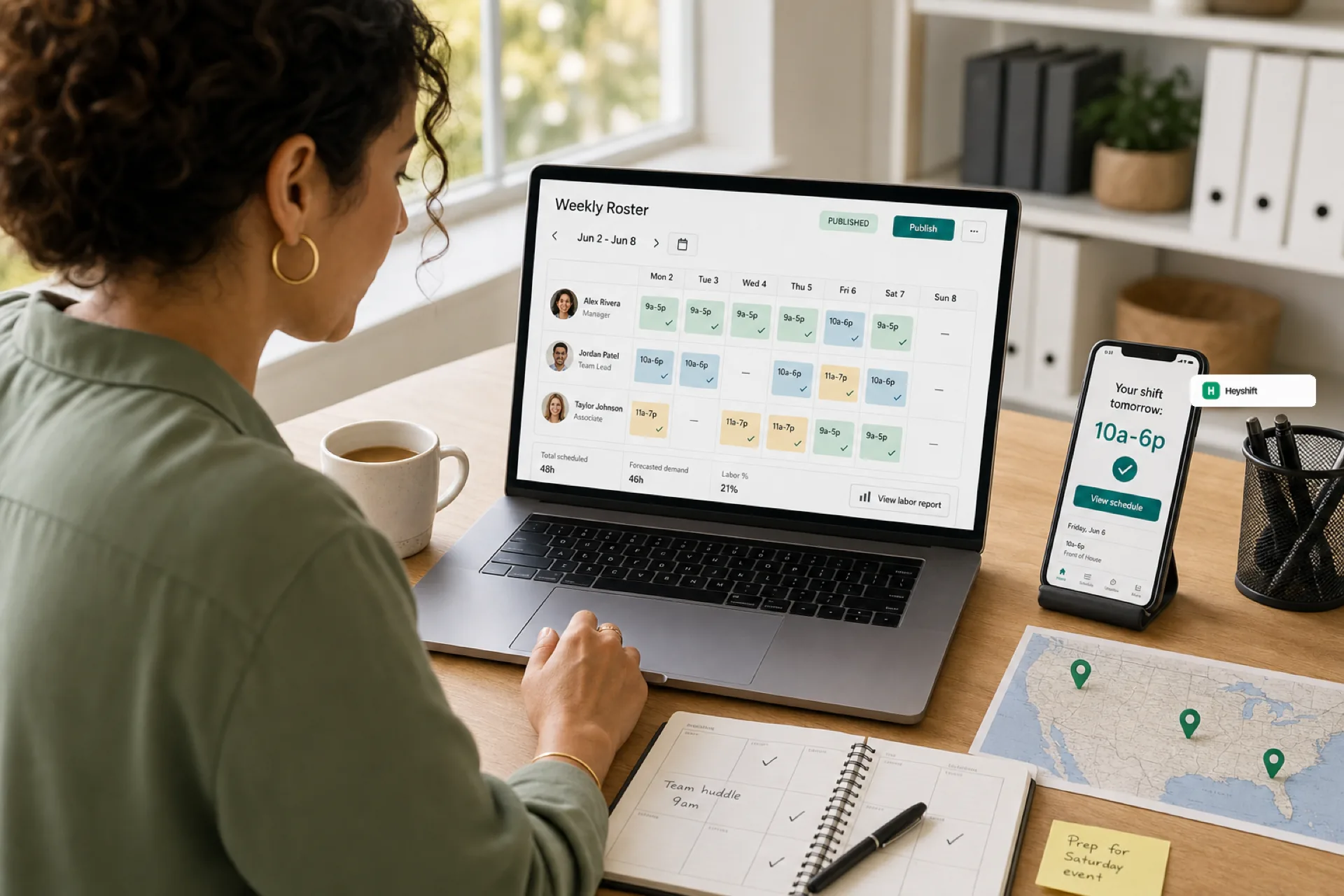
Forecasts are a starting line, not the truth
Most scheduling friction does not come from building the first draft of the week. It arrives when Tuesday looks nothing like Monday, weather shifts patios, a promo lands harder than expected, or attendance patterns drift while managers are already underwater.
When that happens, teams reach for fast fixes: extra texts, an unofficial tab in the spreadsheet, or “just this once” edits that never find their way back to the published roster.
That is how operators end up with multiple versions of the week. Staff follow what they saw last on mobile; payroll follows another sheet; and leadership learns about overtime after it already happened.
What “good” looks like when plans change
Strong operators still adjust mid-week. The difference is they adjust inside one workflow:
- One published roster stays the source of truth after managers publish.
- Changes flow through approvals when policies require them, instead of living in side conversations.
- Open shifts and swaps stay visible on the grid until they resolve, instead of disappearing into chats.
- Labor context stays beside coverage decisions, so mid-week adds do not stack silently against finance-week targets. Cost and labor insights should sit next to the grid when managers rebalance, not only in a Friday export.
Heyshift is built around that publish-first rhythm: managers can react to reality without turning every adjustment into a shadow schedule. For product context, see employee scheduling software for USA hourly teams.
A practical mid-week rhythm for multi-site teams
These steps mirror how USA operators usually stabilize weeks once forecasts slip without boiling the ocean.
1. Name what changed
Before touching shifts, tag whether the miss was demand, attendance, or policy.
Demand misses often mean adding targeted coverage or shifting hours between lunch and dinner windows. Attendance misses mean replacements, extensions, or clearer open-shift visibility. Policy misses mean approvals, breaks, or contractual constraints need to be visible again, not buried under rushed edits.
When managers agree on the category, they waste fewer cycles debating tools and more cycles fixing coverage.
2. Prefer surgical edits over wholesale rebuilds
Unless the week truly collapsed, mid-week changes should stay small and traceable:
- Close specific gaps with named shifts instead of rebuilding entire sections.
- Swap owners explicitly when someone trades hours.
- Keep edits tied to locations and areas so kitchen, bar, and floor leaders still recognize their slice of the plan.
That discipline protects downstream reporting: finance can reconcile scheduled versus worked time without reverse-engineering ten informal edits.
3. Keep approvals on the critical path
Teams loosen approvals under pressure, and then spend weekends reconstructing who authorized what.
If your operating rules require manager sign-off for swaps or overtime-adjacent edits, route those decisions through the same system as publish. Approvals become searchable history instead of screenshot archaeology.
4. Make open shifts impossible to ignore
When forecasts slip, managers often create extra shifts quietly “just to survive service.”
Publishing open shifts to the grid and notifying the right staff cohort surfaces capacity faster than ping-pong messages. It also gives hourly teammates a fair shot at picking up hours without playing favorites in group chats.
5. Look at labor signals before Friday congratulates you
Mid-week heroics feel cheaper than they are. Extra coverage fixes tonight’s service while quietly stacking cost against the finance week.
Operators who review scheduled hours in context, alongside attendance signals where available, catch drift earlier. They can rebalance Friday instead of discovering payroll variance Monday morning. Pair that habit with how to prevent overtime before payroll so hour totals stay visible before export.