Skip to content

Hospitals & nursing teams

Nurse Scheduling Software for Modern Healthcare Teams

Simplify nurse scheduling, reduce overtime, improve staff coverage, and manage attendance from one platform built for hospitals, clinics, nursing homes, and healthcare organizations.

Built for hospital units, outpatient clinics, nursing homes, home healthcare agencies, urgent care centers, and multi-location healthcare organizations that run day, evening, and night coverage.

30-day free trial on every plan, then Starter from $4/seat per month ($3.60 billed yearly). Mobile access included for staff and managers. View pricing.

  • 30-day free trial
  • Day, eve, night rotation
  • Attendance included
  • Multi-site ready
Shift rotation
Day · Eve · Night
Attendance
On the roster
Sites
Multi-location

Trusted by healthcare operators scheduling hourly nursing teams

  • Hospitals
  • Outpatient clinics
  • Nursing homes
  • Assisted living
  • Home healthcare agencies
  • Urgent care centers
  • Community health centers
  • Rehab facilities
  • Behavioral health clinics
  • Multi-site medical groups
Nursing workforce coordination

Simplify Nurse Scheduling, Availability, and Shift Coverage

Nurse supervisors juggle rotating shifts, credential mix, PTO windows, float pool coverage, and last-minute call-offs, often with spreadsheets for the grid, separate tools for punches, and messaging apps for swaps. Heyshift keeps nurse scheduling, availability, attendance, and labor context on one platform so charge nurses and staffing coordinators spend less time reconciling systems and more time closing coverage gaps before patient-facing hours begin.

Nurse scheduling software should support coverage, compliance habits, and labor visibility without a full hospital HRMS rollout. Heyshift fits shift-based nursing teams that need scheduling plus attendance in one place. Compare plans on pricing or start a 30-day free trial.


Common nurse scheduling challenges

  • Day, evening, and night rotations tracked in separate spreadsheets per unit
  • Nurse availability collected on forms not reflected on the live roster
  • Last-minute call-offs with no centralized open-shift queue for RNs and CNAs
  • Overtime building across rotation patterns without a live scheduled-hours view
  • Float pool nurses assigned without visibility across units or clinic sites
  • PTO and leave requests approved outside the scheduling grid supervisors publish
  • Attendance punches that do not tie back to published shift assignments
  • Multi-location clinic groups maintaining five different roster versions each week
  • Shift swaps coordinated through texts with no manager approval trail
  • Labor cost context missing until payroll reconciliation closes the week

With Heyshift

  • One published grid with day, evening, and night lanes per department or clinic
  • Availability and preferences on the same roster you publish to nursing staff
  • Open shifts surfaced on mobile so qualified nurses pick up gaps before shift start
  • Overtime and hours signals while building coverage, plus the [overtime risk calculator](/tools/overtime-risk-calculator)
  • Multi-site visibility so regional leads staff float pools without duplicate entry
  • Leave management tied to scheduling so approved PTO blocks shifts automatically
  • Attendance linked to published shifts for planned-vs-worked supervisor reviews
  • Central dashboard for five clinics with site and department structure intact
  • Shift swap requests with manager approval on the official nurse roster
  • Labor cost visibility beside the grid while supervisors still have time to adjust

What we hear from nurse managers and staffing coordinators, and how one roster changes the weekly workflow.

  • 01

    Day, evening, and night rotations split across files no one trusts

    One published nurse roster by unit and shift band. Staff check the same schedule on web and mobile, not screenshot versions in chat

  • 02

    Nurse availability on paper forms not reflected on the live grid

    Availability and leave sit beside the roster before you lock weekend or holiday coverage

  • 03

    Overtime building across rotation patterns without a live hours view

    Scheduled hours and overtime signals while you build the week, not only after payroll closes

  • 04

    Attendance records that do not tie back to approved nurse shifts

    Clock-ins, breaks, and worked hours linked to published shifts for planned-vs-worked reviews

  • 05

    Multi-location clinic groups maintaining separate roster versions per site

    Regional leads compare nurse coverage across five clinics from one account without merging spreadsheets

Workforce outlook

Nurse workforce trends in 2026

Nursing demand, retention pressure, and multi-site care models continue to shape how hospitals and clinic groups staff hourly teams. Scheduling leaders in 2026 need software that keeps pace with faster roster changes, not static spreadsheet files updated once per pay period.

Three trends nurse managers report most often, and what each means for how you build and publish weekly rotas.

TrendWhat operators seeScheduling implication
Sustained demand for registered nurses across care settingsHiring pipelines stay active while existing units run closer to minimum staffing targets on busy days and weekends.Supervisors need faster rebuild tools, open-shift pickup, and overtime visibility while planning, not after the week closes.
More nurses working across multiple sites or float poolsRegional groups assign RNs and CNAs across outpatient clinics, urgent care, and inpatient units within the same pay period.Multi-location nurse scheduling must show who is already committed elsewhere before you publish a float assignment.
Higher expectations for mobile roster access and shift flexibilityFloor staff expect schedule updates on phone, plus a clear path to request swaps or pick up open shifts without calling the charge nurse.Publish-first discipline plus mobile notifications reduces no-shows driven by outdated roster versions.
Labor cost scrutiny alongside patient volume variabilityFinance asks for scheduled-vs-worked reviews earlier in the pay cycle, especially when overtime spikes on night and weekend bands.Nurse scheduling software should surface labor context on the grid and export payroll-ready time records without a separate reconciliation project.

Retention starts with predictable published rotas

When nurses receive one official schedule through a [nurse scheduling app](/features/mobile-app) instead of conflicting files, swap friction drops. That supports retention when census and acuity fluctuate week to week.

Float pools need a single source of truth

Regional healthcare groups with three to ten sites cannot maintain separate spreadsheets for each clinic and still staff floats responsibly. Central [multi-location scheduling](/multi-location-scheduling-software) shows commitments before you assign a nurse to a second site the same day.

Overtime prevention belongs in the scheduling step

Waiting for payroll to flag excess hours means supervisors already lost the chance to rebalance shifts. Pair roster building with [labor cost visibility](/features/cost-labor-insights) and the [overtime risk calculator](/tools/overtime-risk-calculator) so charge nurses adjust before nurses hit threshold.

Source: U.S. Bureau of Labor Statistics, Registered Nurses Outlook (BLS)

Spreadsheet vs software

Nurse roster spreadsheets vs nurse scheduling software

Many nursing supervisors still build rotas in Excel or Google Sheets, then chase attendance in another system and swaps through group chat. The table below shows where manual nurse roster files break down once you staff more than one unit or clinic.

CapabilitySpreadsheetHeyshift
Schedule updates reach nurses automaticallyManual re-send of files; staff rely on outdated screenshotsPublish once; mobile and web alerts on the official roster
Overtime visibility while building the weekHours summed manually after shifts are lockedScheduled hours and OT signals on the grid during planning
Attendance tied to published nurse shiftsPunches tracked separately from the roster fileClock-ins and worked time linked to approved shifts
Open shifts and swap approvals on one rosterCall trees and texts with no audit trailOpen-shift pickup and manager-approved swaps in app
Multi-location nurse coverage from one dashboardOne file per clinic merged by hand each weekSite and department structure with regional roll-up view
Platform depth

Core nurse scheduling capabilities

Each module below maps to a workflow nursing supervisors run every week, from building rotations to closing payroll-ready time records.

Employee Scheduling

Employee scheduling for nursing teams starts with a publish-first grid: charge nurses build day, evening, and night lanes for RNs, LPNs, and CNAs, then publish one official week. Copy-week and templates cut rebuild time when census shifts or holidays land mid-pay period. Unlike spreadsheet rotas that fork by Friday, Heyshift keeps managers, float pool nurses, and per-diem staff on the same roster supervisors trust. Supervisors see department structure while they plan, then push updates once so floor staff stop chasing PDF exports. Start with a free nurse schedule template when migrating off Excel, then compare pricing and start a free trial. Supervisors spend less time reconciling parallel files and more time closing coverage gaps before shift start. Templates help charge nurses rebuild holiday and weekend bands without copying formulas across multiple Excel tabs.

Learn more
Nurse scheduling dashboard with weekly shift grid, clinic locations, and labor context in Heyshift

Nurse Availability

Nurse availability belongs on the same grid you publish, not on paper forms filed after the roster is locked. Nurses submit preferred days, blocked windows, and recurring constraints; supervisors see those signals while assigning weekend, night, and on-call bands. That reduces double-booking when a CNA marked unavailable still appears on Saturday evening in a spreadsheet tab someone forgot to update. Availability pairs naturally with leave requests so approved PTO automatically blocks new shift assignments. For clinic groups balancing school schedules and second jobs among part-time nursing staff, this visibility prevents the back-and-forth texts that delay publishing. Read how healthcare teams evaluate scheduling tools in the best healthcare scheduling software guide. Charge nurses publish faster when availability is visible before assignments lock.

Learn more
Nurse shift scheduling app on mobile with roster day view for clinical staff

Shift Rotation

Shift rotation for hospital units and long-term care floors rarely fits a simple Monday-through-Friday pattern. Charge nurses rotate RNs through day, evening, and night bands while respecting minimum staffing ratios and credential mix. Heyshift supports recurring rotation templates so supervisors rebuild predictable patterns without retyping twelve-hour blocks each week. When acuity spikes, copy-week plus targeted edits beats rebuilding from a blank spreadsheet. Rotation planning surfaces who is approaching overtime before you stack a third consecutive night on the same nurse. Pair rotation discipline with the shift coverage gap calculator when you model weekend minimums across units and clinic sites. Supervisors document rotation fairness for staff meetings without exporting separate hour tallies. Rotation fairness supports retention on units where night stacks otherwise drive burnout.

Learn more
Nurse scheduling dashboard with weekly shift grid, clinic locations, and labor context in Heyshift

Open Shift Management

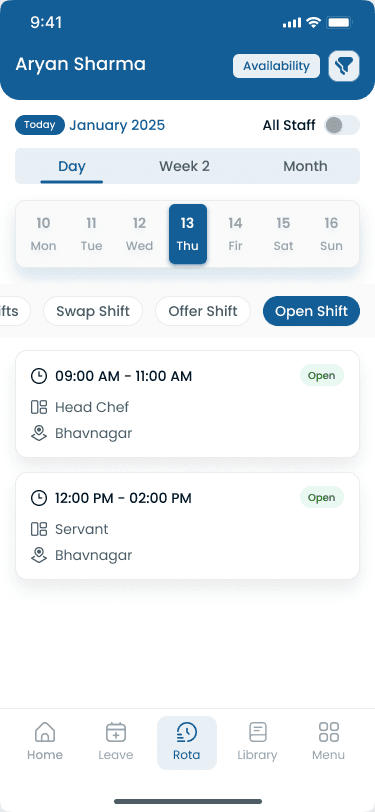
Open shift management gives nursing supervisors a structured queue when call-offs happen two hours before shift start. Instead of texting every qualified RN, managers post open shifts to the official roster; nurses who meet role and site rules pick up coverage from mobile. That shortens time-to-fill and creates a record finance and compliance reviewers can follow later. Open shifts work for per-diem pools, float nurses, and CNAs covering a sudden census jump on a med-surg unit. The workflow pairs with shift scheduling so only published, manager-approved assignments count toward hours and overtime totals. See open shift and swap approvals for publish-first habits that keep pickup fair and auditable. Charge nurses spend less time on phone trees when qualified staff self-serve open shifts from mobile.

Learn more
Nurse shift swap workflow showing manager approval on the published roster in Heyshift

Shift Swapping

Shift swapping lets nurses request trades without bypassing supervisor approval. One nurse proposes a swap, another accepts, and the charge nurse approves on the official roster so hours, credentials, and overtime rules stay intact. That replaces informal texts where two nurses agree but payroll still shows the original assignment. Swap workflows matter most on units with heavy part-time mix and student nurses whose class schedules change mid-semester. Managers keep audit trails without digging through message threads. Explore shift swapping best practices and publish discipline from open shift and swap approvals. Mobile access means swaps resolve on the floor during active patient hours. Approved swaps update hours totals immediately so overtime math stays accurate before publish. Charge nurses approve swaps from the same queue they use for open-shift pickup.

Learn more
Nurse shift swap workflow showing manager approval on the published roster in Heyshift

Attendance Tracking

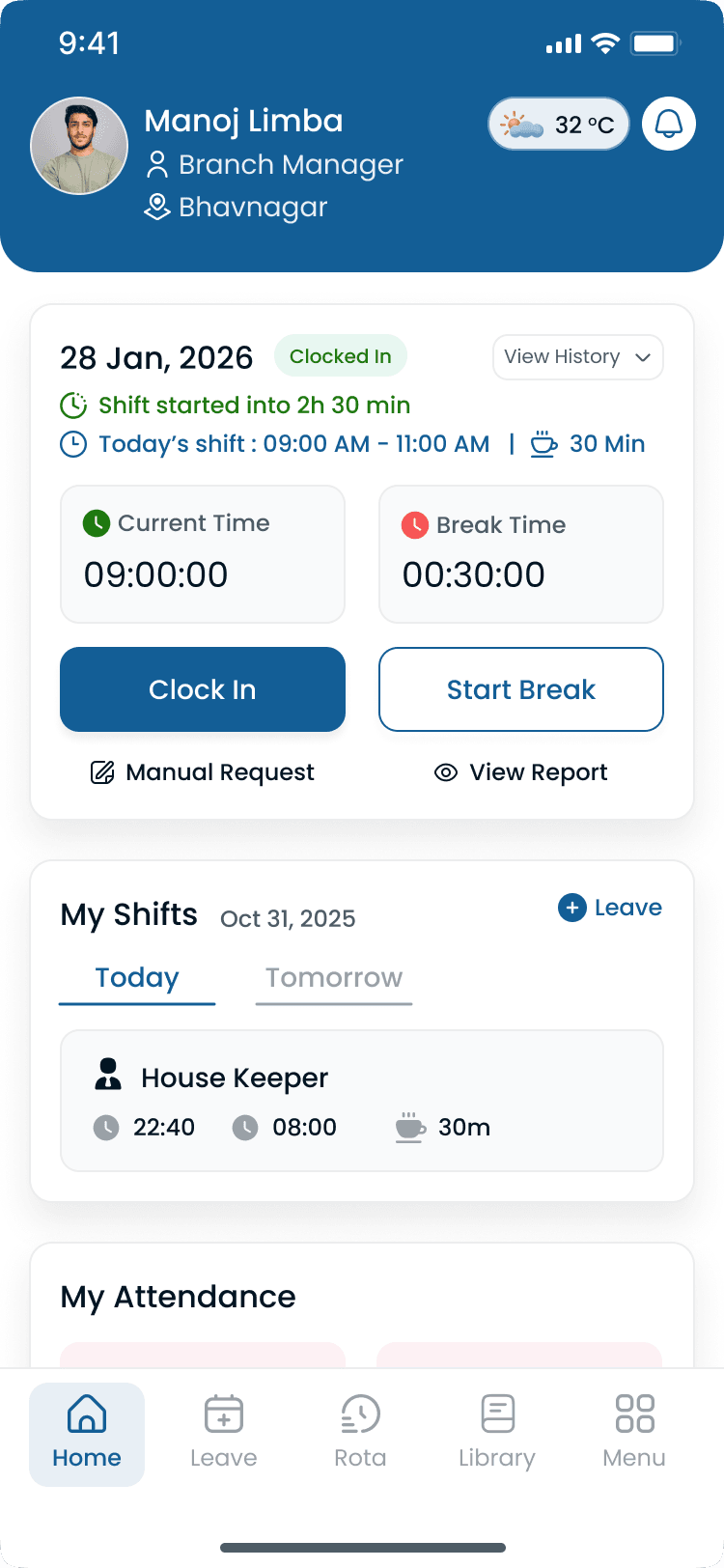
Attendance tracking ties clock-ins, breaks, and worked hours to the shifts charge nurses published. Supervisors compare planned vs worked time without exporting punches from a separate system and matching rows by hand. That supports bed-side accountability when tardiness patterns affect handoff quality and when finance questions weekend overtime spikes. Attendance data also feeds workforce reports supervisors use in stand-ups. For nursing homes and assisted living, kiosk or mobile clock options help deskless staff punch in without lining up at a single terminal. Learn more in attendance management software for the full planned-vs-worked workflow across healthcare sites. Supervisors catch exceptions early instead of waiting for payroll to flag mismatches. Kiosk and mobile clocks suit nursing homes where staff cannot queue at one shared terminal at shift change.

Learn more
Nurse attendance tracker showing clock-in status tied to published shifts on mobile

Leave Management

Leave management connected to nurse scheduling prevents the classic failure mode: PTO approved in email while the nurse still appears on the published grid. Nurses request leave in app; managers approve with visibility into coverage impact before they confirm. Approved leave blocks new assignments automatically, which protects minimum staffing math charge nurses rely on. Supervisors also see upcoming PTO clusters around holidays early enough to post open shifts or adjust rotation templates. For multi-site groups, regional leads compare leave load across five clinics without opening five spreadsheet files. Pair leave discipline with prevent overtime before payroll when holiday coverage stretches existing staff. Regional directors avoid approving leave in one system while the nurse still appears on a clinic spreadsheet tab.

Learn more
Nurse shift scheduling app on mobile with roster day view for clinical staff

Mobile App

The Heyshift mobile app gives nurses the same official roster supervisors publish on desktop, not a stale PDF in group chat. iOS and Android access is included on Free, Starter, and Pro plans for floor staff who rarely sit at a nurse station computer. Nurses view shifts, receive publish alerts, request swaps, and pick up open shifts from phone. Charge nurses approve requests during active patient hours. Field nurses and urgent care per-diem staff who move between sites weekly rely on the same mobile path. Read healthcare staff scheduling software and start a 30-day free trial. Mobile parity with desktop reduces no-shows caused by nurses checking outdated roster screenshots. Per-diem and float staff get the same update path as full-time RNs on every unit.

Learn more
Nurse shift scheduling app on mobile with roster day view for clinical staff

Notifications

Schedule notifications keep nursing teams aligned when a published roster changes after initial release. Instead of supervisors calling every affected nurse, Heyshift pushes updates to mobile and web when shifts move, open shifts post, or swap requests resolve. Location communication features help multi-site groups target alerts by clinic or department so float pool nurses only receive relevant coverage asks. Timely notifications reduce no-shows driven by outdated screenshots and cut phone tag during evening shift change. Notifications pair with publish discipline: one official schedule, one update path. That is especially important when weather events or census surges force same-day edits across three outpatient clinics in the same regional group. Fewer manual calls means charge nurses stay on the floor during high-acuity hours.

Learn more
Nurse shift scheduling app on mobile with roster day view for clinical staff

Multi-location Scheduling

Multi-location scheduling lets regional healthcare operators staff five clinics, two urgent care sites, and a skilled nursing wing from one account. Site and department structure mirrors how nurse managers actually think: which RNs are credentialed at which location, which CNAs float, and where weekend minimums differ. District views show scheduled hours and open shifts across sites without merging Excel tabs every Sunday night. Float nurses see commitments at all locations before accepting a pickup shift that would double-book them. Multi-location support also simplifies auditor questions about who was scheduled where during a survey week. See multi-location employee scheduling for USA teams for rollout patterns that work in healthcare. One login replaces five Sunday-night spreadsheet merges for regional nurse directors. Float credentials and site rules stay attached to each assignment so pickup shifts stay compliant.

Learn more
Nurse scheduling dashboard with weekly shift grid, clinic locations, and labor context in Heyshift

Workforce Reports

Workforce reports and analytics turn nurse scheduling and attendance data into supervisor-ready views: scheduled vs worked hours, tardiness patterns, overtime concentration by unit, and leave utilization by site. Charge nurses use these reports in weekly staffing meetings instead of rebuilding pivot tables from exported punches. Finance gets cleaner inputs for labor reviews when scheduled and actual time share one system of record. Reports also help nursing directors compare clinic groups after a merger, when legacy facilities still use different overtime habits. Export paths support payroll handoff without re-keying hours from a spreadsheet. For broader workforce visibility, see workforce visibility and the scheduling ROI calculator. Directors compare units after mergers without rebuilding pivot tables from legacy time exports. Weekly staffing meetings start from one report instead of five clinic exports.

Learn more
Nurse attendance tracker showing clock-in status tied to published shifts on mobile

Labor Cost Visibility

Labor cost visibility shows scheduled hours and overtime risk beside the nurse roster while supervisors still have time to rebalance assignments. That matters when night differentials, weekend premiums, and float pool rates combine to push a unit over budget mid-week. Charge nurses adjust Saturday coverage or post open shifts earlier instead of discovering overrun after payroll closes. Pair grid signals with the overtime risk calculator and labor cost percentage calculator. Read prevent overtime before payroll for habits that keep nursing teams inside target. Finance and nurse managers review the same scheduled hours context before approving extra shifts on weekend bands. Supervisors rebalance per-diem and full-time mix while census is still visible on the schedule grid. Night and weekend premiums show beside assignments before supervisors lock the week.

Learn more
Nurse scheduling dashboard with weekly shift grid, clinic locations, and labor context in Heyshift

Payroll Ready Time Tracking

Payroll-ready time tracking closes the gap between the roster nurses worked and the hours finance exports. Clock data links to published shifts so approvers reconcile exceptions before payroll cutoff, not through a Friday-night spreadsheet merge. Supervisors flag missing punches or unscheduled extra hours while memory is fresh. Groups running payroll integration reduce correction runs and pay disputes. Start with shift scheduling plus attendance, then add export when your team outgrows manual totals. Book a demo to map pay rules to Heyshift fields. Clean time records shorten Friday reconciliation for payroll admins supporting multiple clinic sites. Time records stay tied to the shift charge nurses published, not a shadow overtime tab. Payroll admins export one clean file instead of reconciling five clinic spreadsheets.

Learn more
Nurse attendance tracker showing clock-in status tied to published shifts on mobile

Regional coverage

Coordinate Nurses Across Hospitals, Clinics, and Care Sites

Healthcare operations depend on having the right nurses available at the right time across every site in a regional group. Heyshift helps nurse managers reduce scheduling gaps, improve workforce coverage, monitor attendance, and respond to staffing changes quickly without maintaining one spreadsheet per clinic.

  • Reduce scheduling gaps before shifts start

    Surface open shifts and nurse availability while building the week, not only after a no-show on the med-surg floor.

  • Improve workforce coverage by unit and clinic

    Align RN, LPN, and CNA lanes on one grid with clear day, evening, and night bands per location.

  • Monitor attendance beside the published nurse roster

    Clock data and scheduled shifts in one view for charge nurses, directors, and ops leads across sites.

  • Respond to staffing changes quickly

    Publish updates once; nursing teams get mobile and web alerts on the official schedule at every location in the group.

Multi-location scheduling

Care settings

Built for Nursing Operations Across Care Settings

From single-unit hospitals to regional clinic groups with 180 or more nurses, Heyshift matches how nursing supervisors staff departments, rotation patterns, and float pools.

  • Inpatient units

    Hospitals

    Coordinate RN, LPN, and CNA schedules across units and shift bands.

    • Unit structure
    • Rotation patterns
    • One publish
  • Long-term care

    Nursing Homes

    Track 24/7 nurse and aide coverage with attendance beside the roster.

    • 24/7 coverage
    • Attendance
    • OT visibility
  • Field nursing

    Home Healthcare

    Mobile roster access for nurses visiting patients across a service area.

    • Mobile first
    • Route coverage
    • Open shifts
  • Residential care

    Assisted Living

    Staff med techs and nurses across day and evening bands with leave visibility.

    • Shift bands
    • Leave sync
    • Swap approvals
  • Outpatient

    Clinics

    Coordinate nurses and clinical support across departments and locations.

    • Multi-department
    • Availability
    • Publish once
  • Oral health

    Dental Clinics

    Schedule hygienists, dental assistants, and clinical support in one workflow.

    • Chairside teams
    • Part-time mix
    • Mobile roster
  • Provider teams

    Medical Practices

    Manage nurse and MA schedules alongside provider calendars without double entry.

    • MA + RN lanes
    • PTO blocks
    • Labor context
  • Therapy care

    Rehab Facilities

    Align nursing coverage with therapy schedules across inpatient rehab units.

    • Cross-discipline
    • Weekend mins
    • Reports
  • Mental health

    Behavioral Health

    Staff nurses and counselors across day, evening, and overnight residential programs.

    • Overnight bands
    • Credential mix
    • Swap queue
  • Walk-in care

    Urgent Care

    Flex per-diem nurse pools across evening and weekend peaks at multiple sites.

    • Per-diem pool
    • Peak staffing
    • Multi-site

Roll out nurse scheduling by care setting, or browse location guides for multi-site healthcare groups.

Operator story

How a regional healthcare group with five clinics simplified nurse scheduling

A regional healthcare operator runs five outpatient clinics with roughly 180 nurses and clinical support staff shared across locations. Before Heyshift, each clinic manager kept a separate Excel roster, attendance lived elsewhere, and the regional director merged files every Sunday to staff floats. After Heyshift, the group publishes one roster with site labels, uses open shifts for same-day gaps, and reviews scheduled vs worked hours before payroll export.

Before Heyshift

  • Five separate Excel nurse rotas updated on different cadences each week
  • Float pool assignments tracked in email without live hours visibility
  • Call-offs handled through phone trees and group texts with no audit trail
  • Attendance punches reconciled manually against spreadsheet rows every pay period
  • Overtime discovered after payroll when RN hours crossed threshold on night shift
  • Regional director spent Sunday evenings merging clinic files before Monday publish

After Heyshift

  • One published nurse roster with site and department labels across five clinics
  • Float nurses visible on a regional grid with scheduled hours before assignment
  • Open shifts posted to mobile; qualified RNs pick up gaps without phone tag
  • Attendance tied to published shifts for planned-vs-worked reviews mid-week
  • Overtime signals on the grid while supervisors still rebalance Saturday coverage
  • Regional director publishes updates once; nurses receive mobile alerts at every site
One workflow

Nurse Scheduling and Attendance in One Platform

Usually split across

  • Nurse rotas in spreadsheets
  • Attendance in a separate time system
  • Shift swaps through messages
  • No single labor view for charge nurses

On Heyshift

  • Nurse scheduling. Build and publish official nurse rotas with rotation templates, not version four of the same Excel file.
  • Attendance. Clock-ins, breaks, and overtime tied to published shifts for planned vs worked visibility on every unit.
  • Workforce visibility. See who is scheduled, who is on site, and where nurse coverage is thin before shifts start.
  • Labor insights. Scheduled hours and overtime context beside the grid while you still have time to adjust weekend and night coverage.
Why teams switch

Why Nursing Supervisors Choose Heyshift

Nurse managers want fewer scheduling errors, reliable coverage, attendance data they can trust, and labor visibility without adding enterprise HR complexity. Heyshift fits teams that outgrew spreadsheet rotas but do not need a full hospital workforce suite.

  • Improve nurse shift coverage

    Keep units and clinics staffed appropriately across day, evening, night, and weekend bands with open-shift pickup.

  • Reduce scheduling errors

    Avoid conflicts and staffing gaps with nurse availability and leave on the same grid you publish.

  • Control overtime earlier

    See scheduled hours and overtime risk while building the week, not only after payroll closes.

  • Track nurse attendance

    Monitor attendance and worked hours in real time beside the roster charge nurses approved.

  • Support multiple care sites

    Manage nurse operations across hospitals, clinics, and nursing homes from one dashboard.

  • Speed up swap and call-off response

    Route shift swaps and open shifts through approvals on the official roster instead of message threads.

  • Improve operational visibility

    See workforce activity (scheduled, in progress, and open) from one operational surface for regional leads.

Mobile nurse scheduling

The same roster on the floor and in the manager office

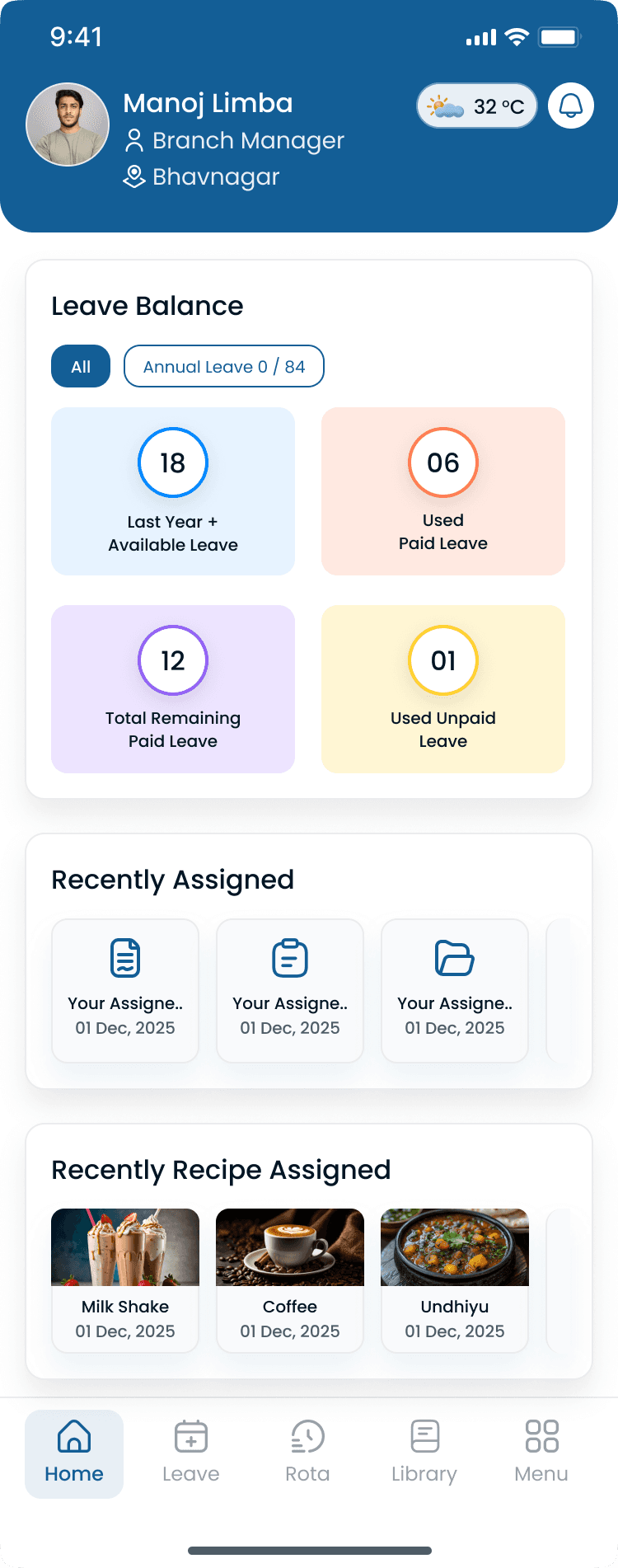
Nurses view published shifts, open pickups, and attendance updates in the Heyshift mobile app, the same official roster supervisors publish on desktop.

  • Published shifts

    Day, evening, and night assignments on the official roster supervisors publish.

  • Open shift pickup

    Qualified nurses claim posted gaps without phone tag or screenshot threads.

  • Instant updates

    Schedule changes reach mobile and web at the same time, not a stale PDF.

Nurse shift scheduling app on mobile with roster day view for clinical staff
Vendor comparison

How Heyshift compares for nurse scheduling

Use these matrices when you evaluate nurse scheduling software alongside spreadsheets, Deputy, or Connecteam. Capabilities reflect typical operator workflows for hourly nursing teams in the USA.

Manual workflow

Heyshift vs traditional nurse scheduling (spreadsheets)

Many nursing supervisors still build rotas in Excel, track attendance separately, and coordinate swaps by phone. This matrix shows typical gaps once you staff more than one unit or clinic.

Feature comparison between Heyshift and Traditional scheduling (manual spreadsheet workflow) workforce management software
CapabilityHeyshiftTraditional scheduling (manual spreadsheet workflow)
Central published nurse rosterSupportedNo
Real-time mobile schedule access for floor staffSupportedNo
Overtime visibility while building the weekSupportedNo
Attendance tied to published nurse shiftsSupportedNo
Open shift pickup workflow on official rosterSupportedNo
Manager-approved shift swap queueSupportedNo
Multi-location nurse coverage dashboardSupportedNo
Labor cost context beside the scheduling gridSupportedNo

If your team still merges weekly Excel files, start with the nurse schedule template to standardize columns, then move to Heyshift when multi-site nurse coverage outgrows manual files. Start a free trial or book a demo.

Vendor compare

Heyshift vs Deputy for nurse scheduling

Deputy is a common option when nursing operators search for hourly workforce software. This matrix highlights typical workflow differences for shift-based nursing teams in the USA.

Feature comparison between Heyshift and Deputy workforce management software
CapabilityHeyshiftDeputy
Nurse shift scheduling and publish workflowSupportedSupported
Attendance tracking tied to published shiftsSupportedSupported
Mobile roster access for floor nursesSupportedSupported
Multi-location nurse scheduling structureSupportedSupported
Nurse availability on scheduling gridSupportedSupported
Open shift and swap approvals on official rosterSupportedSupported
Labor cost visibility while planning coverageSupportedSupported
30-day full-feature trial without per-seat sales callSupportedNo

Evaluating a Deputy alternative for nursing teams? See the full Deputy alternative page and compare rollout paths with a 30-day Heyshift trial.

Vendor compare

Heyshift vs Connecteam for nurse scheduling

Connecteam bundles scheduling with mobile communication for deskless teams. Nursing supervisors often compare it when clinic groups prioritize shift coverage and attendance accountability.

Feature comparison between Heyshift and Connecteam workforce management software
CapabilityHeyshiftConnecteam
Nurse shift scheduling with publish disciplineSupportedSupported
Attendance tracking tied to published nurse shiftsSupportedNo
Multi-location nurse roster structureSupportedNo
Overtime and labor cost visibility on gridSupportedNo
Payroll-ready time export from same rosterSupportedNo
Open shift pickup with manager approvalSupportedSupported
Mobile team communication beside scheduleSupportedSupported
Healthcare scheduling depth for rotation-heavy unitsSupportedNo

Connecteam fits chat-first mobile engagement. Heyshift fits nursing supervisors who need scheduling, attendance, and labor visibility together. Read the healthcare scheduling comparison.

FAQ

Nurse scheduling software FAQ

Questions from nurse managers, charge nurses, staffing coordinators, and healthcare ops leads evaluating nurse scheduling software, nursing staff scheduling software, and nurse workforce management tools for hospitals and clinics.

Get started

Simplify Nurse Scheduling Without the Spreadsheet Chaos

Start a 30-day free trial or book a walkthrough for hospital units, clinic groups, and nursing homes: shift rotation, availability, overtime control, attendance, and multi-location coverage on one published roster.