
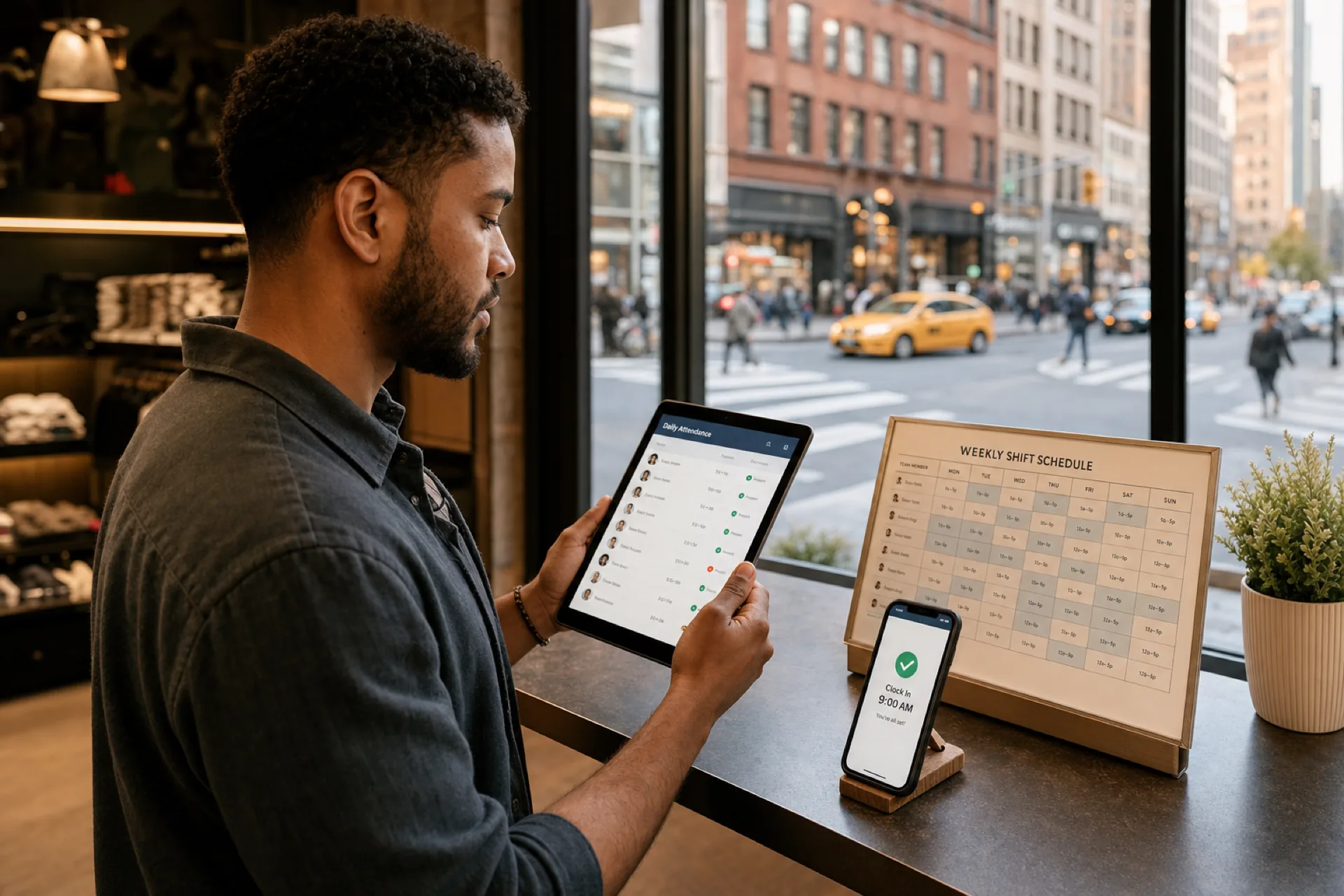
Attendance Management Software for New York City Businesses (2026)
How attendance management software helps New York City businesses track hours, reduce payroll errors, cut buddy punching, and keep planned shifts aligned with worked time.
Employee scheduling and shift planning for USA businesses with multi-site rosters and finance-week aware coverage.
Practical ideas on shift scheduling, labor signals, and running coverage across locations, written for managers who publish real rosters, not slideware.
Shorter reads on the patterns we see across finance-week scheduling and multi-area ops.
Compare the best shift scheduling software for New York City businesses. Features, benefits, and buying guidance for shift swaps, open shifts, and hourly team scheduling.
What NYC small businesses should look for in workforce management software in 2026: scheduling, attendance, leave, mobile access, and buying guidance for growing teams.
Compare the best employee scheduling software for NYC startups and growing businesses. Features, pricing factors, and buying guidance for shift planning and workforce management in New York City.
Learn healthcare leave management best practices to reduce scheduling conflicts, improve staffing coverage, manage PTO, and simplify workforce scheduling for hospitals, clinics, nursing homes, and care providers.
Learn medical office scheduling best practices to improve staff coverage, reduce overtime, streamline attendance, and optimize workforce management for healthcare practices and multi-location clinic groups.
Learn healthcare workforce management best practices for hospitals, clinics, and care providers: staff scheduling, attendance tracking, labor planning, overtime reduction, compliance, and workforce communication in one guide.
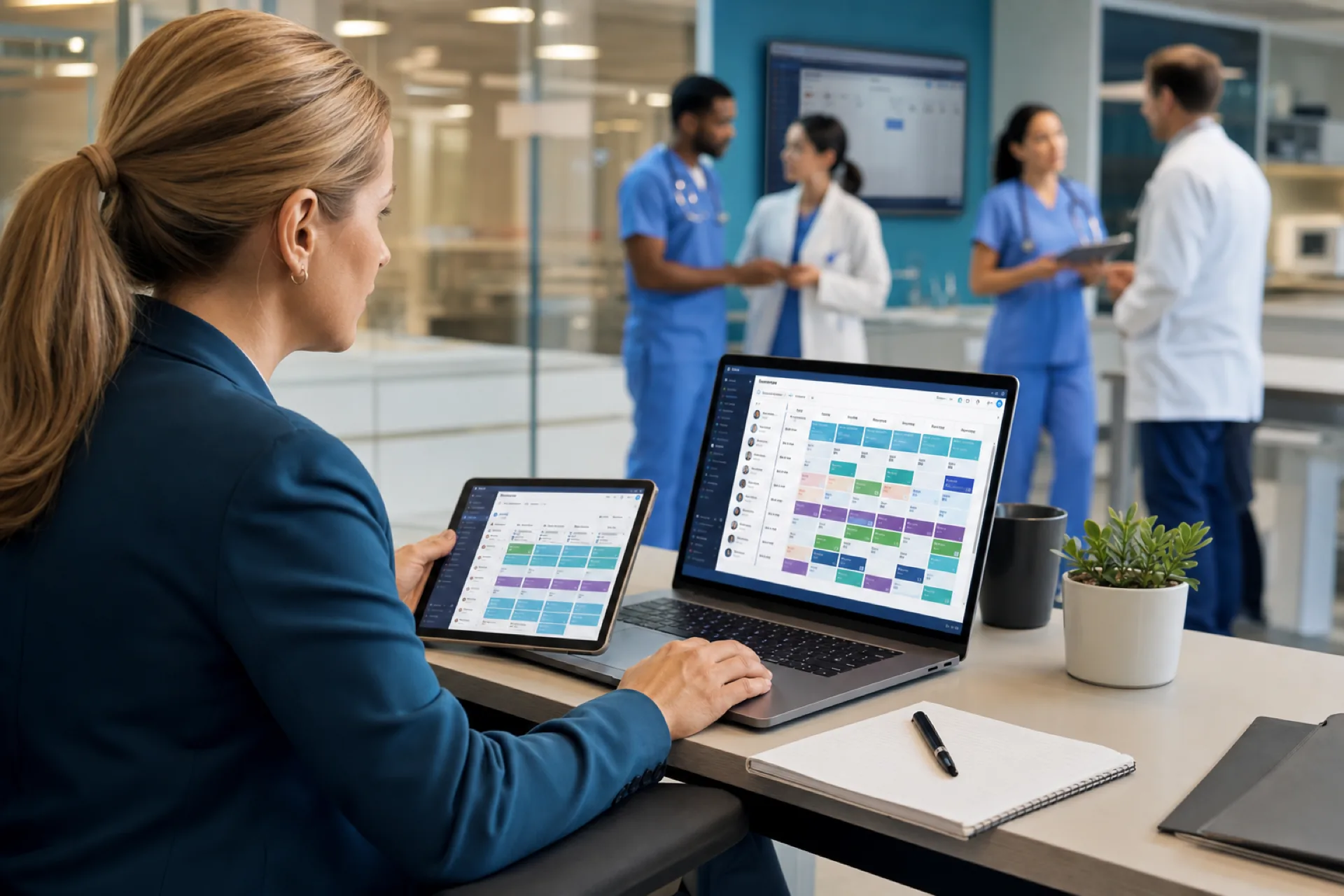
Compare the best healthcare staff scheduling software for hospitals, clinics, nursing homes, assisted living, and home healthcare agencies. Features, pricing factors, and buying guidance for growing care organizations.
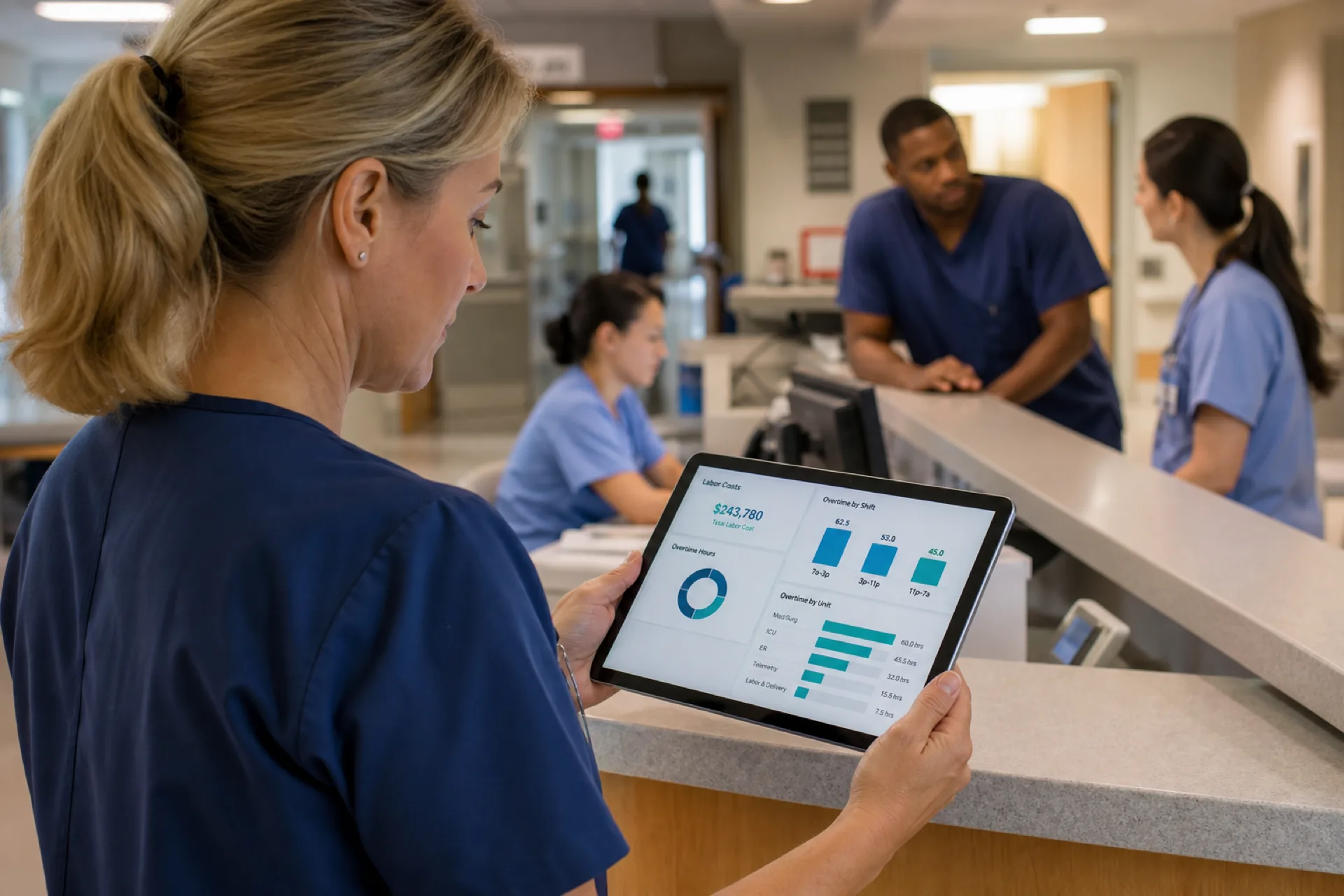
Learn healthcare overtime management best practices to reduce labor costs, improve staffing efficiency, minimize burnout, and optimize employee scheduling with alerts before payroll.
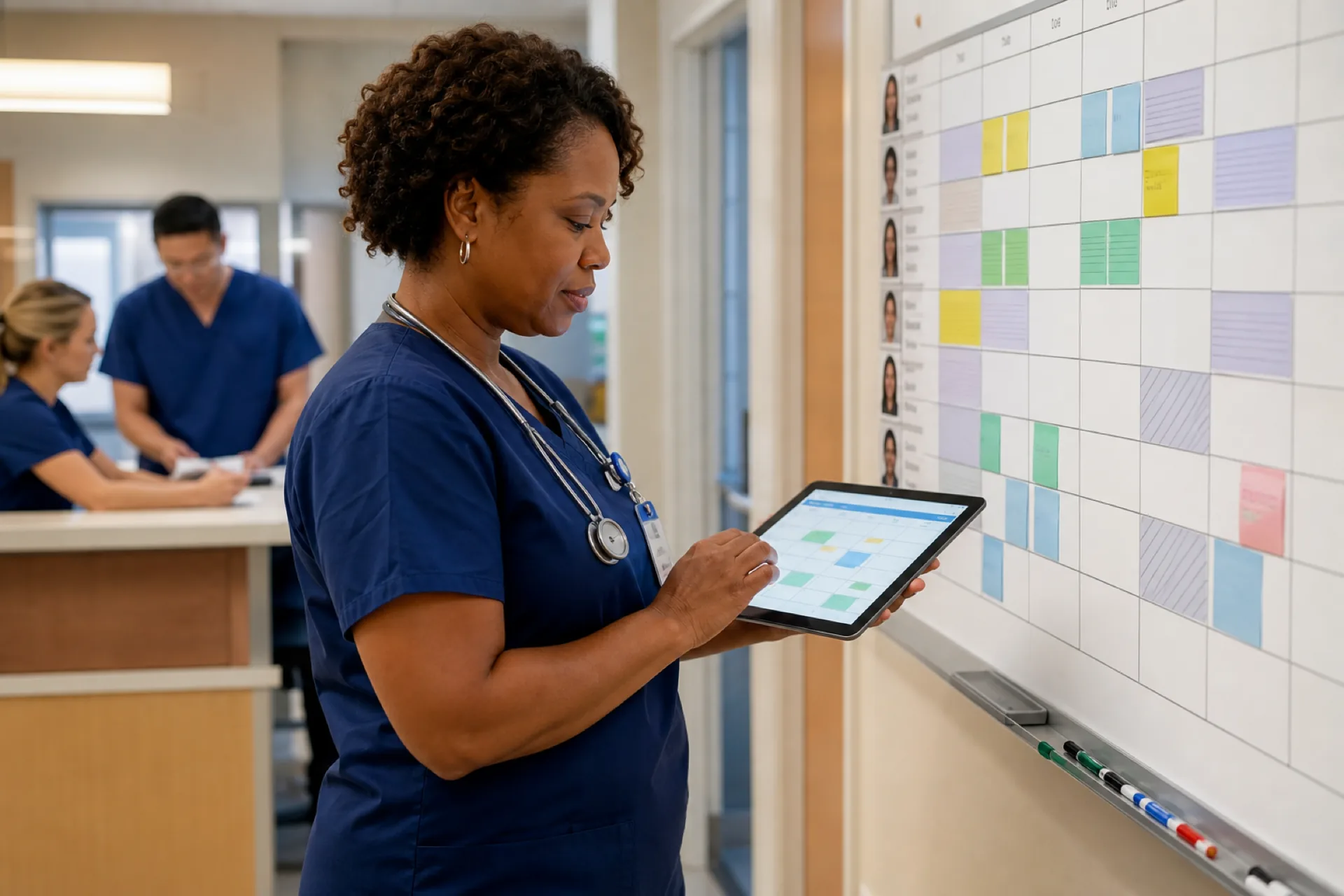
Learn nurse shift rotation best practices to reduce burnout, improve staffing coverage, balance workloads, and create fair healthcare schedules with publish-first nurse scheduling software.
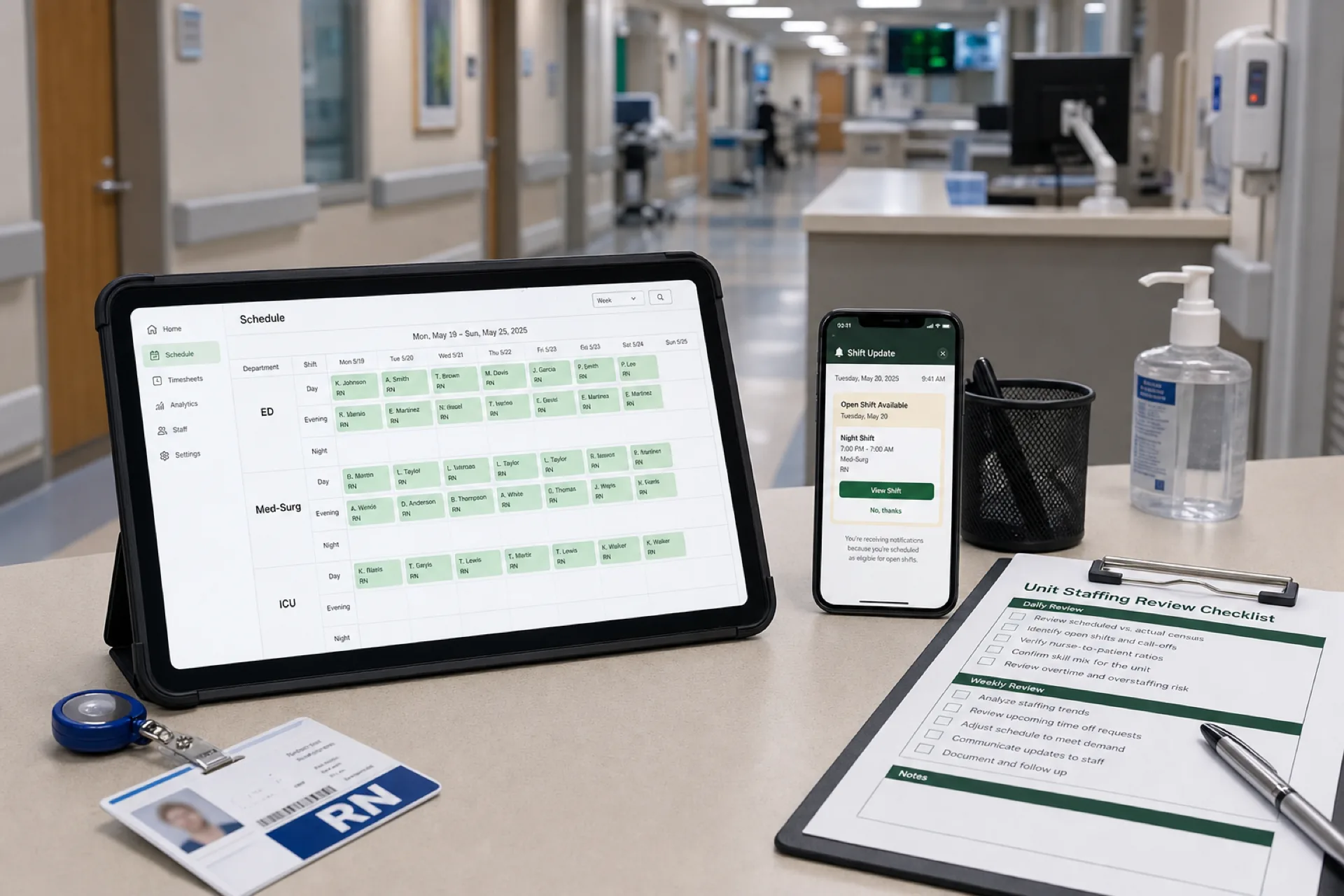
Learn hospital staff scheduling best practices to improve nurse coverage, reduce overtime, optimize workforce planning, and enhance patient care across inpatient, emergency, and surgical units with publish-first scheduling software.
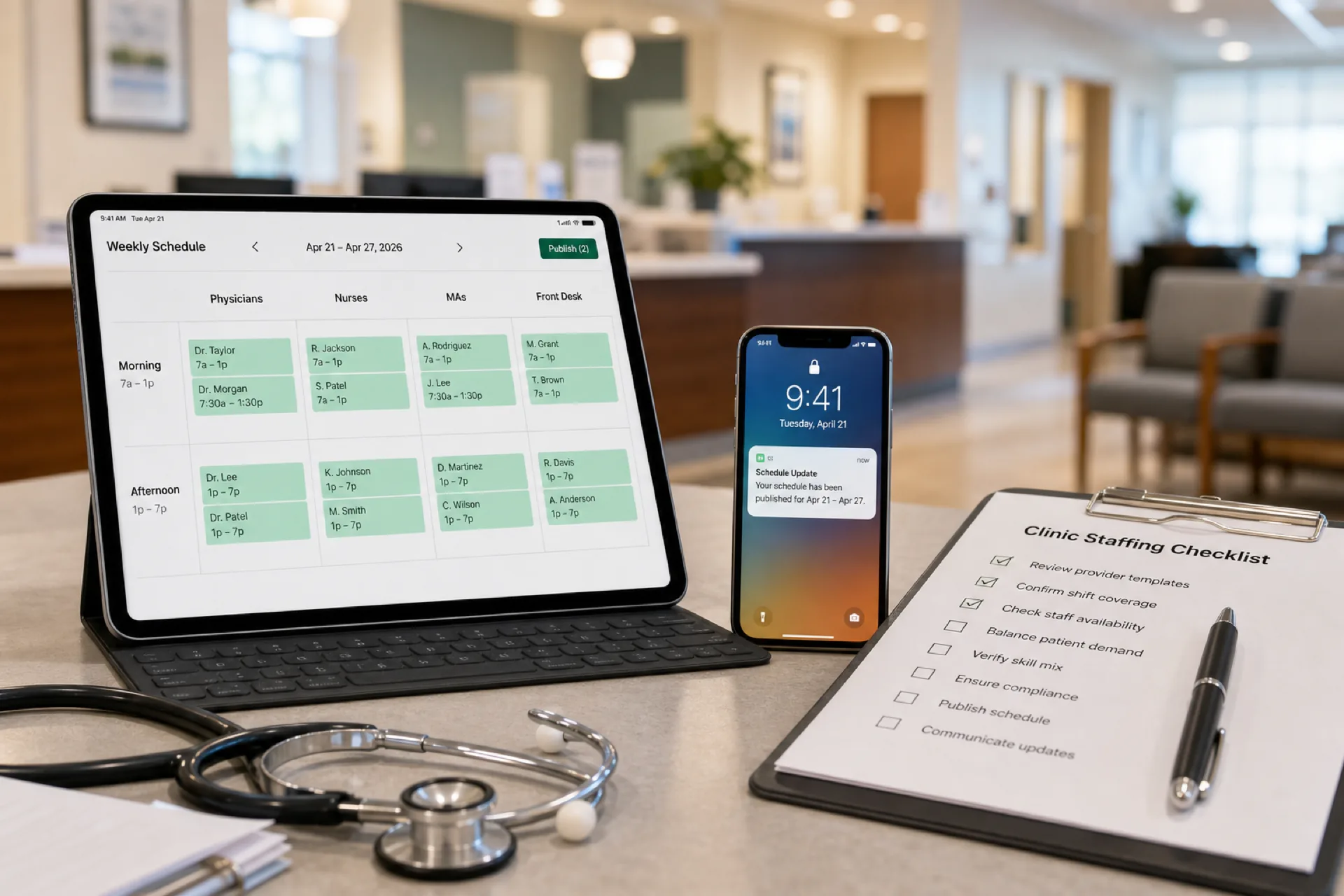
Learn clinic staff scheduling best practices to improve patient coverage, reduce overtime, optimize physician and nurse rosters, and streamline outpatient workforce management with publish-first scheduling software.
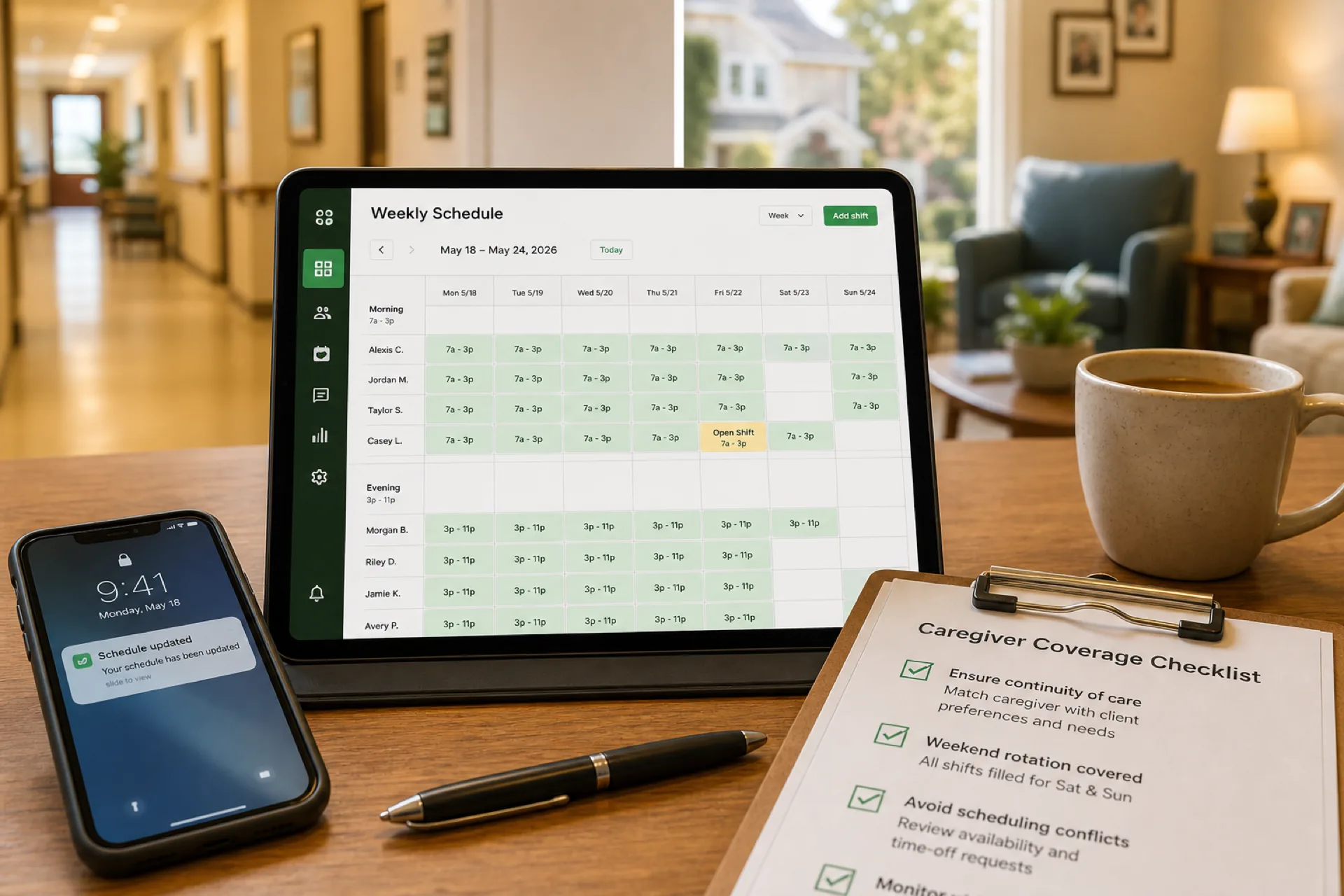
Learn caregiver scheduling best practices to improve shift coverage, reduce overtime, prevent burnout, and manage home healthcare, senior care, and personal care teams more efficiently with publish-first workforce software.
Learn healthcare attendance tracking best practices to reduce payroll errors, improve compliance, monitor nurse and caregiver attendance, and streamline workforce management across hospitals, clinics, and care facilities.
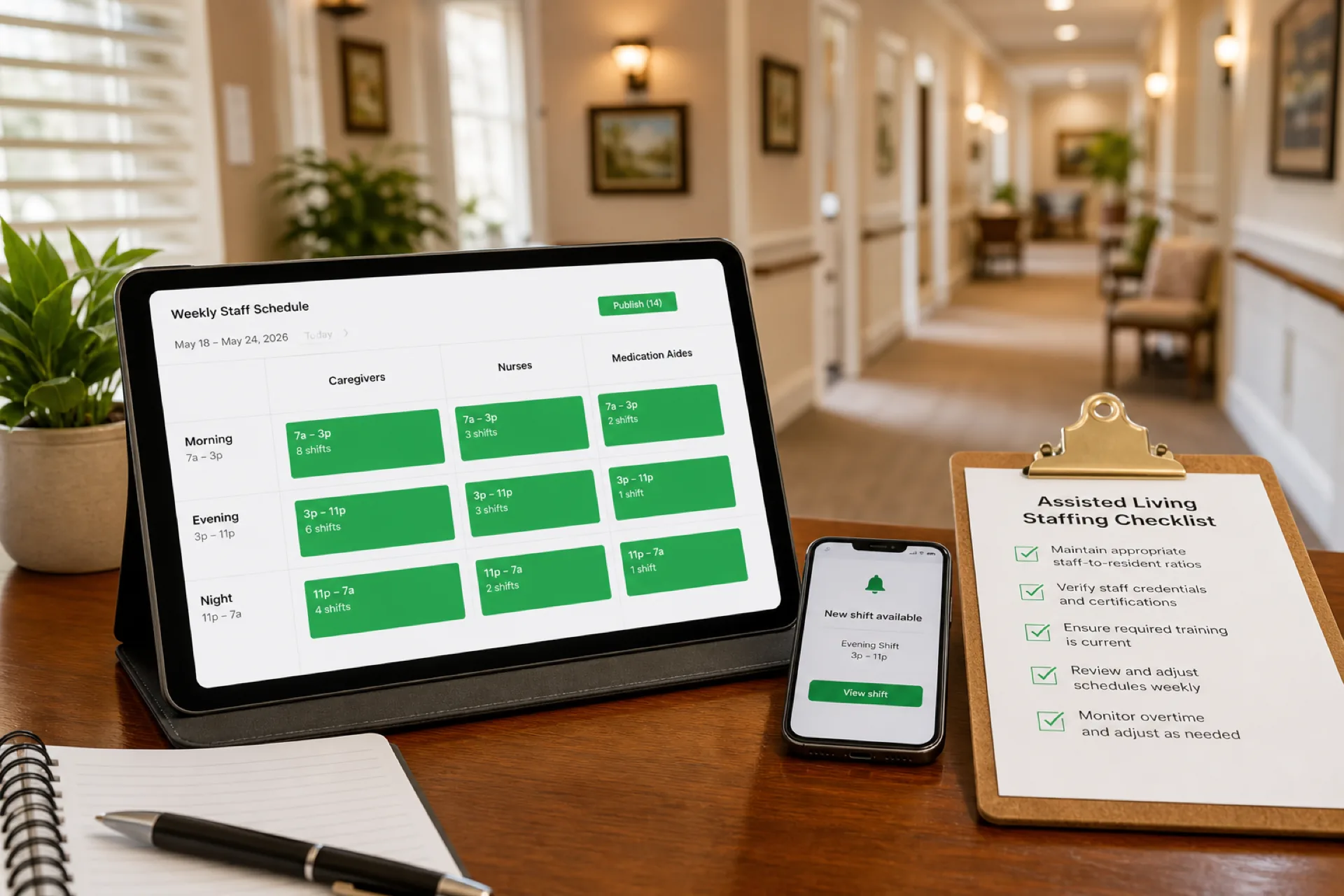
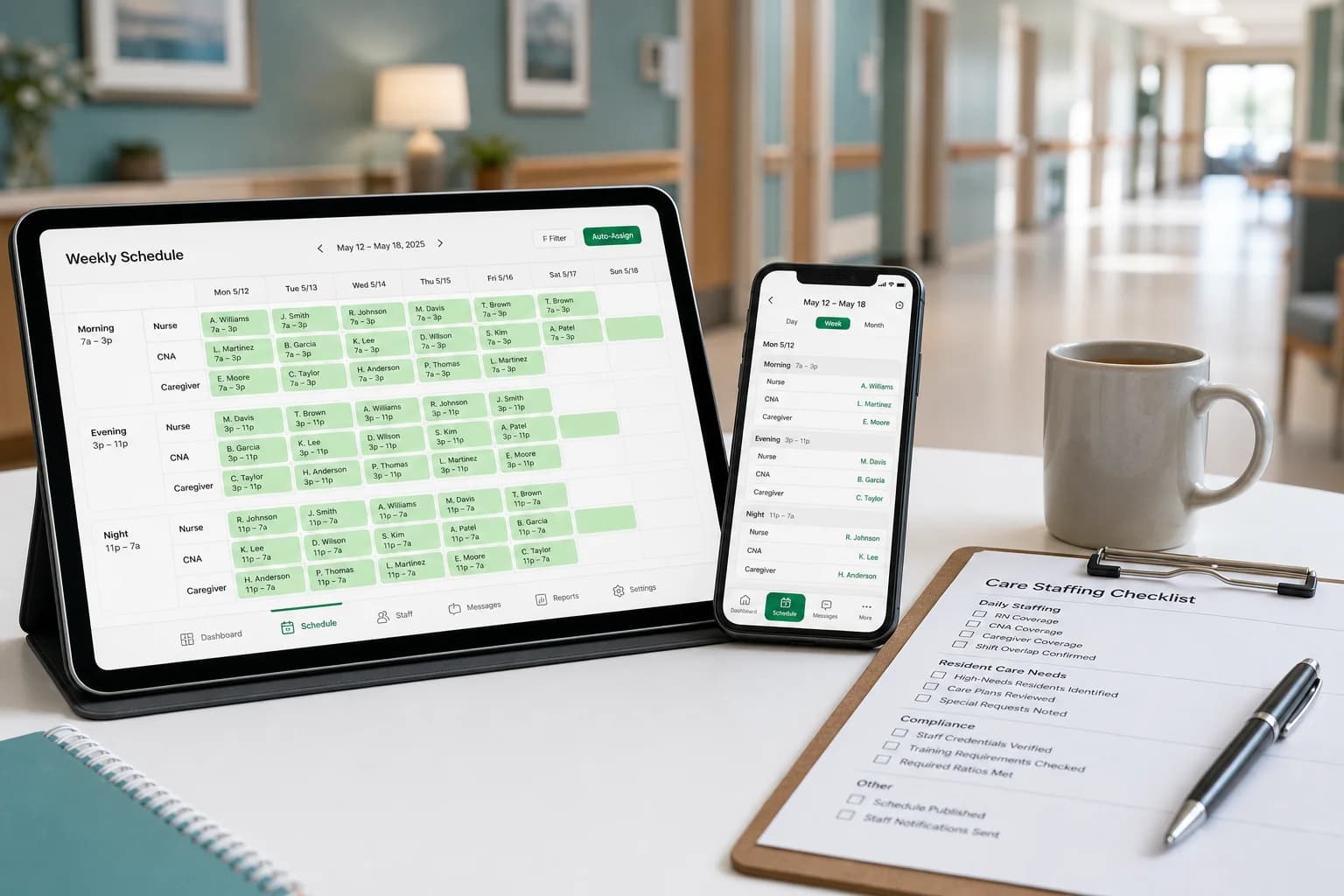
Learn how assisted living facilities improve staff scheduling, reduce overtime, manage caregivers and nurses, and deliver better resident care with modern scheduling software and publish-first workforce habits.
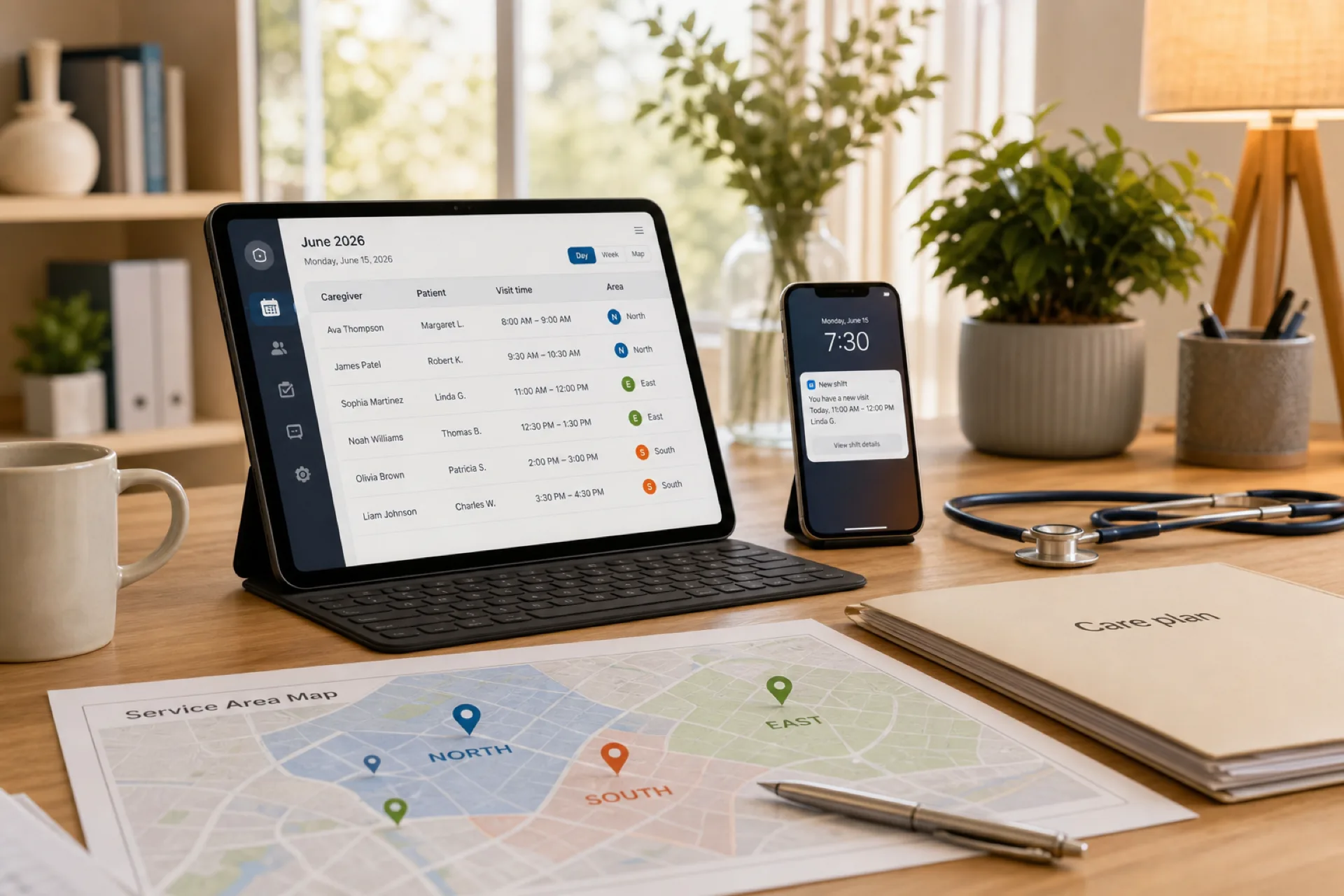
Home healthcare scheduling best practices help agencies assign caregivers to patient visits, reduce overtime, manage call-offs, and improve care continuity with publish-first workforce management.
Learn how nursing homes build efficient staff schedules, reduce overtime, improve shift coverage, and manage nurses, CNAs, and caregivers with modern scheduling strategies.
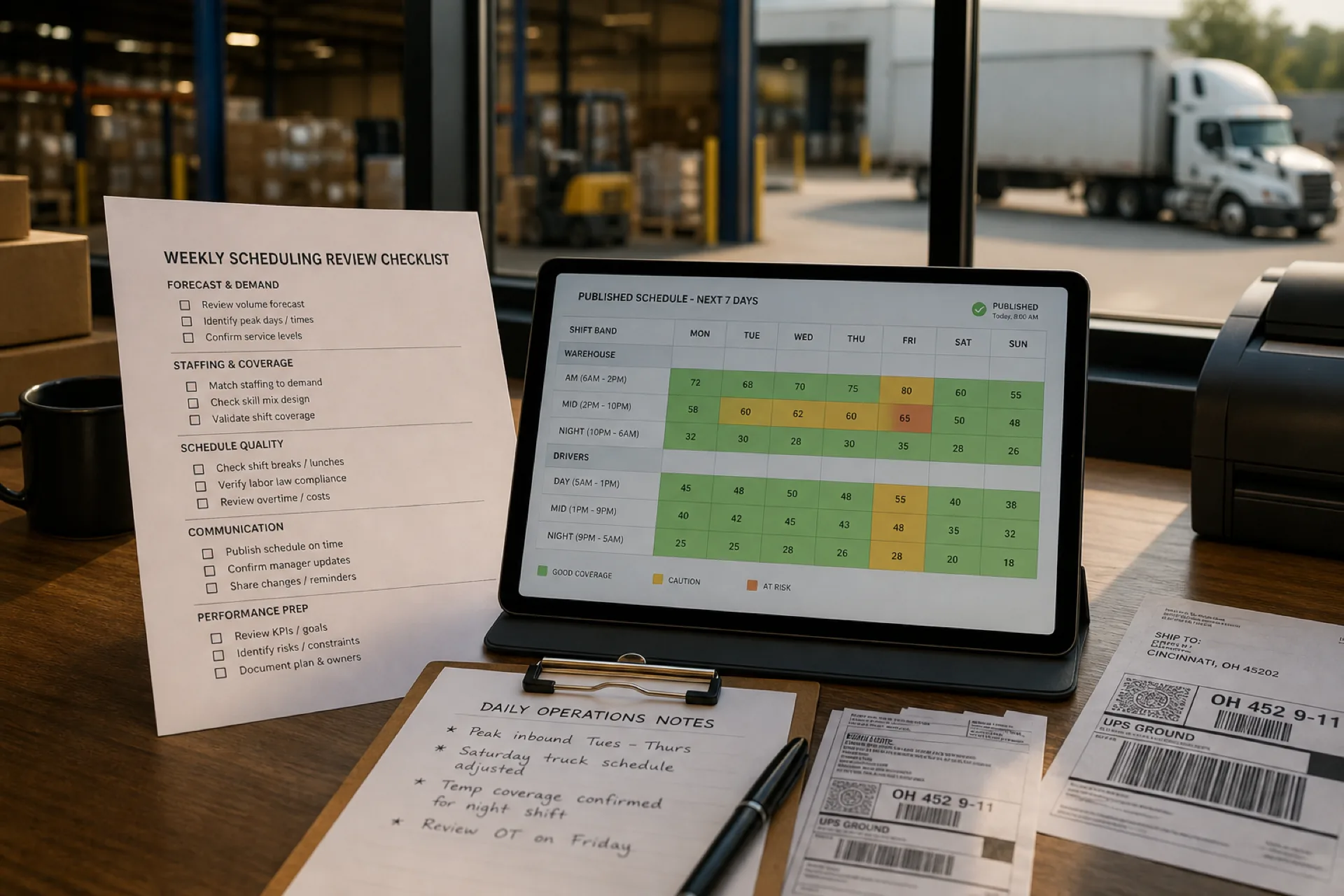
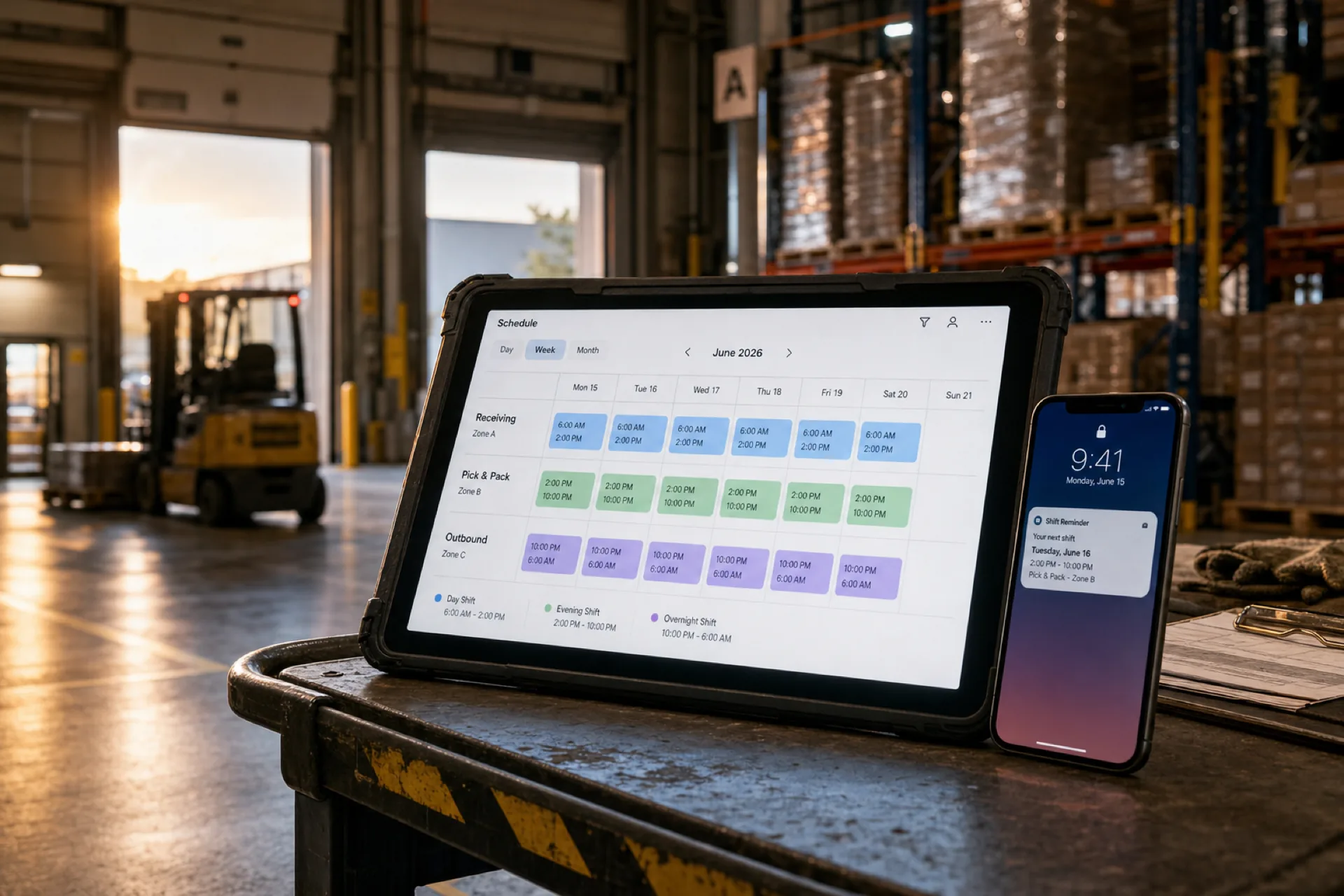
Compare the best employee scheduling software for logistics companies in 2026. Reduce overtime, improve workforce management, and streamline attendance for warehouses, 3PLs, freight carriers, and delivery operations.
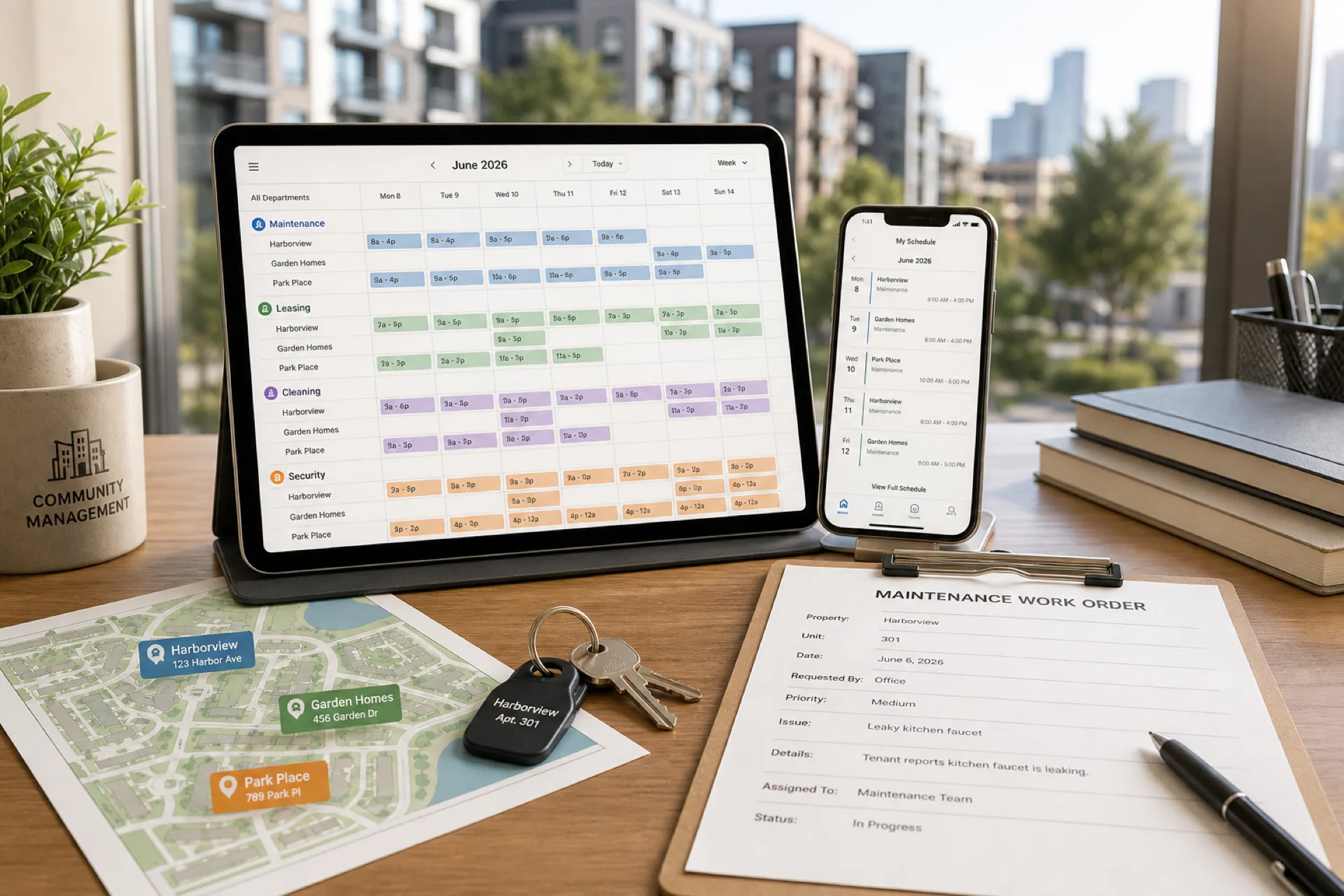
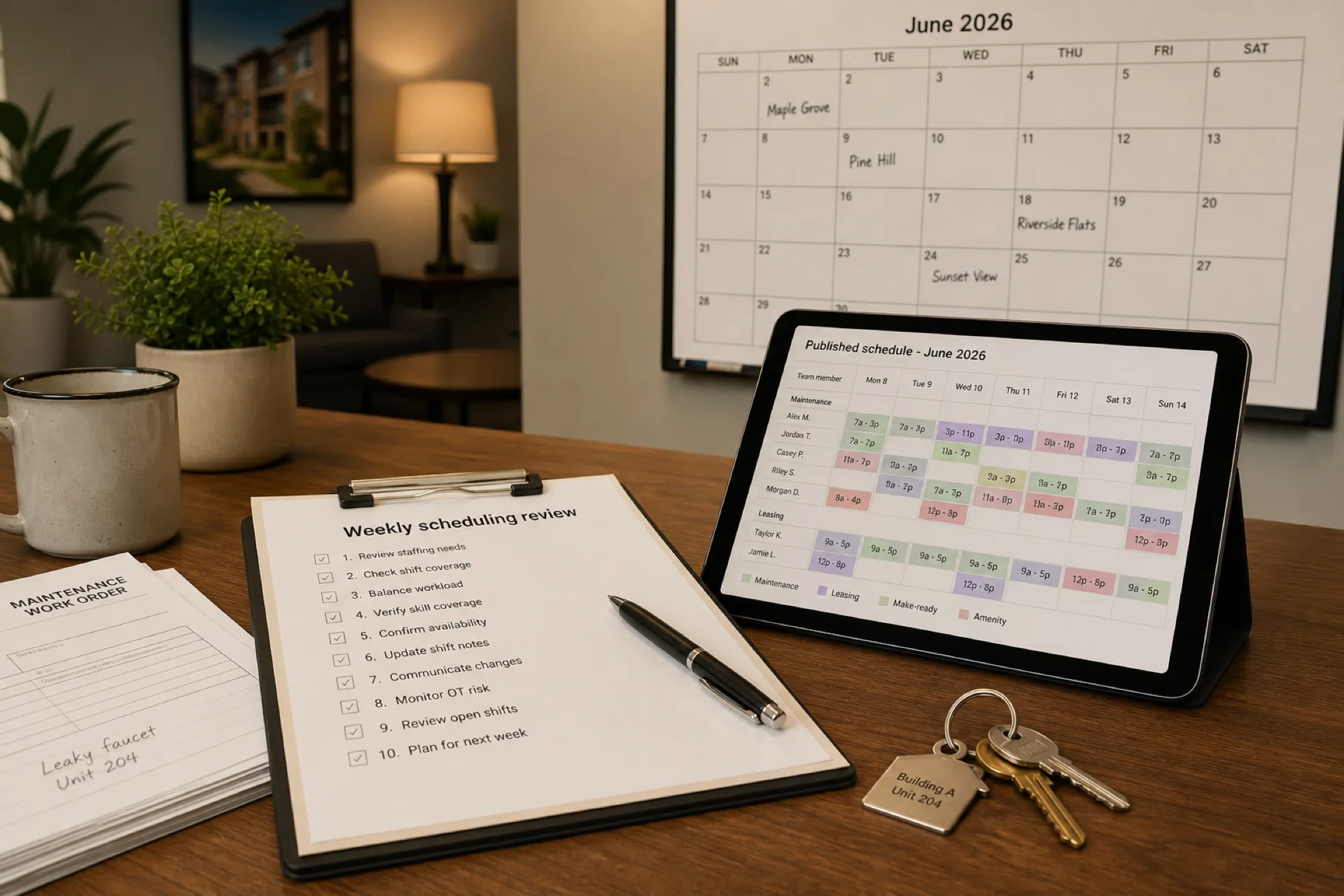
Compare the best scheduling software for property management companies in 2026: multi-property scheduling, maintenance coordination, attendance tracking, and workforce management for apartment, commercial, and HOA portfolios.
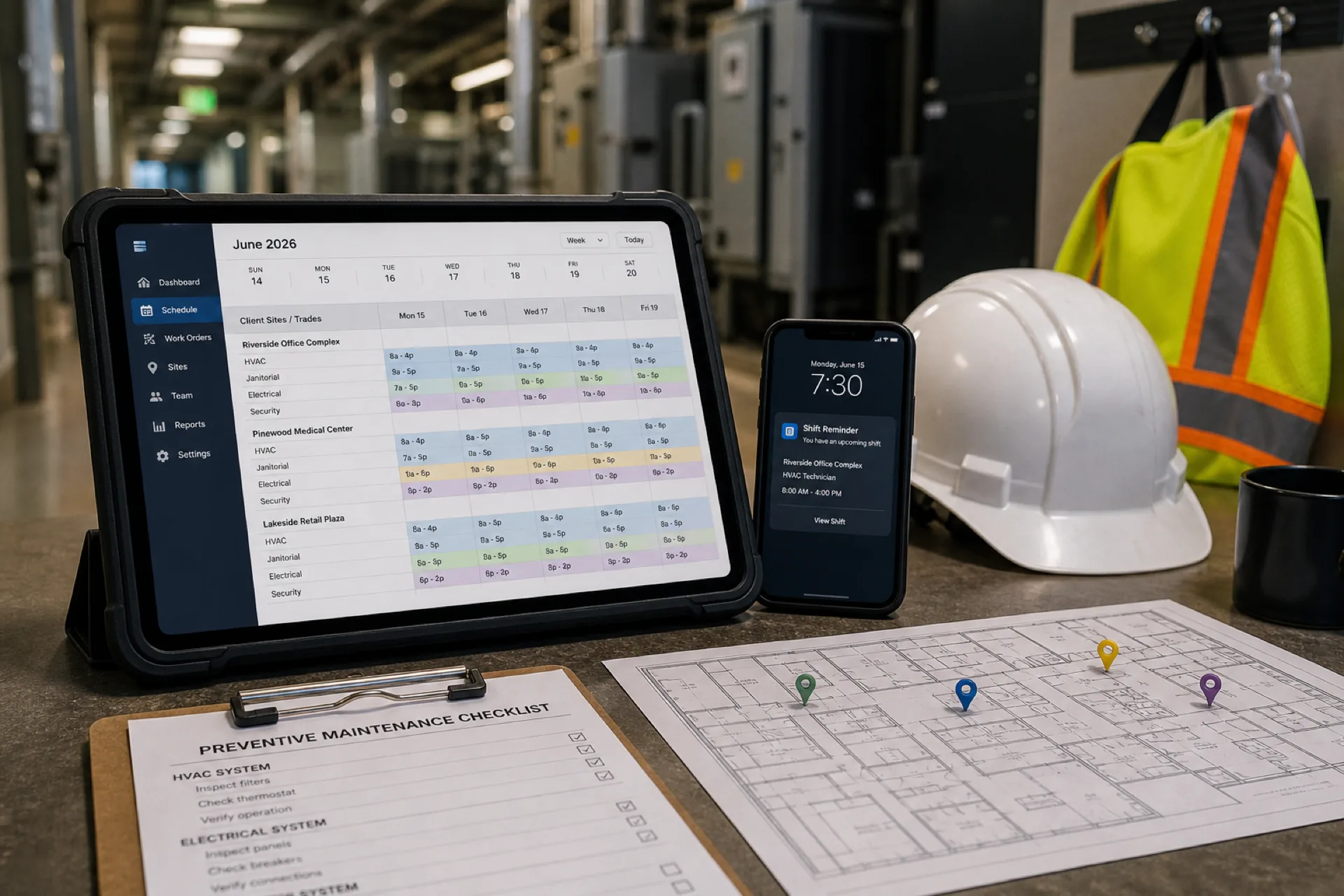
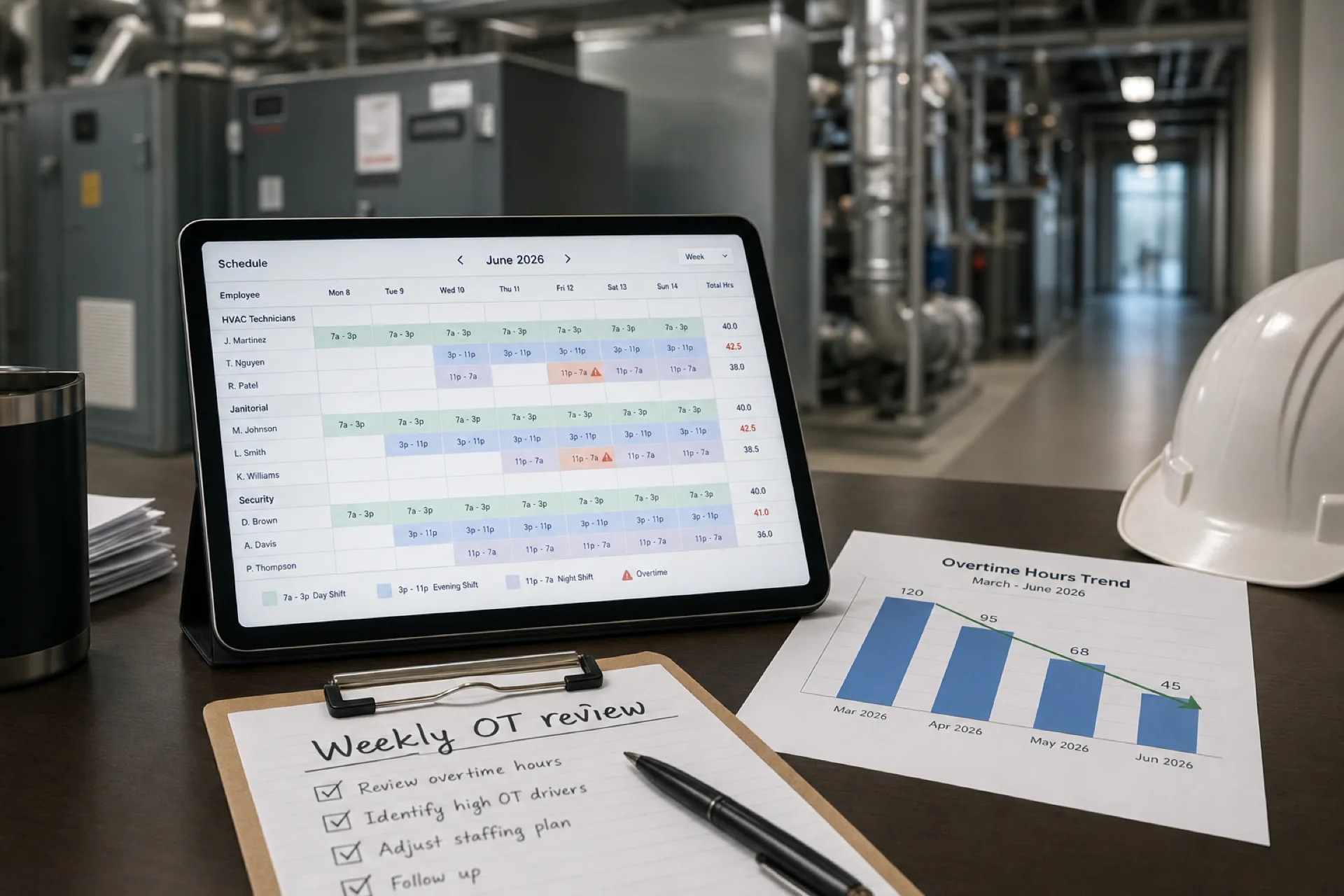
Compare the best workforce management software for facility management companies in 2026. Reduce overtime, improve multi-site scheduling, streamline attendance tracking, and coordinate maintenance, janitorial, and security teams across client sites.
Learn logistics workforce scheduling best practices to reduce overtime, improve employee productivity, optimize warehouse staffing, and build more efficient schedules for USA logistics teams.
Property management scheduling best practices help managers staff multiple properties, coordinate maintenance, reduce overtime, and keep mobile teams aligned on one published roster.
Learn how facility management companies reduce overtime with better employee scheduling, attendance tracking, workforce planning, and modern scheduling software across multi-site operations.
Compare the best scheduling software for hospitality businesses in 2026: hotel and resort shift scheduling, attendance tracking, multi-property management, and workforce communication for guest-ready teams.
Compare the best employee scheduling software for warehouses in 2026: multi-shift scheduling, attendance tracking, overtime visibility, and workforce management for distribution centers and fulfillment teams.
Compare the best employee scheduling software for franchise businesses in 2026: multi-location scheduling, attendance tracking, labor visibility, and workforce communication across every store.
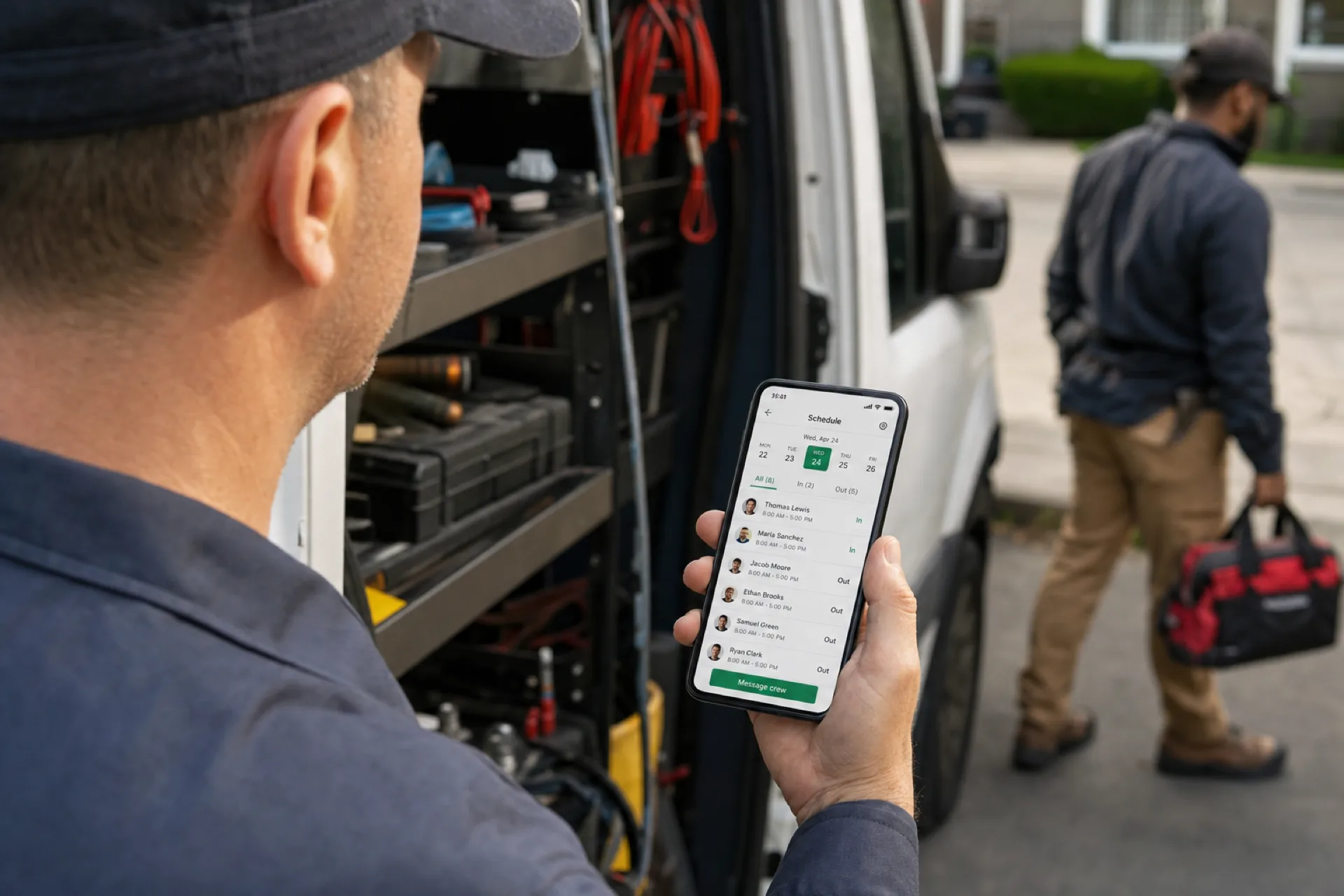
Compare the best employee scheduling software for field service teams in 2026: technician scheduling, mobile access, attendance, open shifts, and multi-area coverage.
Compare the best employee scheduling software for security companies in 2026: 24/7 guard coverage, attendance, mobile access, open shifts, and multi-site management.
Compare the best employee scheduling software for cleaning businesses in 2026: multi-site crews, attendance, mobile access, open shifts, and route coordination.
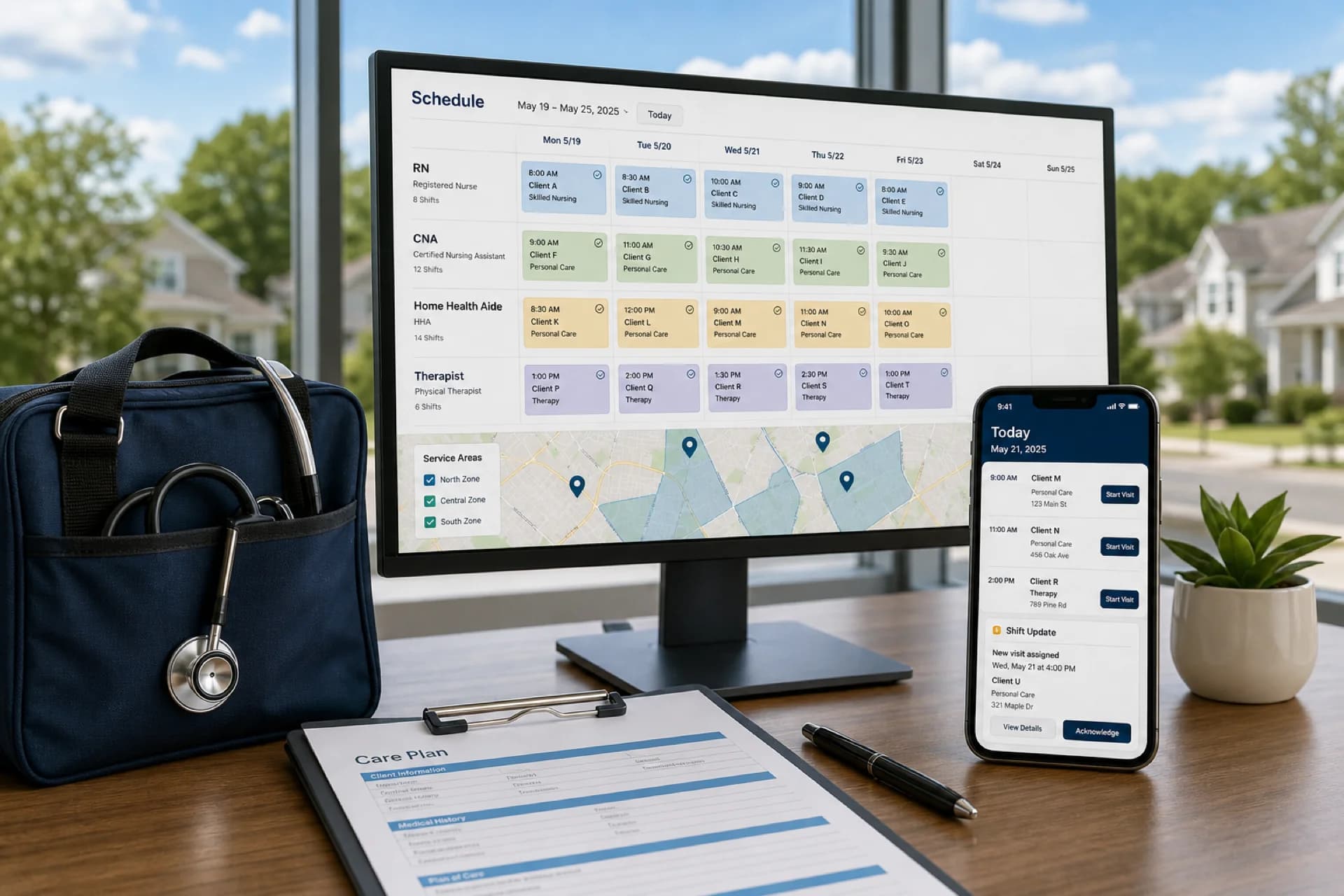
Compare the best employee scheduling software for home healthcare agencies in 2026: caregiver scheduling, field attendance, mobile access, open shifts, and multi-area coverage.
Compare the best employee scheduling software for dental practices in 2026: hygienist and front desk scheduling, attendance, leave, mobile access, and multi-location support.
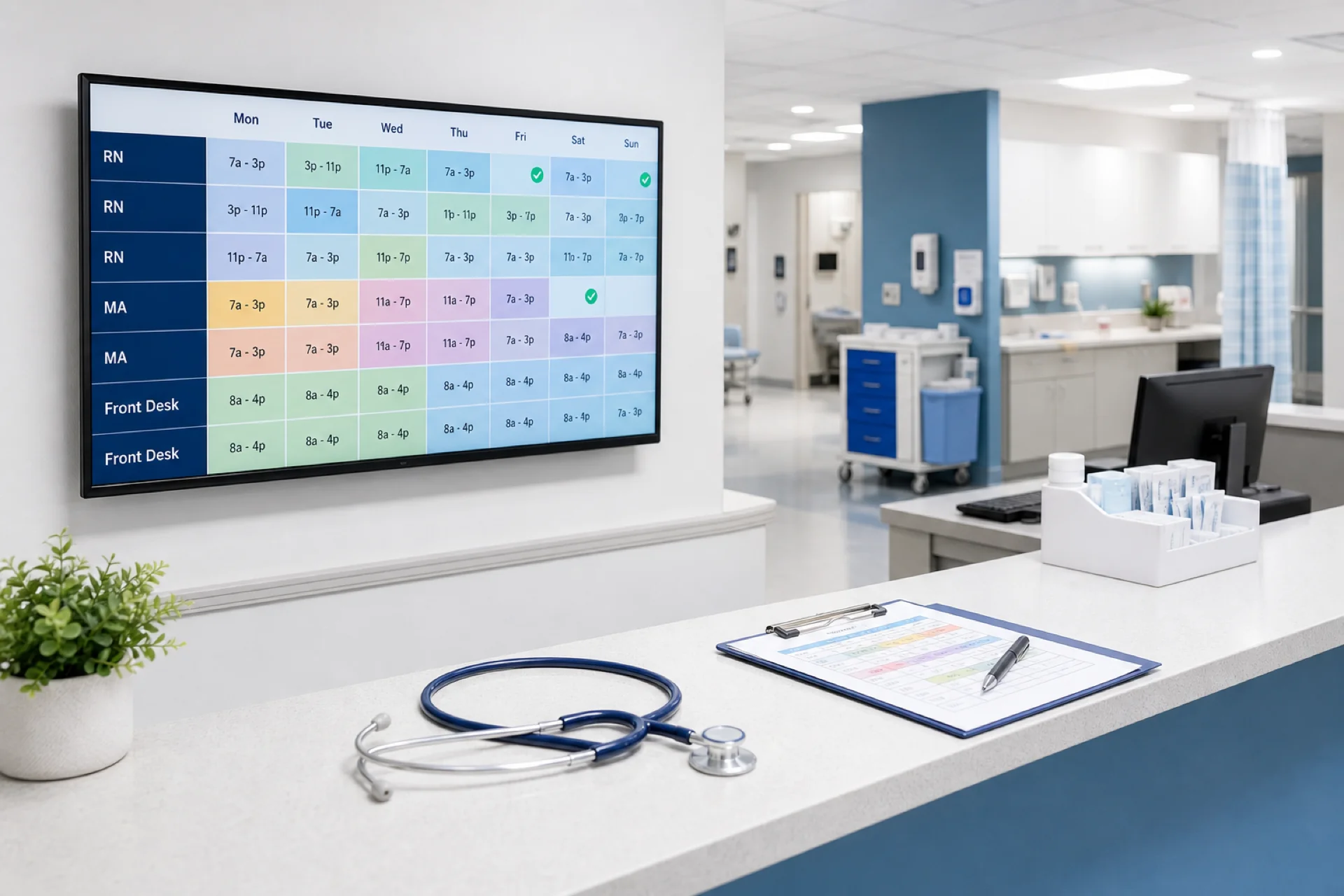
Compare the best employee scheduling software for healthcare teams in 2026: clinic staffing, attendance, shift swaps, multi-location coverage, and labor visibility.
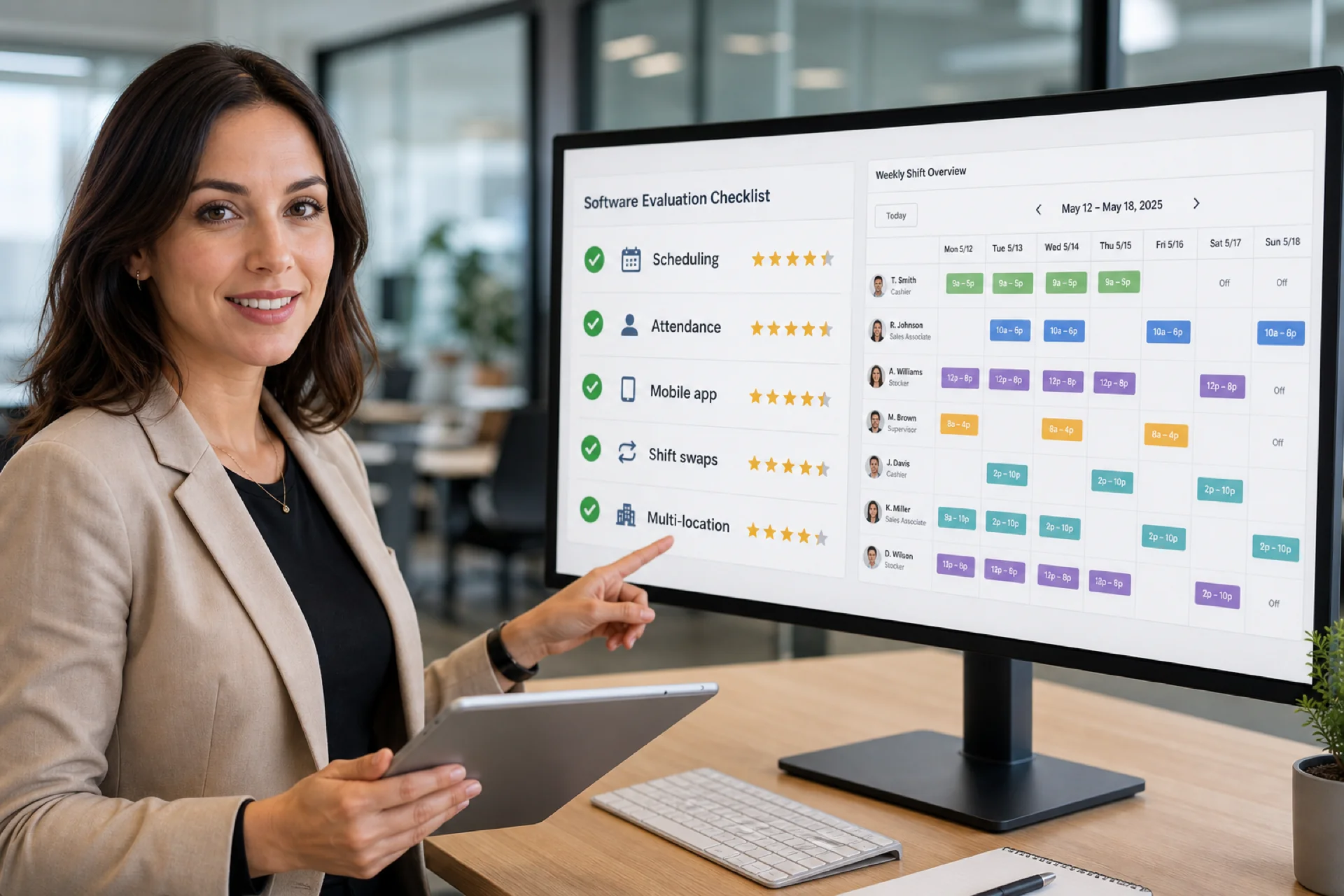
Buying shift scheduling software in 2026? Use this buyer's guide for essential features, common mistakes, pricing checks, and questions to ask before you sign.
Learn how to calculate employee scheduling software ROI in 2026: hidden manual costs, overtime, attendance, a worked example, and when software pays for itself.
Compare employee scheduling software pricing, plans, and feature tiers in 2026. Learn hidden costs, free vs paid tradeoffs, and how to pick the right plan.
Learn how much employee scheduling software costs in 2026: pricing models, typical monthly ranges, hidden fees, free trials, ROI, and how to choose the right tier.
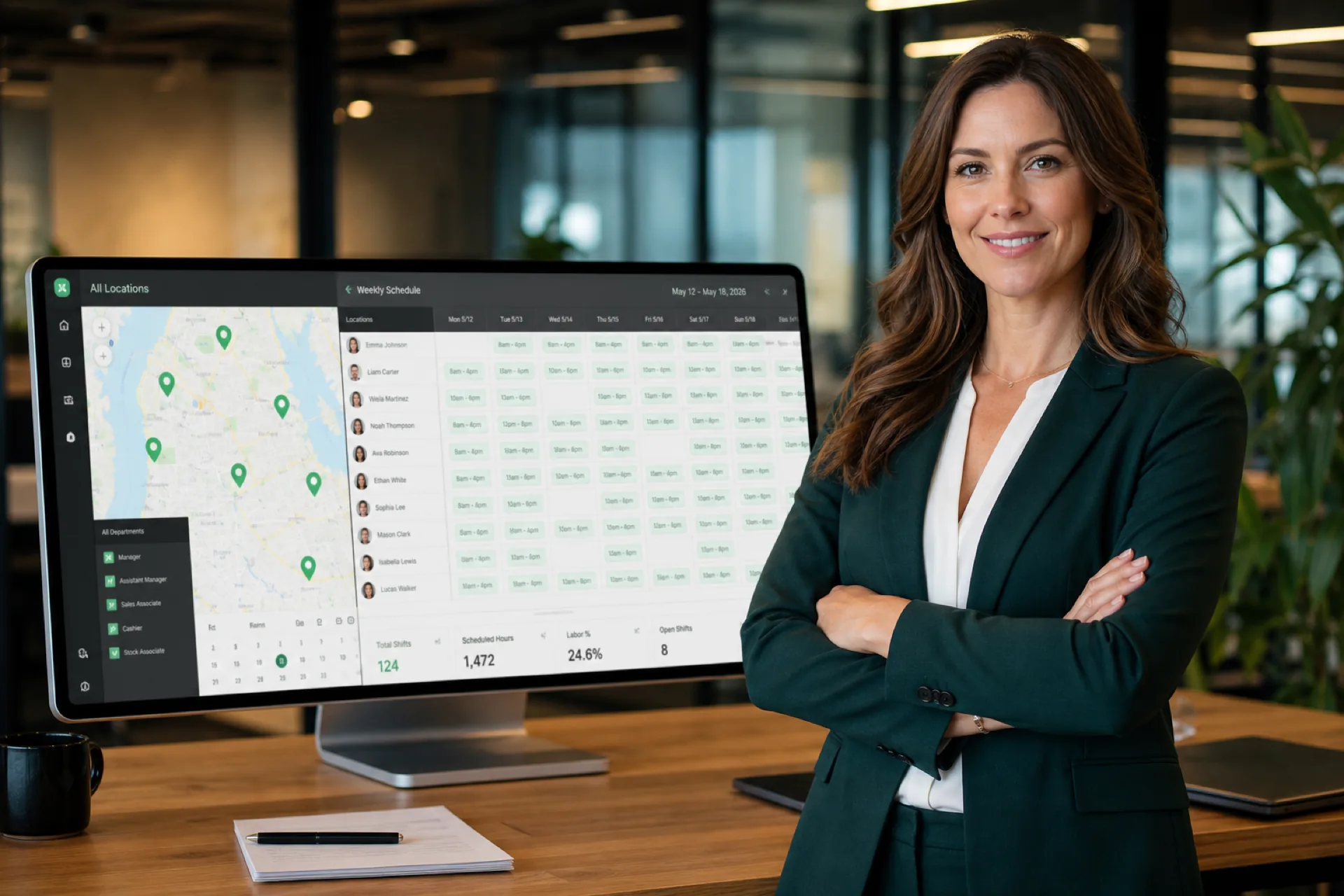
Compare the best scheduling software for multi-location businesses in 2026: centralized schedules, attendance, labor visibility, and workforce communication across every site.
Compare the best employee scheduling software for retail stores in 2026: peak-hour coverage, attendance, shift swaps, labor visibility, and multi-location support.
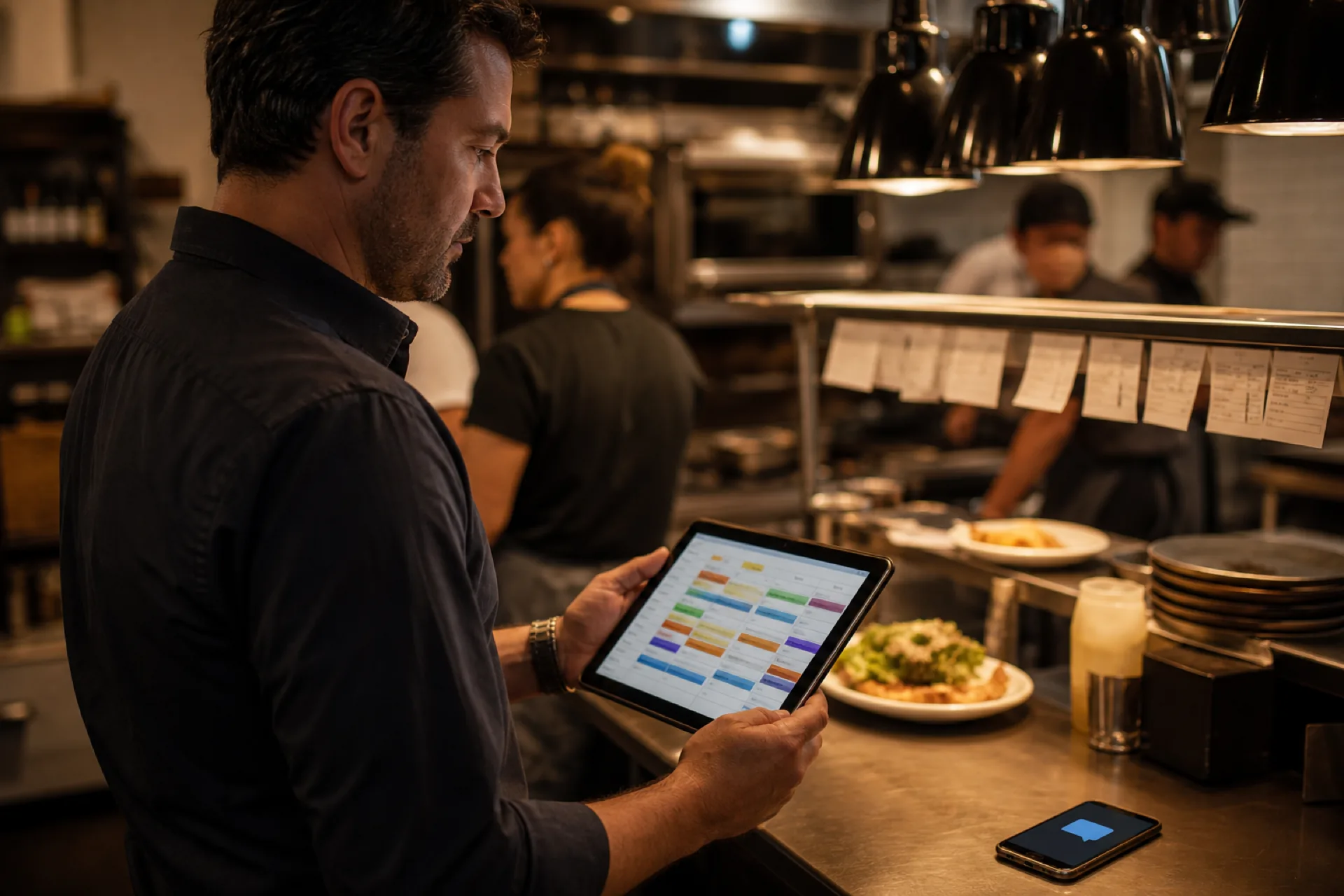
Compare the best restaurant employee scheduling software in 2026: scheduling, attendance, shift swaps, labor visibility, and multi-location support for USA operators.
Restaurant staff scheduling best practices help managers match FOH and BOH coverage to demand, control labor cost, handle call-offs, and keep hourly teams on one published roster.
Fast-growing restaurant teams in New York and California need shift scheduling that keeps coverage, labor costs, availability, and publish discipline in one place before the week gets noisy.
Retail employee scheduling best practices help store managers match staffing to customer traffic, control labor cost, reduce call-offs, and keep part-time teams aligned on one published roster.
Mobile workforce management connects scheduling, attendance, and communication for deskless and field teams so USA operators manage distributed staff from one platform.
Employee attendance tracking gives small businesses accurate work records, fewer payroll disputes, and real visibility into lateness, absences, and overtime before close.
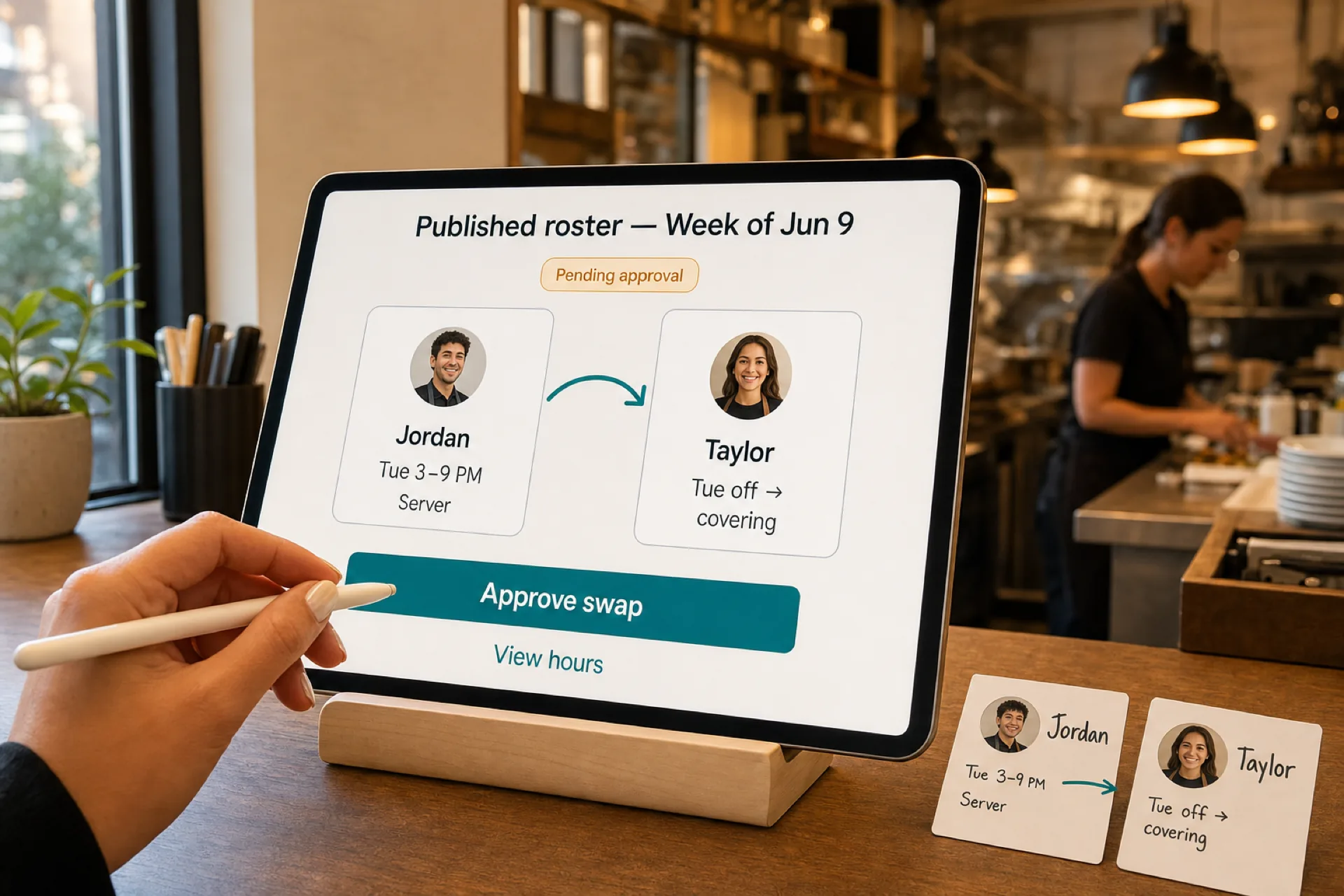
Learn employee shift swapping best practices for growing USA teams: clear policy, manager approval, labor checks, and scheduling software that keeps coverage honest.
Learn multi-location workforce management for growing USA businesses: centralized scheduling, attendance, communication, labor control, and staffing across every site.
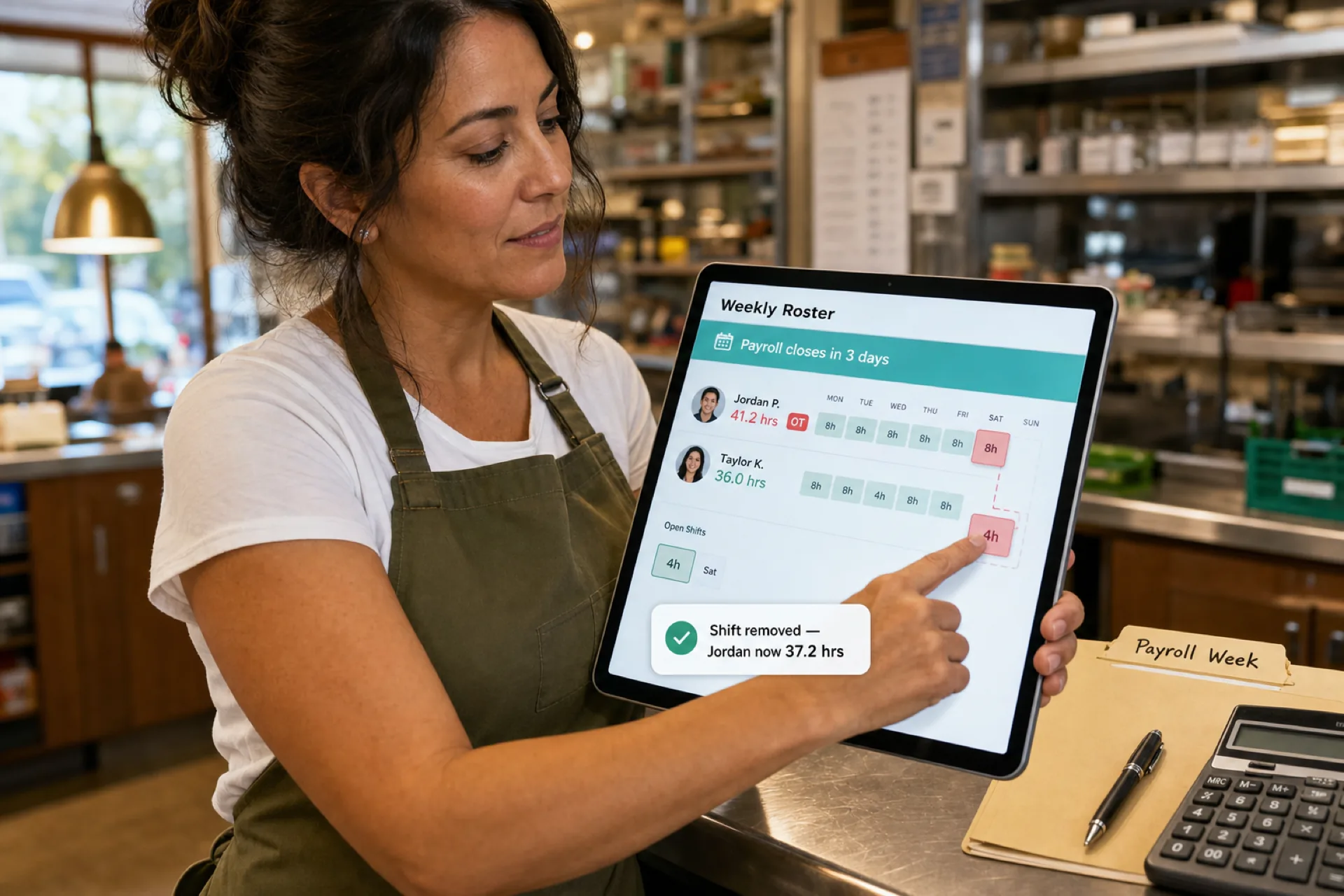
Learn how to prevent overtime before payroll with weekly hour monitoring, labor budgets, swap controls, and workforce scheduling visibility for growing USA teams.
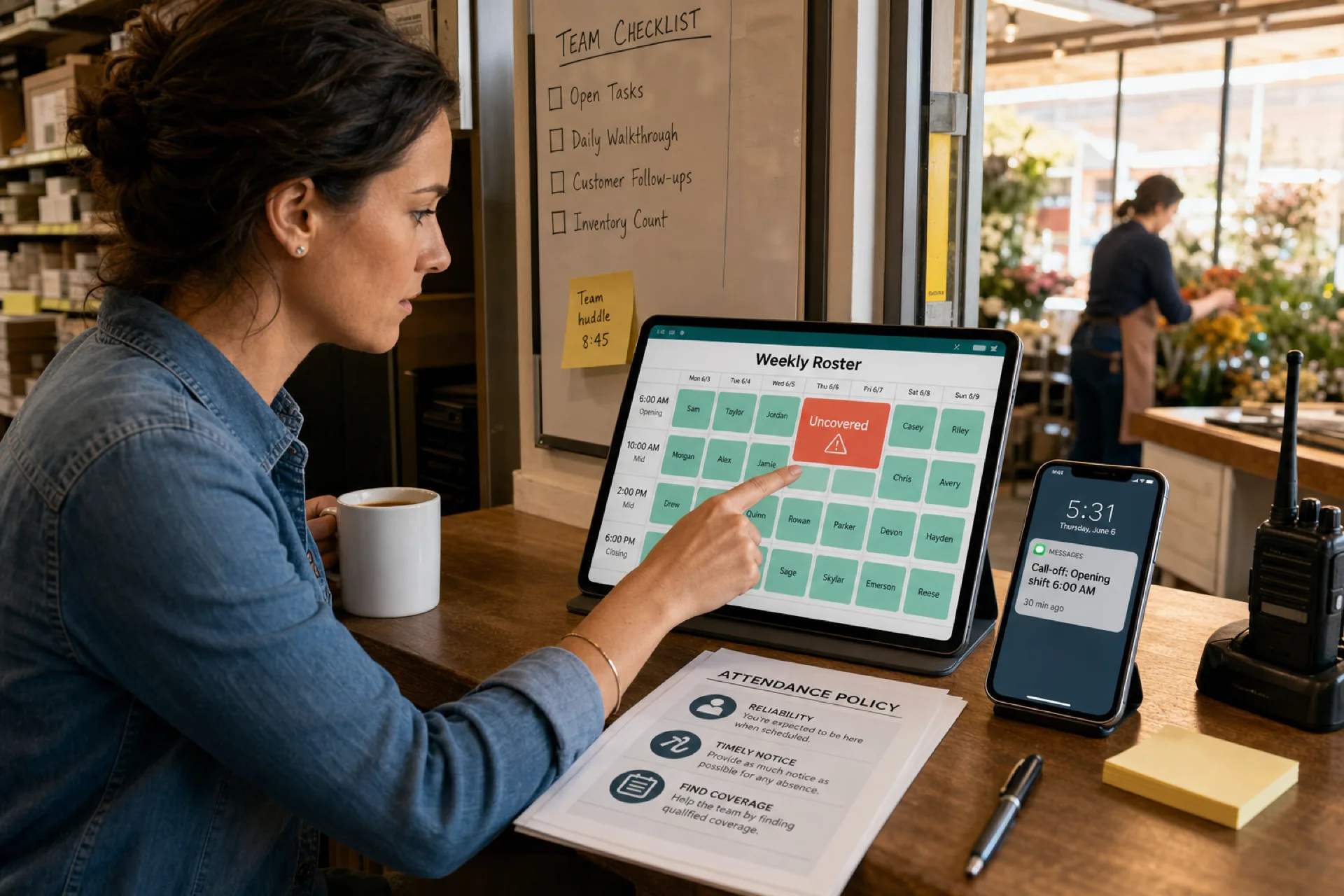
Learn how to reduce employee no-shows and last-minute call-offs with scheduling, communication, reminders, and attendance practices built for growing USA teams.
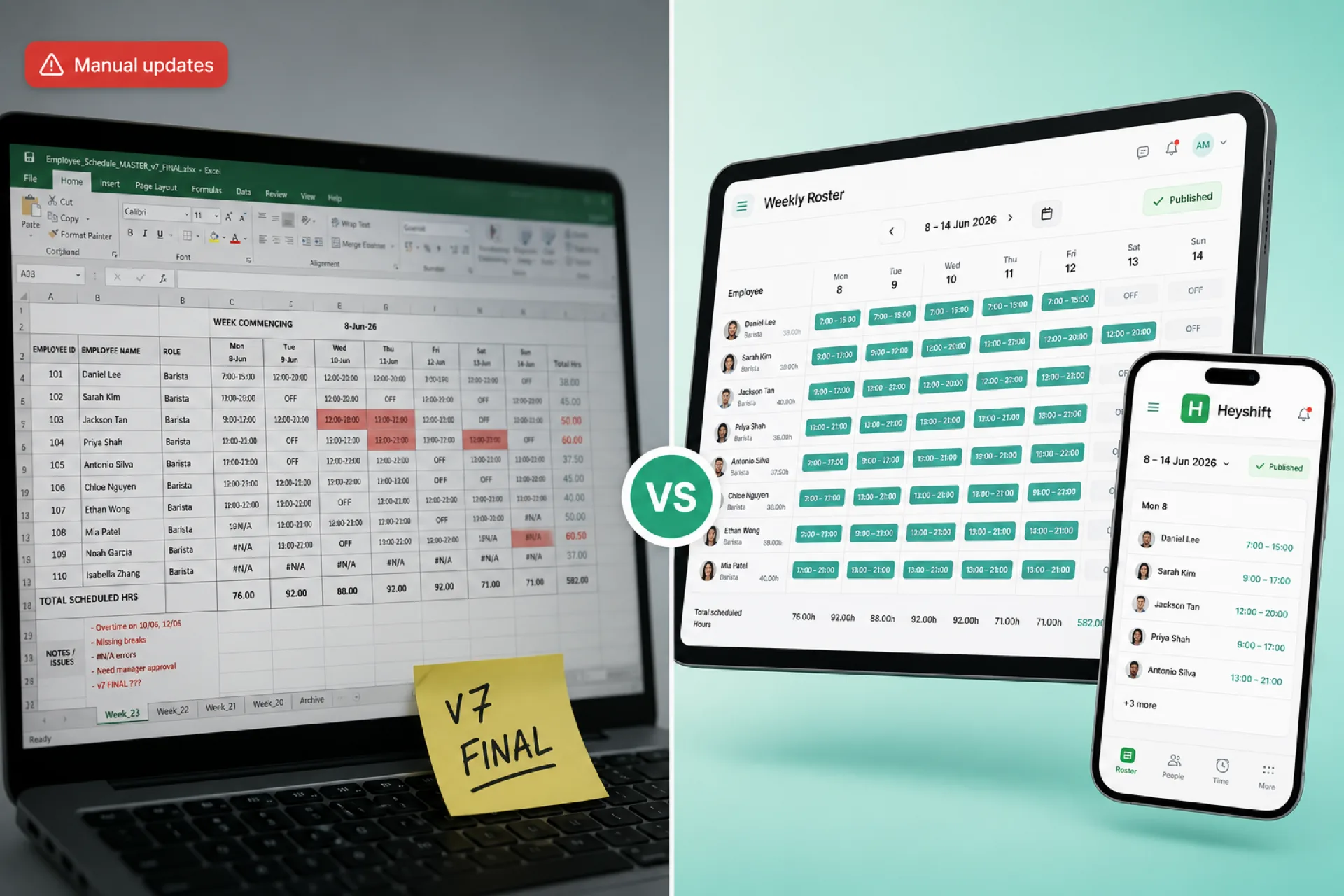
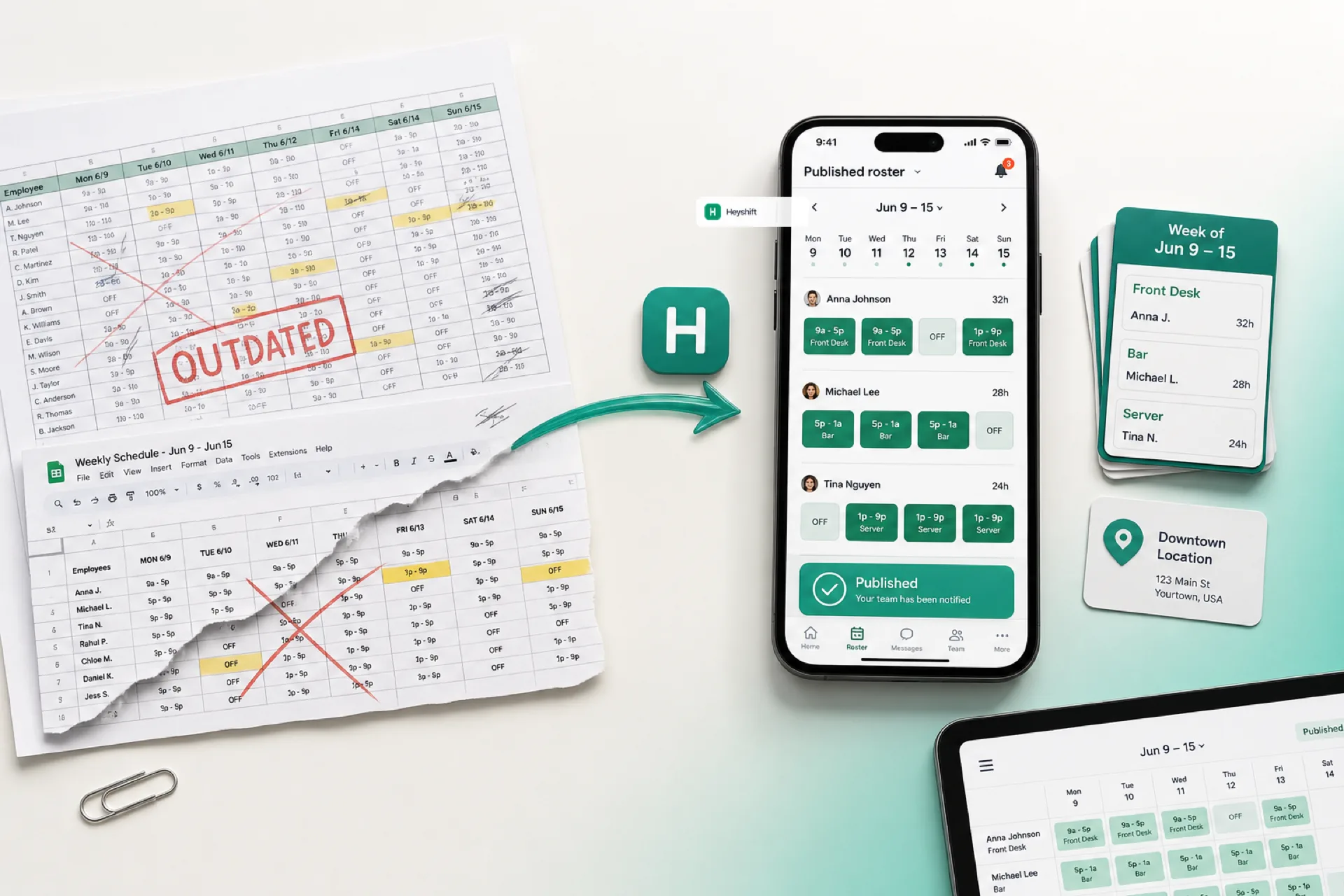
Excel works for tiny teams, but growing businesses need publish-first scheduling software with mobile alerts, swap approvals, and labor visibility Excel cannot match.
Excel and Google Sheets work for tiny teams, but version chaos, missed updates, and overtime blind spots make spreadsheet scheduling expensive as you grow in 2026.
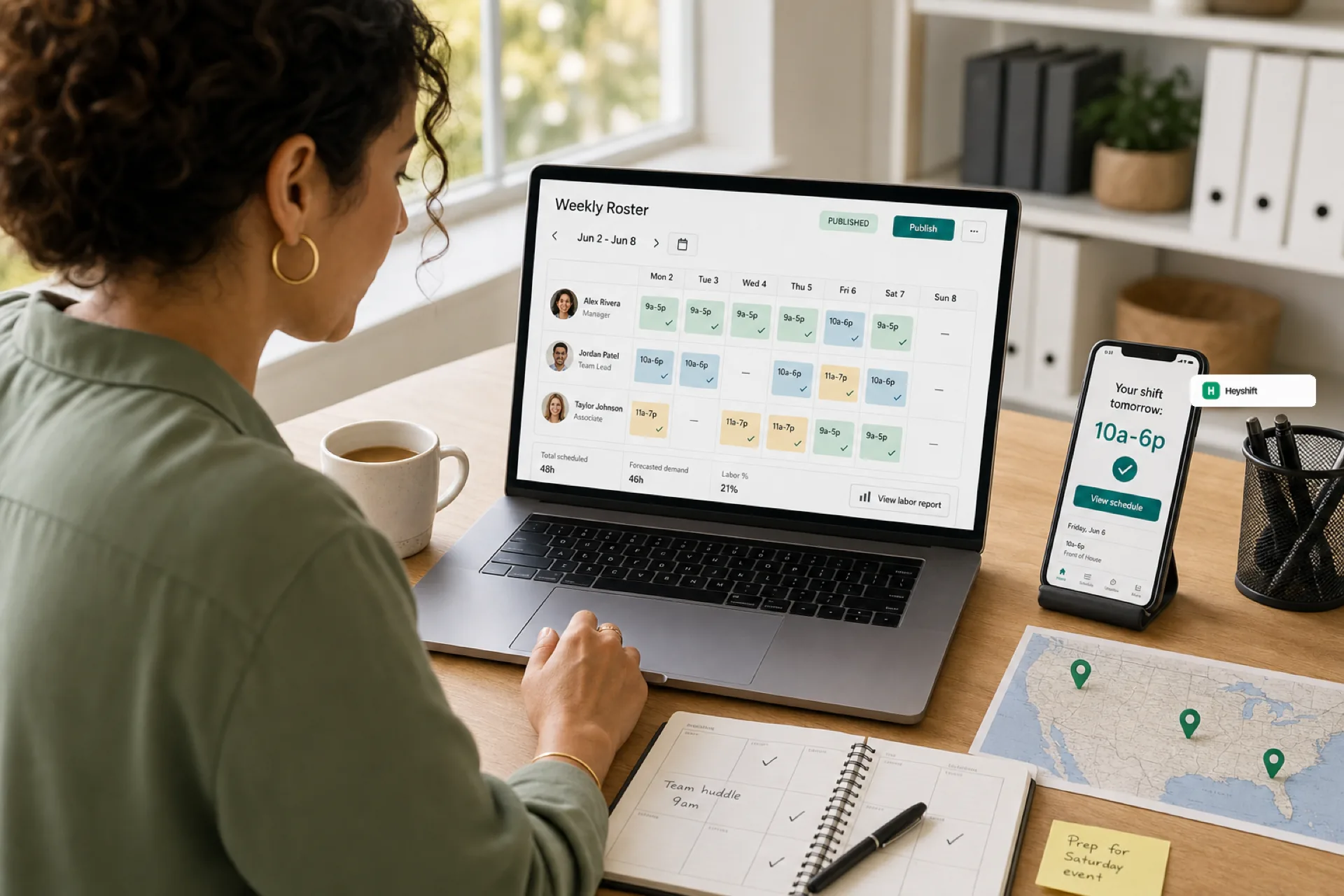
Small businesses in 2026 need employee scheduling software that publishes one official roster, keeps hourly staff on mobile, and scales across locations without spreadsheet chaos.
When you open a second or tenth location, the hardest part is not the grid. It is keeping everyone pointed at the same published roster while habits catch up.
Multi-location teams need attendance management software that ties mobile clock-in, kiosk punches, and scheduled hours to one record before payroll close.
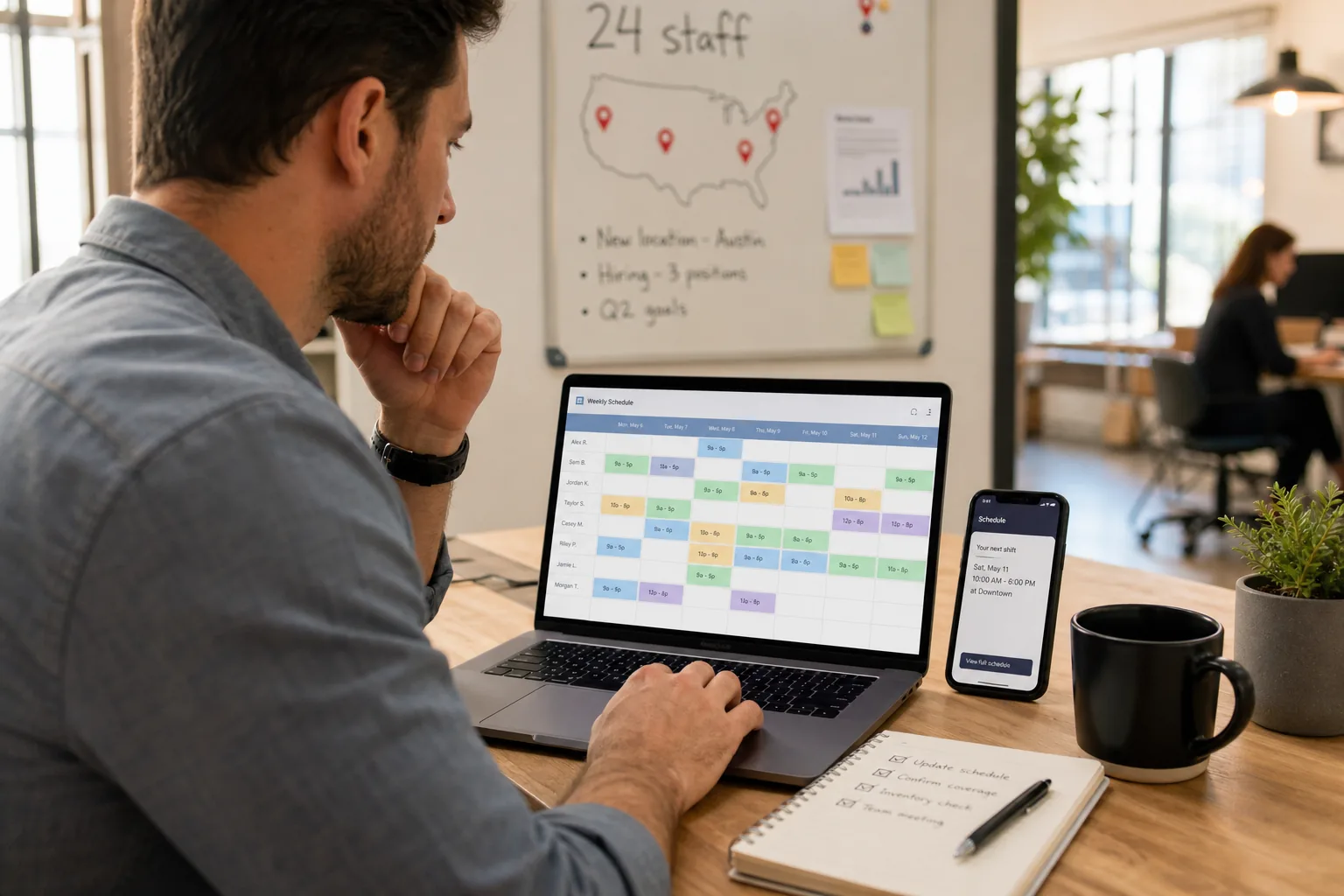
Growing startups and small-to-mid teams need employee scheduling software when informal tools cannot keep one published roster across managers, roles, and locations.
Attendance corrections workflow is where payroll accuracy is won or lost for USA shift teams. Use this practical playbook to reduce disputes, speed approvals, and close payroll with clean records.
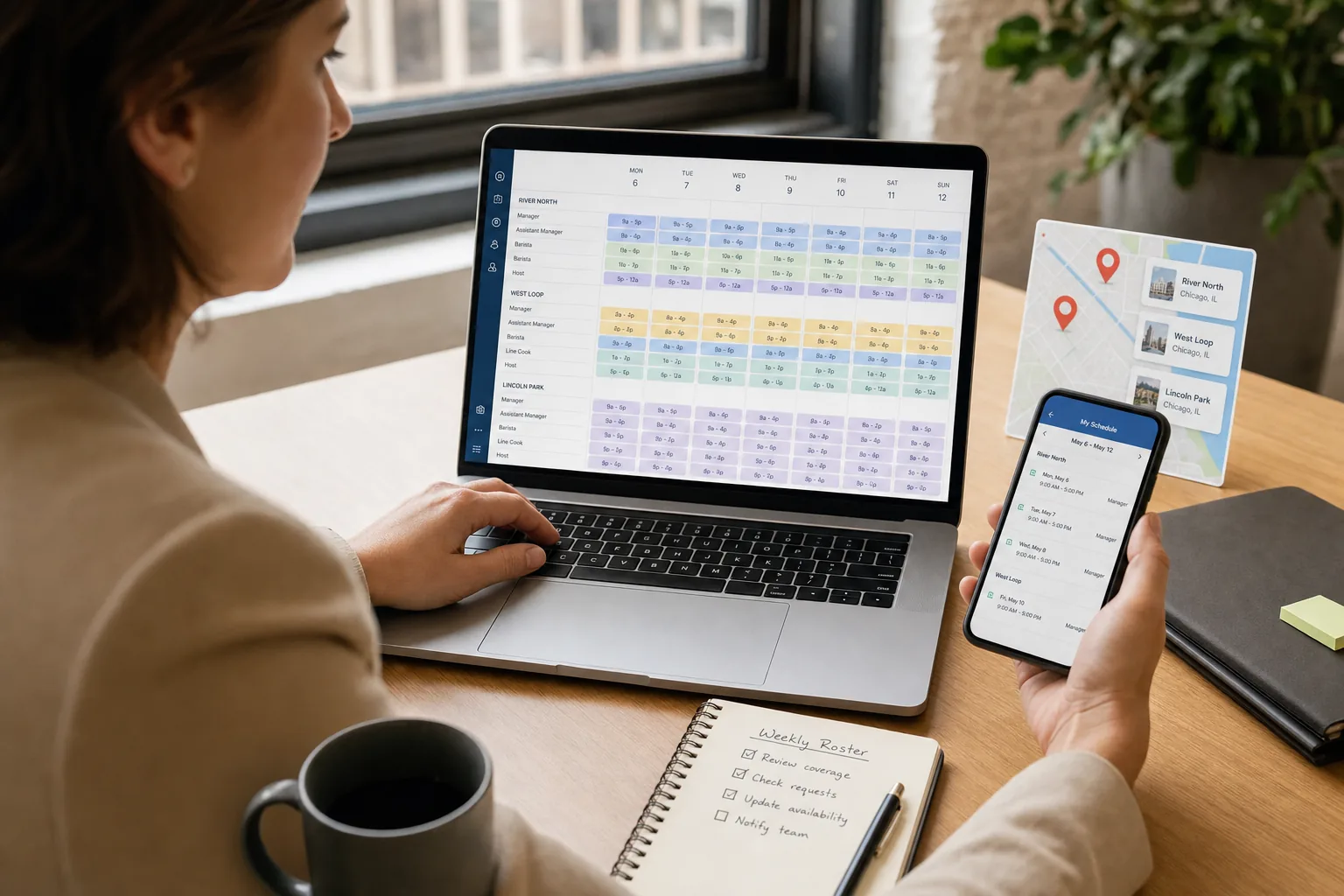
USA teams with two or more sites need multi-location employee scheduling software that keeps separate rosters per location while leadership sees one account, not a folder of forked spreadsheets.
Small businesses should not need a separate mobile add-on for every hourly worker. Here is how to compare employee scheduling software when staff, managers, and owners all need phone access.
For NYC startup operators with hourly crews on mobile: one published roster, clock-ins on the shift you published, and manager approvals without reconciling chat and punch exports at midnight.
Startups and small businesses need a mobile shift scheduling app when spreadsheets, screenshots, and group chats stop keeping hourly teams aligned on the published week.
Restaurants, hotels, bars, and multi-site operators in NYC, LA, Chicago, and Miami need one published roster crews trust. What to model, how to evaluate roster apps, and when scheduling software actually earns adoption on the floor.
New York City restaurant, hotel, and bar owners run on thin margins and fast callouts. Publish-first scheduling keeps FOH, BOH, and late-night coverage on one official roster crews trust.
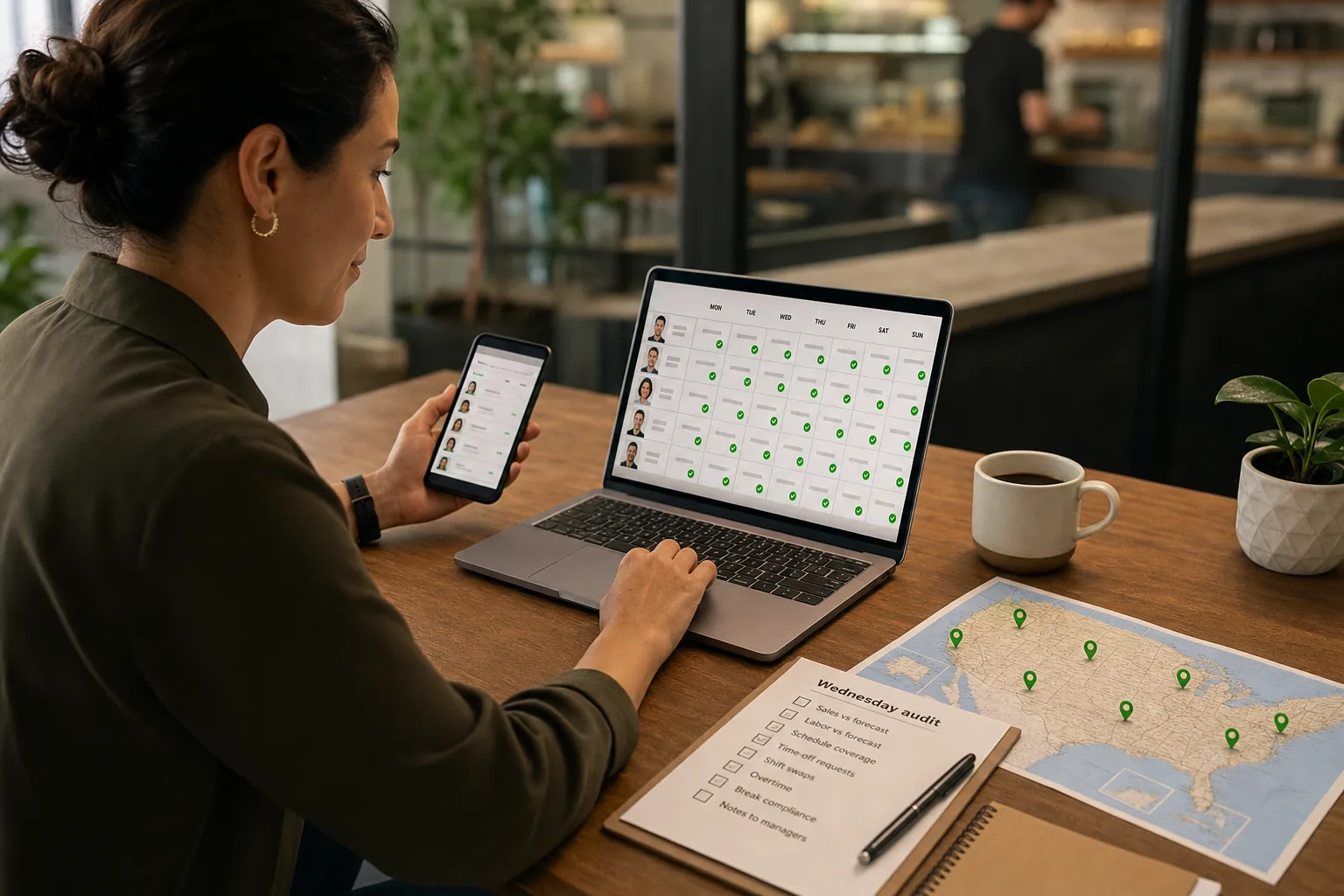
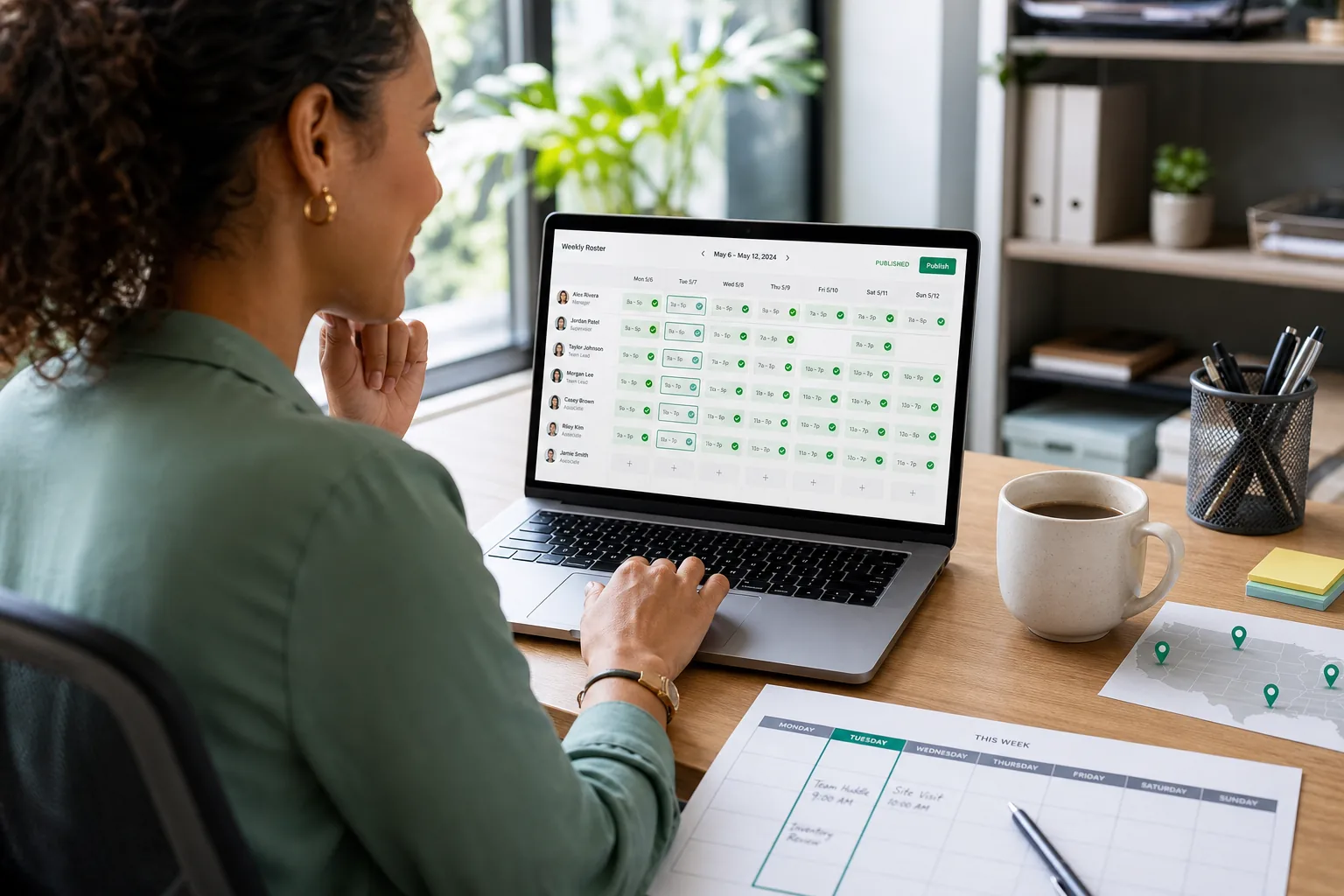
Tuesday publish locks the week; Wednesday proves every site is actually running it. A short roster integrity check stops side edits and ghost swaps before Thursday pressure forks the grid again.
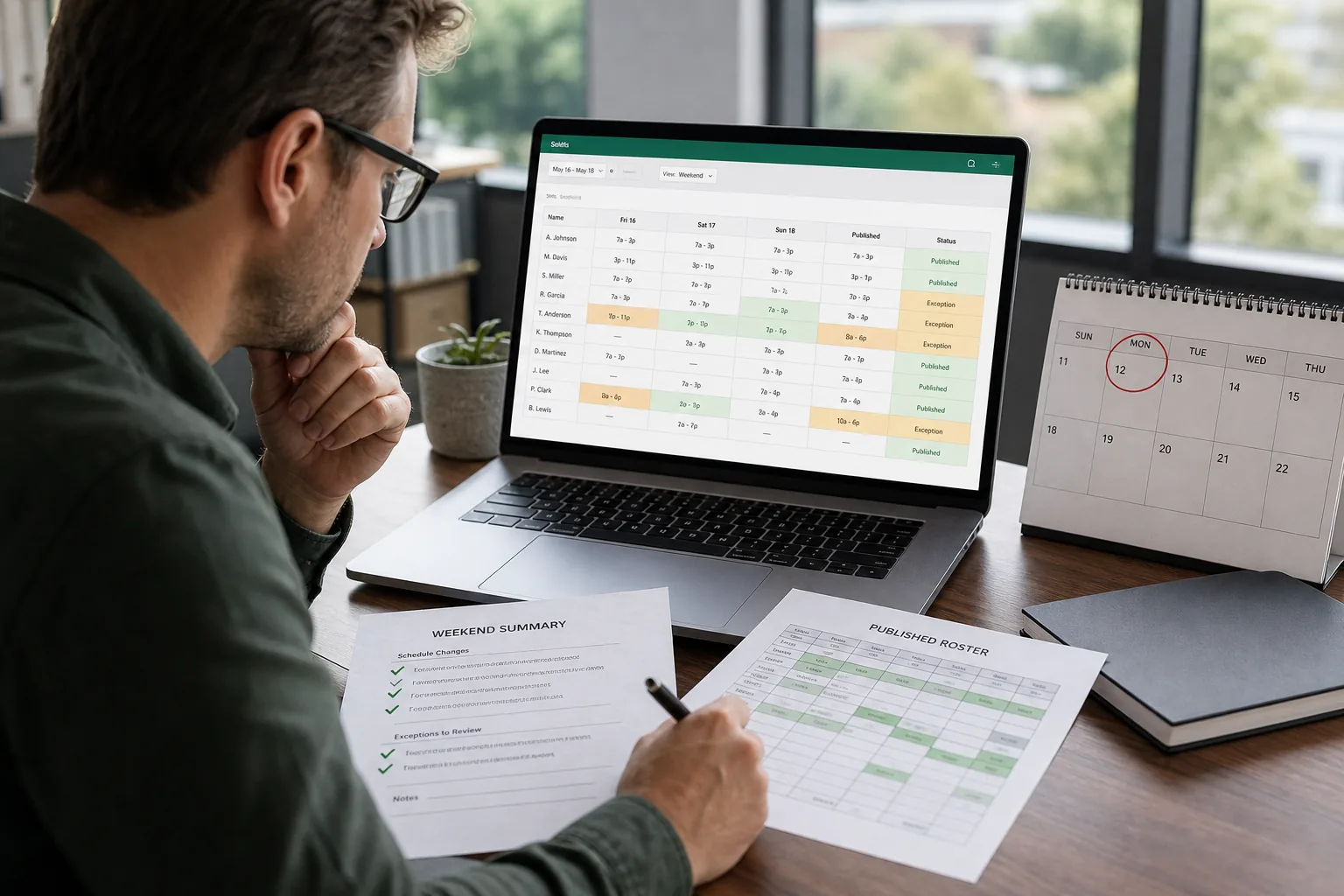
Monday cleanup only helps if Tuesday locks the week. A short publish checkpoint keeps multi-site teams from drifting back into side edits and conflicting rosters by Wednesday.
Callouts and swaps stack up fast. By Monday you need one answer: what staff worked from and what payroll should match.
Early-stage teams leak money in quiet places: manager hours lost to schedule churn, overtime that could have been prevented, and tools that never became the single roster everyone trusts. Here is a practical cost lens on scheduling for startups.
Last-minute coverage does not have to mean shadow spreadsheets and conflicting screenshots. Here is how operators run open shifts and swap approvals so mobile crews still trust what was published.
USA operators run multi-location shifts in chat threads and spreadsheets until payroll argues back. Heyshift keeps locations, areas, labor context, and attendance beside the same published grid.
Peak Fridays and Saturdays are where fragile schedules snap first. Here is how operators keep surge weekends staffed without rewriting the whole roster, or splitting reality across spreadsheets again.
Coverage plans rarely survive contact with real demand. Here is how multi-site teams rebalance shifts mid-week while keeping one official publish, clear approvals, and finance-week labor context beside the grid.