How to prevent overtime before payroll
Overtime can become one of the largest quiet leaks in your labor budget. Many managers only see the damage after payroll runs, when hours are already locked and margin is already thinner.
A few extra hours per person does not look dramatic on one shift. Across a team, a weekend, or multiple locations, it compounds fast.
Whether you run retail, restaurants, healthcare, warehouses, cleaning routes, or field service, preventing overtime before payroll is how you protect profitability without guessing.
Most excessive overtime is not inevitable. It is a visibility problem: hours spread across swaps, call-offs, and side edits that nobody totals until export day.
This guide covers why overtime is expensive, what causes it, and seven ways to prevent overtime before payroll closes.
Pair scheduling discipline with attendance management software so worked hours stay tied to the published week. Healthcare operators should also read healthcare overtime management for clinical OT KPIs and alerts. Also see Monday roster reconciliation for weekly discipline, reduce employee no-shows when coverage scrambles drive OT, and startup operational cost scheduling for the broader cost picture.
Why overtime is so expensive
Labor is often the largest operating expense for small businesses. When hourly staff exceed standard thresholds, you may owe overtime wages on top of regular rates.
| Direct cost |
What shows up on the P&L |
| Premium pay |
OT rate on hours you did not budget |
| Margin compression |
Same revenue, higher labor % |
| Budget drift |
Weekly targets missed before anyone adjusts |
Teams with dozens of employees across sites feel this faster because small overages repeat in parallel.
Common causes of overtime
Employee no-shows and call-offs
When someone misses a shift, managers ask others to stay late or pick up an extra block. Emergency coverage is often the fastest fix and the most expensive one.
Poor scheduling without hour totals
Grids built shift-by-shift without a weekly hour view accidentally stack hours on the same people. Nobody notices until payroll.
Last-minute staffing gaps
Open shifts filled reactively tend to land on whoever is available, not whoever has room under the threshold.
Multiple locations without shared visibility
Site A schedules someone to 38 hours. Site B adds a cover shift without seeing the running total.
Seasonal demand without a labor plan
Busy weekends and holiday peaks need templates and buffers, not heroic closes every Saturday.
The hidden cost of overtime
Overtime is not only premium wages.
| Hidden cost |
Why it matters |
| Burnout |
Chronic long weeks reduce quality and safety |
| Turnover |
Replacing trained staff costs more than one OT shift |
| Productivity |
Fatigue shows up as errors and slower service |
| Scheduling rework |
Managers firefight instead of planning |
| Payroll complexity |
Corrections and disputes after close |
Consistent overtime hurts morale and margin at the same time.
Seven ways to prevent overtime before payroll
1. Monitor scheduled hours weekly
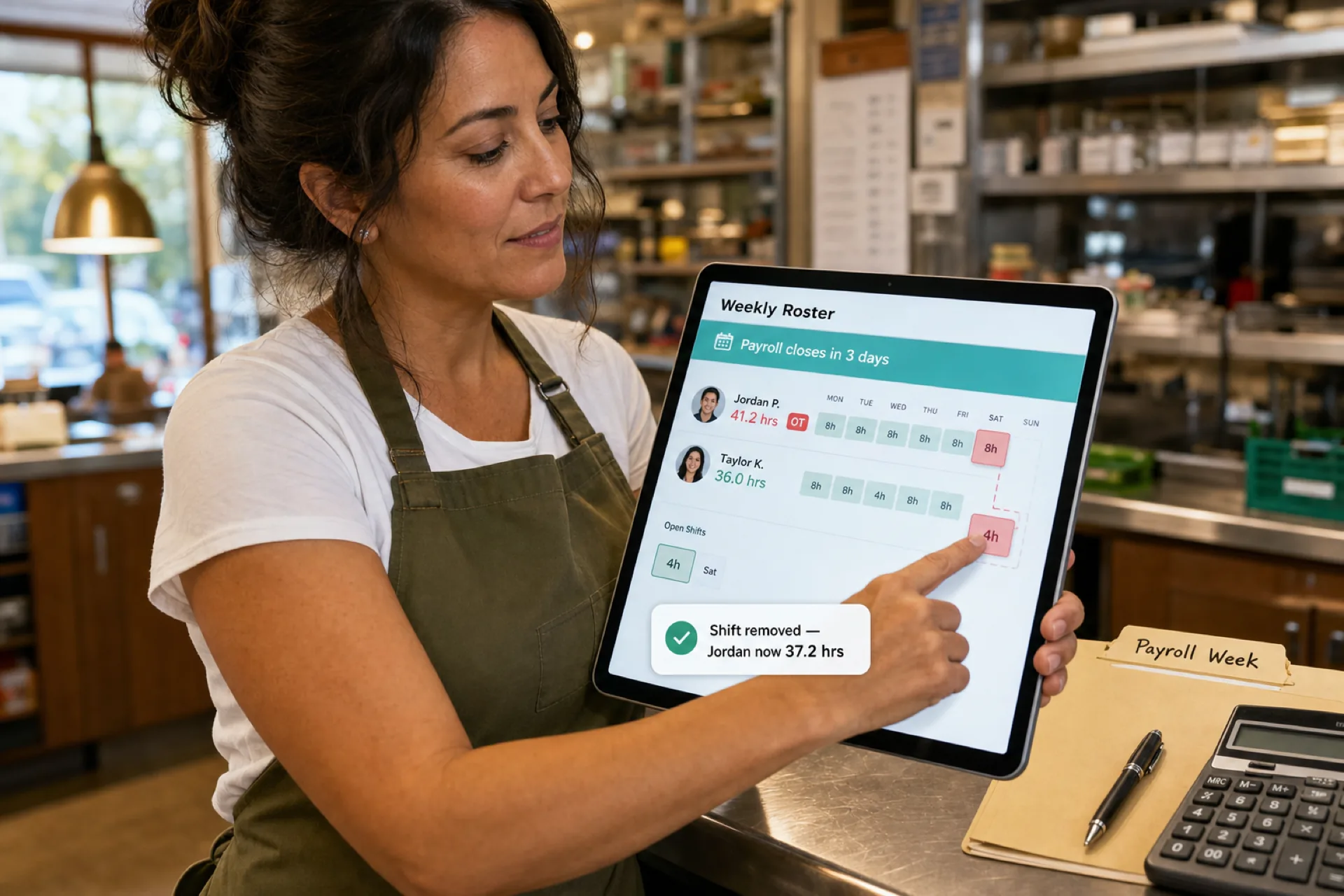
Do not wait for payroll export. Review scheduled hours before you publish the week and again mid-week after swaps.
Look for:
- Employees within a few hours of your OT threshold
- Back-to-back closes on the same person
- Open shifts likely to land on already-heavy weeks
Build this into Monday roster reconciliation so OT creep is a standard line item, not a surprise.
2. Build schedules around labor budgets
Scheduling should reflect expected demand and a labor budget, not only coverage minimums.
Balance:
- Required staffing for service levels
- Revenue or traffic expectations for the week
- Hour caps per person before publish
If finance gives you a labor % target, translate it into hours you can assign before the week starts.
3. Use real-time workforce visibility
Managers need one place to see:
- Scheduled hours by employee and location
- Open shifts and pending approvals
- Coverage gaps that might trigger emergency OT
Real-time visibility means adjustments happen on Tuesday, not Friday after the fact.
4. Cross-train for flexibility without defaulting to OT
Cross-trained staff let you move people into open roles instead of extending the same closer every night.
Flexibility is not unlimited hours on your most reliable people. It is options on the roster when a gap appears.
5. Reduce employee no-shows
Attendance problems create overtime opportunities. Fewer preventable no-shows means fewer panic extensions.
Fix visibility and reminders first; OT often falls without heavier enforcement.
6. Manage shift swaps with hour checks
Uncontrolled swaps can push someone over the threshold accidentally.
Before approving a swap, confirm:
- Both employees' weekly totals after the change
- Premium windows (weekends, holidays) your policy flags
- Pending open shifts that might stack on the same person
See open shift and swap approvals on the published roster for a repeatable approval habit.
7. Use workforce scheduling software
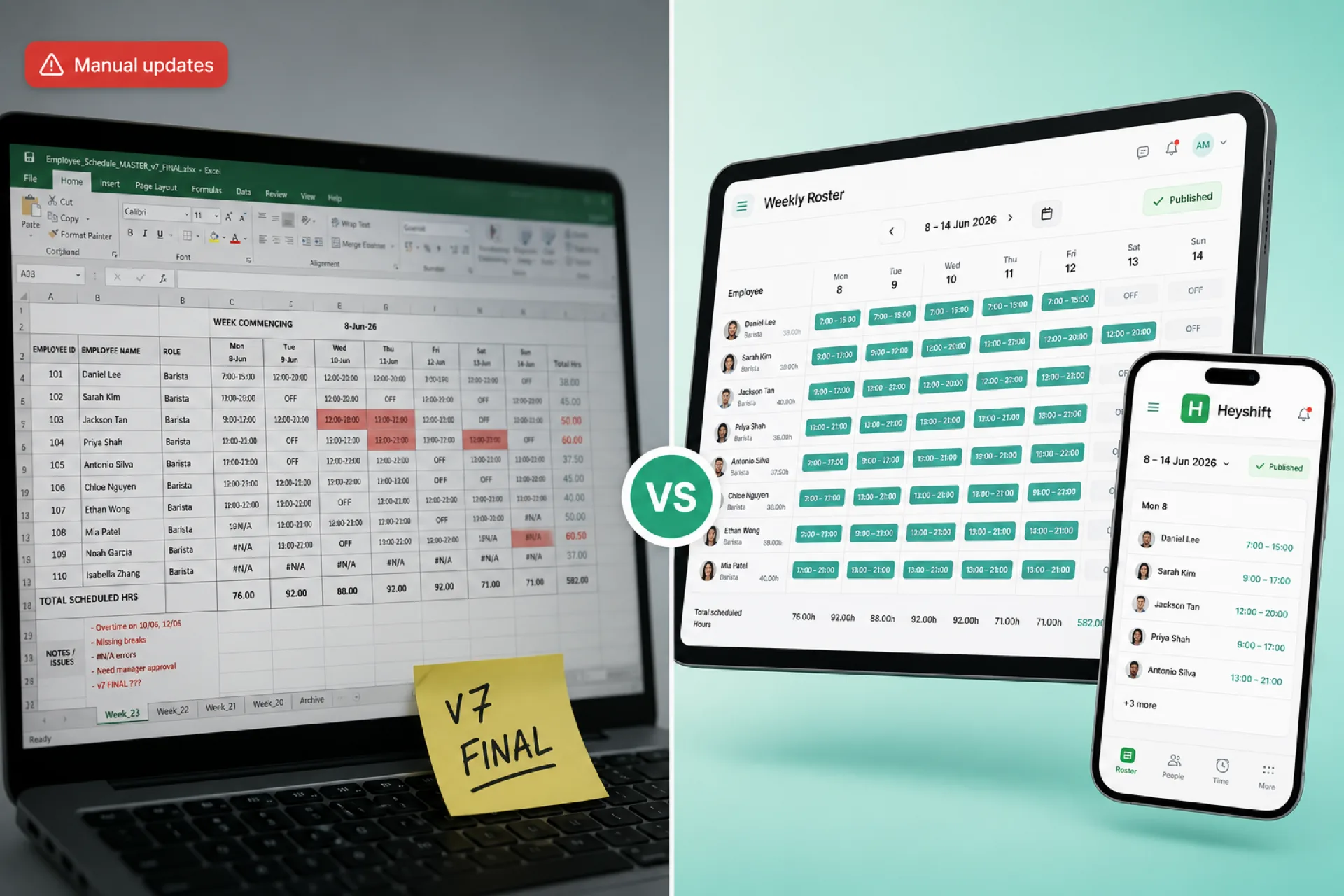
Workforce scheduling software should show hour totals and OT risk while you are still editing the week, not only in payroll.
Look for:
- Scheduled hours vs threshold alerts
- Labor budget or hour caps by location
- Swap approval with hour impact visible
- Multi-site totals on one employee record