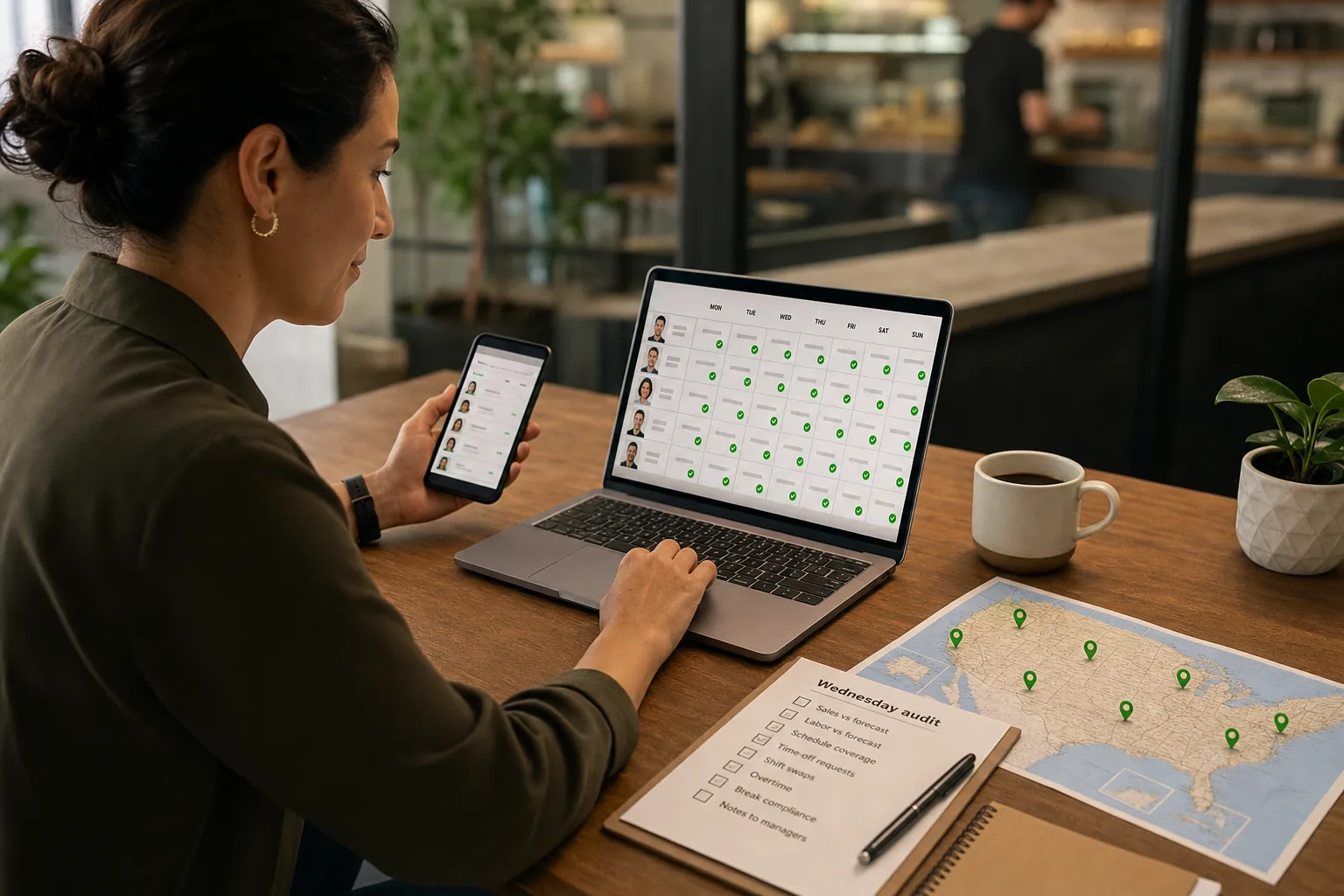
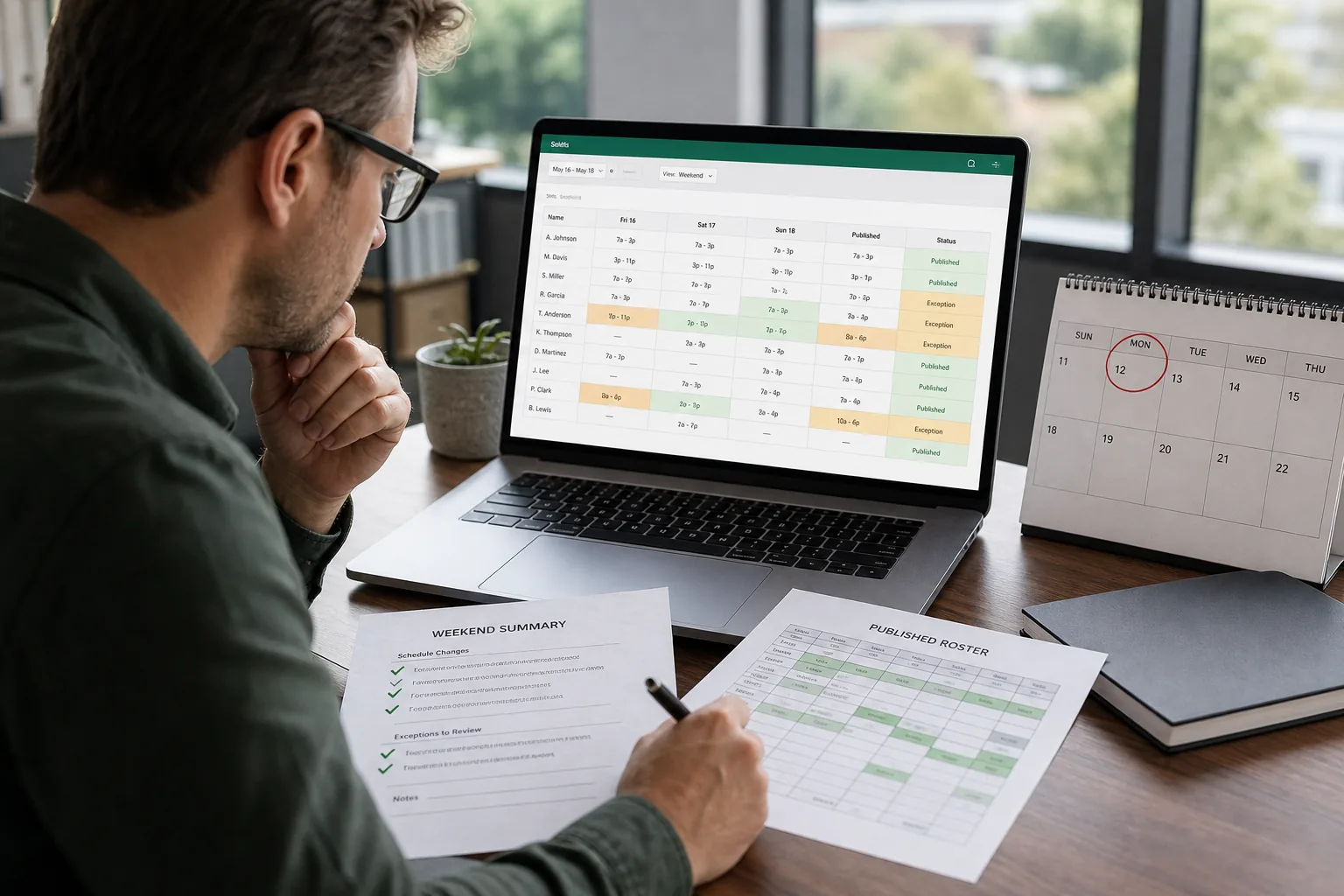
Three questions every site lead should answer
Before lunch on Tuesday, each location or area lead should answer without opening a side spreadsheet:
- What is published through Sunday? Not “mostly updated,” but what hourly staff see on mobile right now.
- What changed since Monday reconciliation? Callouts, swaps, training removals, added shifts. Each should tie to an approval when your policy requires it.
- What still depends on a text or a side sheet? If the answer is not “nothing,” that item is debt you will pay again at payroll.
If leads cannot answer in plain language, the checkpoint is not done.
What belongs in the checkpoint (and what does not)
Include:
- Fixes you accepted during Monday reconciliation.
- Mid-week demand tweaks you already know about (weather, promo, school break).
- Open shifts you intend to post, with clear claim and escalation rules.
- Coverage you are deliberately leaving thin, with a named owner if it breaks.
Exclude:
- “We will figure out Friday later.”
- Swaps agreed verbally but not on the roster.
- Copying last week’s grid because it is faster than publishing this week’s truth.
The goal is not a perfect forecast. The goal is one official week everyone can cite when labor, compliance, or a crew member asks what is real.
A fifteen minute rhythm that scales
You do not need identical templates in every city. You do need the same verbs everywhere:
| Step |
Owner |
Outcome |
| Confirm baseline |
Site or area lead |
Published roster through Sunday is current on mobile |
| List exceptions |
Same |
Every change since Monday has status: approved, open, or escalated |
| Publish and notify |
Same |
Grid matches what staff should work from tonight |
| Roll up gaps |
Regional or ops |
Unresolved items older than 24 hours have a named next step |
Fifteen minutes per site is enough when Monday reconciliation already happened. Without Monday cleanup, Tuesday becomes damage control and the checkpoint takes longer.
Multi-site: same rhythm, different ratios
Austin, Denver, and Portland will not run identical floors. They can still report the same checkpoint signals:
- Sites that published on time.
- Sites with unresolved exceptions older than twenty-four hours.
- Sites repeating the same gap (lunch-to-dinner handoff, bar vs dining, closers).
Regional leads do not need to re-edit every grid. They need a short rollup that shows where the week is still forked. Patterns beat anecdotes when you are past a handful of locations.
Standard language helps:
- Same labels for areas or stations when swaps reference coverage.
- Same escalation path when nobody picks up an open shift by cutoff.
- Same expectation for audit: who approved, when, and against which published version.
Tie Tuesday to mid-week changes without reopening chaos
Tuesday is also when forecasts start to diverge from reality. That is normal. The mistake is treating reforecast as a reason to fork the roster.
When sales or attendance shift:
- Adjust inside publish, not in a parallel board.
- Route swaps through the same approvals path you use the rest of the week.
- Keep finance-week labor context beside coverage if your team uses it, so adjustments are visible before payroll export.
Mid-week change works when Tuesday gave you a clean starting line. If your team already published a truthful week, managers can rebalance shifts without inventing shadow schedules. Follow with a Wednesday roster integrity check so quiet edits do not fork the official week before payroll.
Operational checklist you can reuse every Tuesday
- Pull the published roster from Monday reconciliation forward through Sunday.
- Close or escalate every item that still lives only in chat.
- Post opens with claim rules; do not rely on “who can cover?” threads for tracked roles.
- Skim pending versus approved swaps before the lunch rush, not after payroll asks.
- Send a one-line rollup to ops: green sites, yellow sites, red sites.
Small habits compound into fewer disputes about which version of the week was official.
How this fits publish-first scheduling
Publish-first does not mean “no changes after Tuesday.” It means changes flow through visibility:
- Managers see pending work next to the live grid.
- Employees stop debating whether a PDF or the app is current.
- Leadership spots repeat gaps instead of firefighting case by case.
Heyshift is built for USA teams that need that loop across locations: shift scheduling, manager approvals, and mobile visibility so crews align on what actually shipped. For product context, see employee scheduling software for USA hourly teams.
Monday reconciliation closes the weekend. Tuesday publish locks the week. If your team can describe the official roster through Sunday without screenshots, you have bought calm for the back half of the week. If not, fix that before Thursday makes the gap expensive. Start a Start 30-day free trial with your real sites and roles to run the Mon–Tue rhythm on one published calendar.