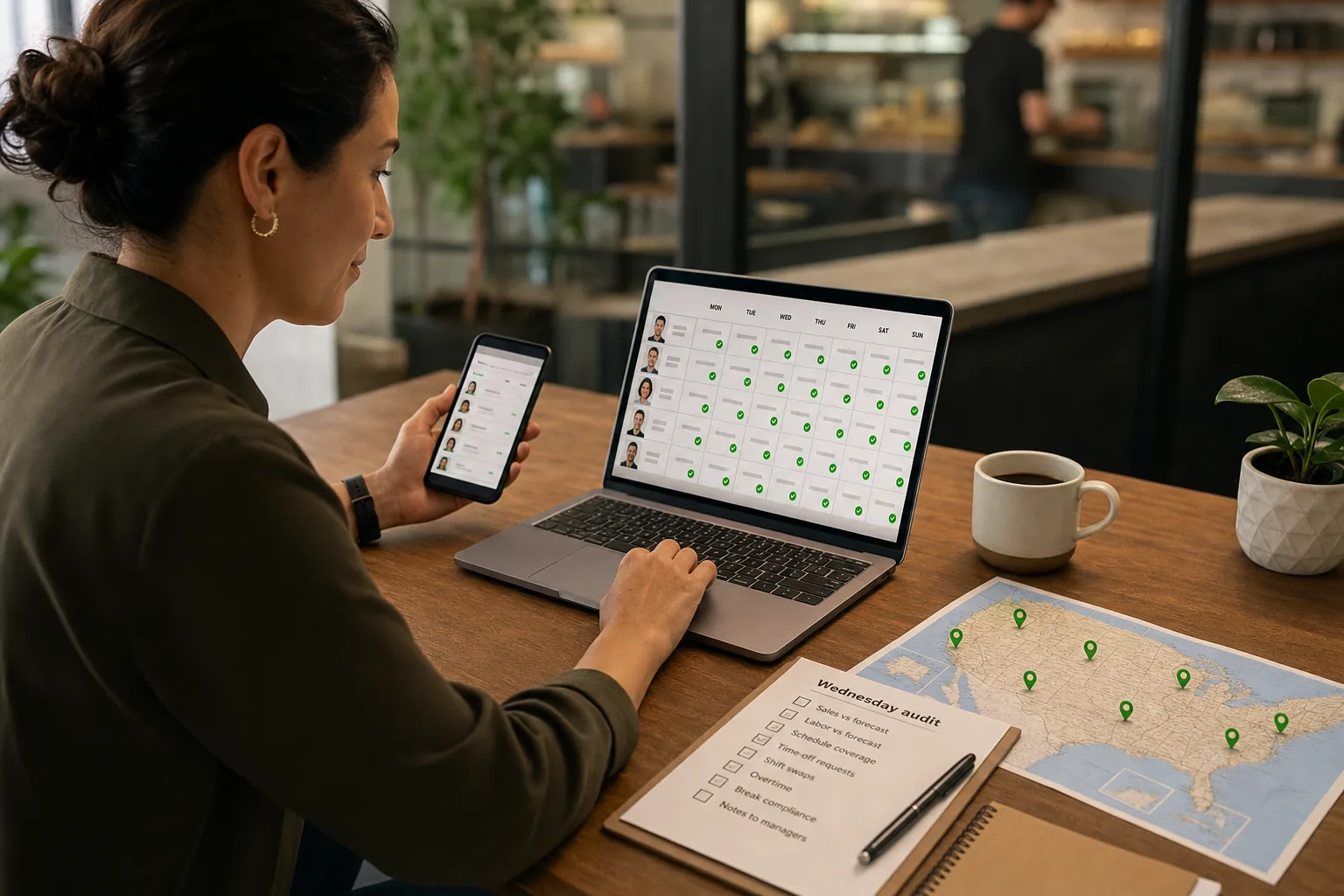
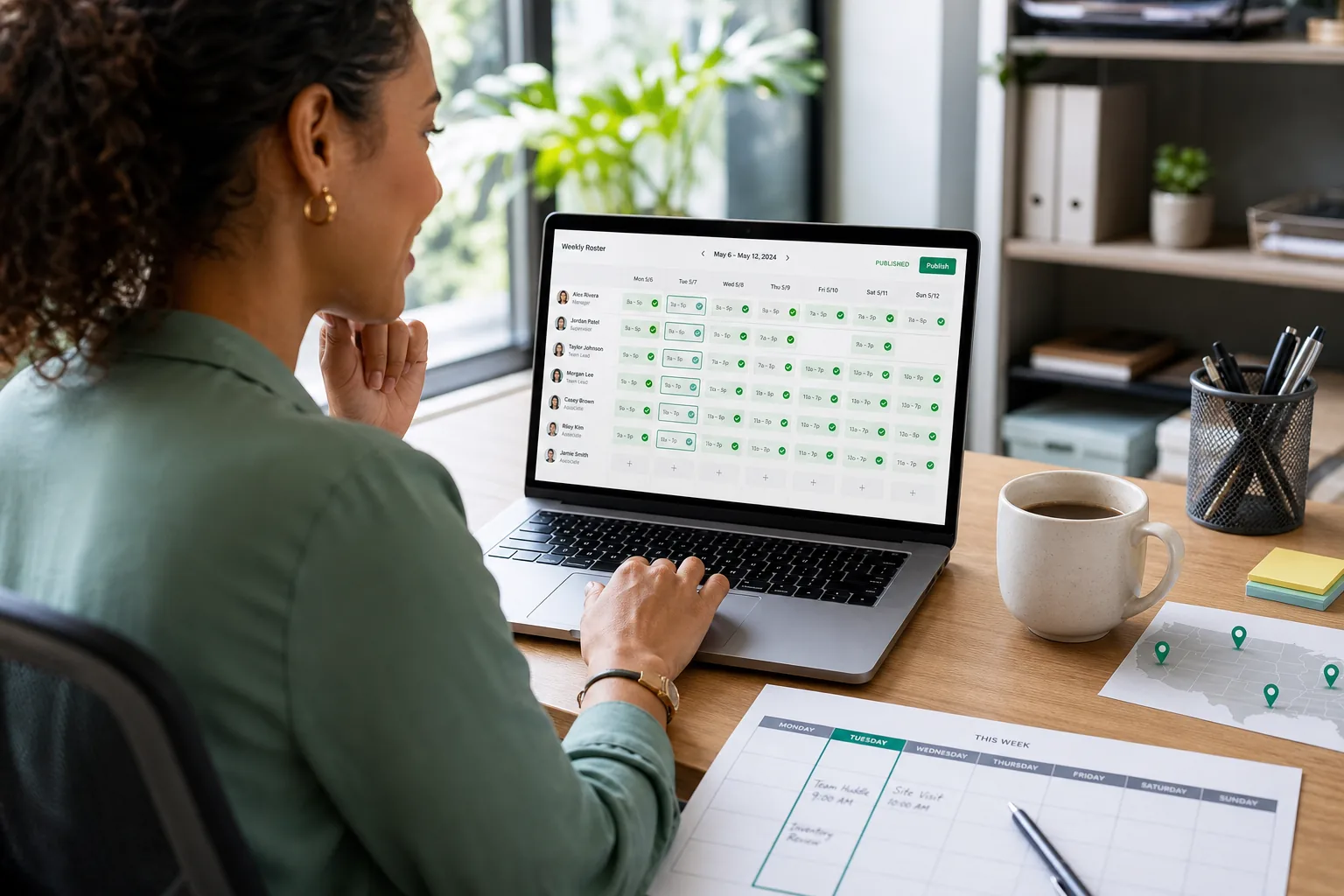
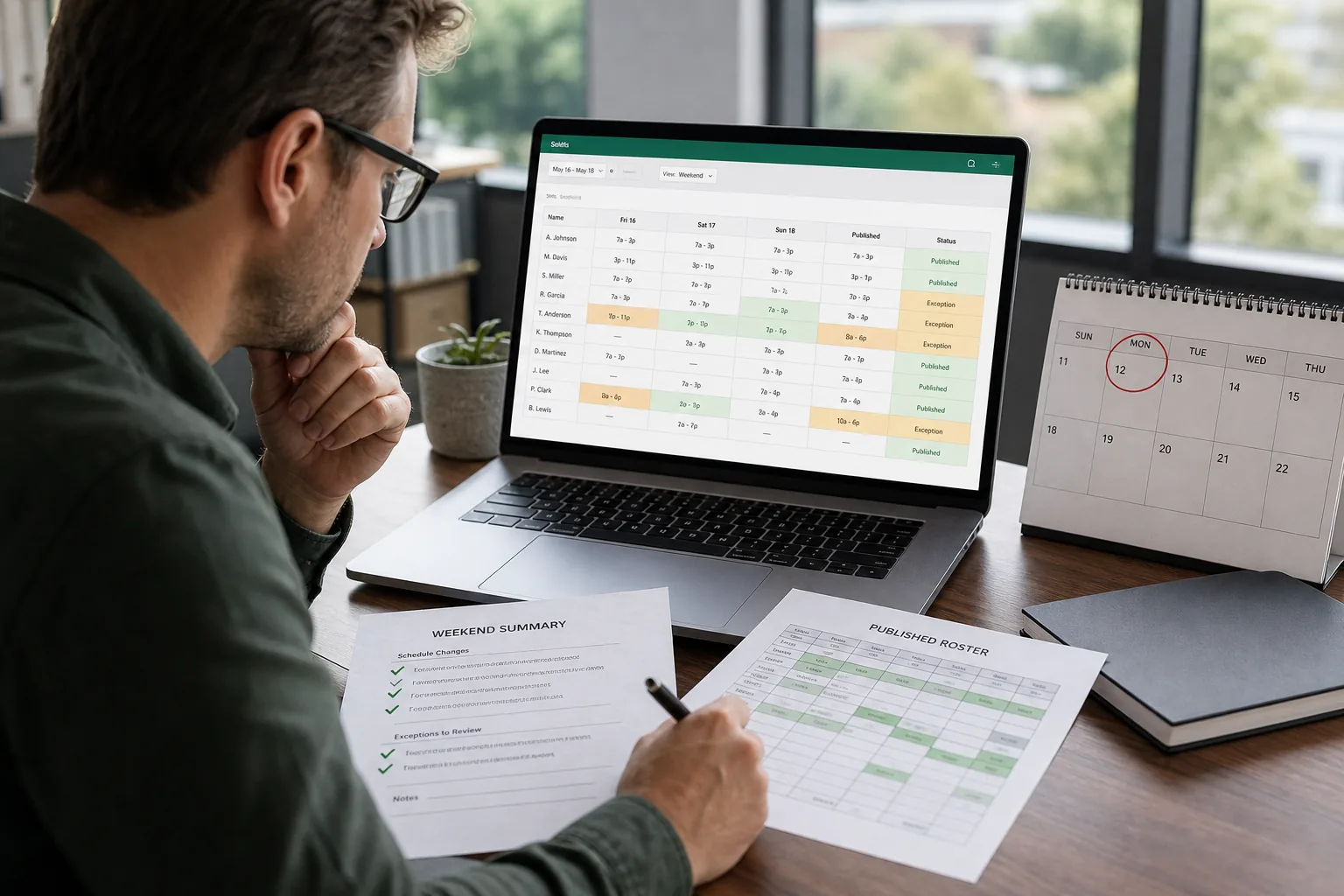
What a fifteen-minute integrity check includes
You are not rebuilding the week. You are spot-checking publish discipline before Thursday and Friday compress decision time.
Include:
- Compare published roster through Sunday against what area leads say crews are working tonight.
- List pending swaps older than twenty-four hours; escalate or cancel, do not let them age in limbo.
- Confirm open shifts posted Tuesday actually appear on mobile with the same claim rules.
- Note deliberate thin coverage (named owner if it breaks).
Exclude:
- Full reforecast because sales moved two points. That belongs in publish, not a shadow board.
- “We will publish after the rush” for changes already communicated verbally.
- Site-specific vocabulary that finance cannot map on export.
Fifteen minutes per location is enough when Monday and Tuesday habits are in place. Without them, Wednesday becomes damage control and the check takes an hour.
Signals that integrity is slipping
You do not need perfect data to see drift. Watch for repeat patterns:
| Signal |
What it usually means |
| Crew asks “which schedule is real?” |
Publish and mobile forked |
| Payroll chases screenshots |
Approvals not on the official roster |
| Same handoff gap three Wednesdays in a row |
Template issue, not a one-off callout |
| Regional lead learns about swaps from texts |
Publish checkpoint skipped or bypassed |
| OT surprises mid-week |
Extensions logged socially, not in publish |
Patterns beat anecdotes when you are past a handful of USA multi-location sites. Roll those signals up the same way every Wednesday so ops sees yellow and red sites, not a inbox of exceptions.
Multi-site: same audit, different floors
Austin, Denver, and Portland will not run identical ratios. They can still report the same integrity outcomes:
- Sites where published roster matches mobile (green).
- Sites with unresolved exceptions older than twenty-four hours (yellow).
- Sites with repeat gaps or forked edits (red).
Regional leads should not re-edit every grid on Wednesday. They need a short rollup: who is aligned on the published schedule, who is not, and what blocks publish before Thursday.
Standard language still matters:
- Same labels for areas or stations when swaps reference coverage.
- Same escalation when open shifts sit unclaimed past cutoff.
- Same expectation for audit: who approved, when, and against which published version.
That is how shift schedule audit habits scale without turning Wednesday into a second Tuesday workshop.
Tie Wednesday to mid-week changes without reopening chaos
Sales and attendance will diverge from plan. That is normal after Tuesday publish.
The mistake is treating mid-week adjustment as a reason to fork the roster. When demand shifts:
- Rebalance inside publish, not in a parallel spreadsheet.
- Route swaps through the same approvals path you use the rest of the week.
- Keep finance-week labor context beside coverage if your team uses it, so changes stay visible before export.
If you already ran mid-week schedule changes when labor forecasts slip, Wednesday is the guardrail: prove the official week is still one story before you change it again.
Operational checklist you can reuse every Wednesday
- Pull the published roster from Tuesday forward through Sunday.
- Spot-check mobile on one high-traffic role per site (closer, opener, bar lead).
- Close or escalate every item that still lives only in chat.
- Skim pending versus approved swaps before the dinner rush.
- Compare site rollups: green / yellow / red, with named owners on red items.
- Send one line to ops: “Integrity held” or “These sites forked before Thursday.”
Small habits compound into fewer disputes about which version of the week was official when payroll closes the period.
How this fits publish-first scheduling
Publish-first scheduling does not mean “no changes after Wednesday.” It means changes flow through visibility:
- Managers see pending work next to the live grid.
- Employees stop debating whether a PDF or the app is current.
- Leadership spots schedule drift mid-week instead of firefighting case by case.
Heyshift is built for USA teams that need that loop across locations: shift scheduling, mobile app visibility, and manager approvals so crews align on what actually shipped.
Monday reconciliation closes the weekend. Tuesday publish locks the week. Wednesday roster integrity check proves every site is still running that published schedule before Thursday makes the gap expensive.
If your team can describe the official roster through Sunday without screenshots, and every site lead agrees, you have bought calm for the back half of the week. If not, fix integrity before the weekend surge rewrites the story again.
Start 30-day free trial →