

Summary
Workforce management software is a platform that combines employee scheduling, time and attendance tracking, labor forecasting, and compliance management into one system. It helps businesses with hourly workers plan who works when, track whether they showed up, control labor costs against revenue, and stay compliant with labor laws, all without juggling separate tools for each task. Workforce management software also gives managers a single view of multiple business locations, helping operators coordinate schedules, attendance, and labor costs from one dashboard. For USA businesses with multiple locations and shift-based teams, WFM software replaces the patchwork of spreadsheets, time clocks, and manual processes that break down as teams grow.
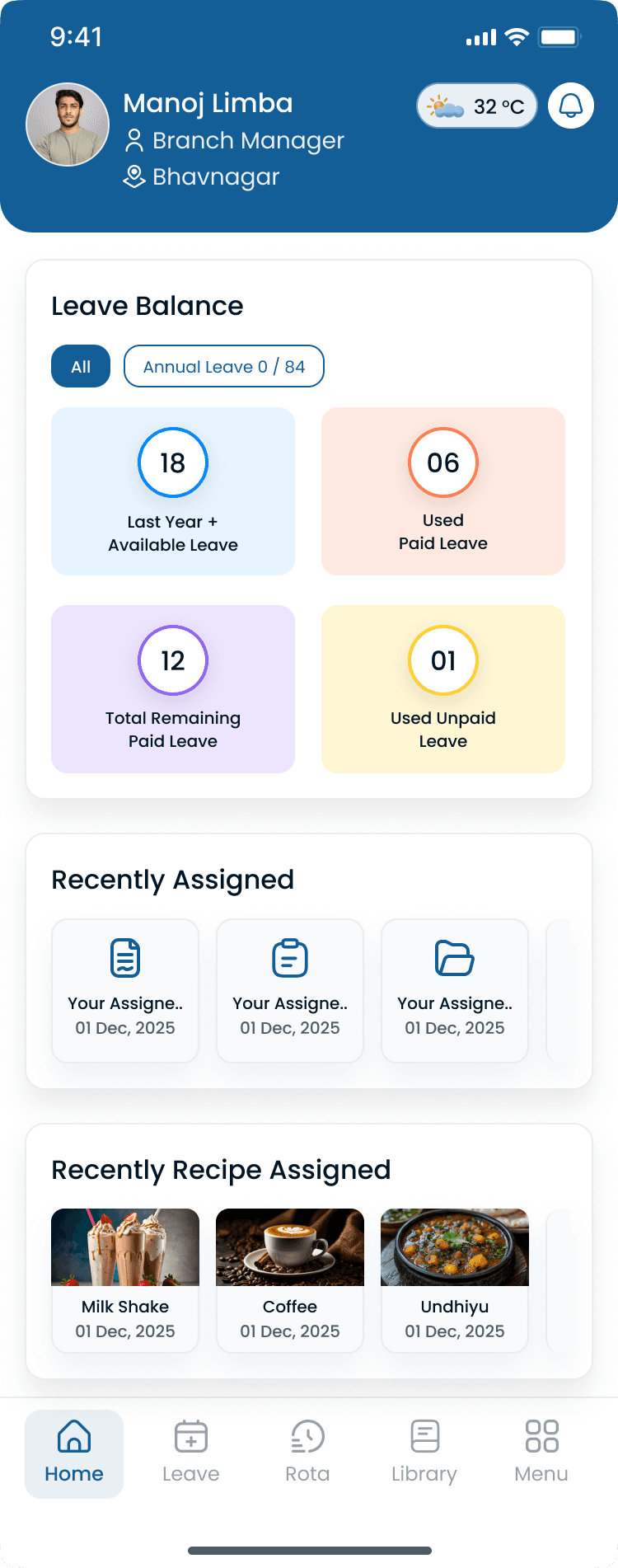
Step-by-step
What Does Workforce Management Software Actually Do?
Workforce management software sits at the center of how businesses manage their hourly workforce. It connects five core functions that are usually handled separately.
Shift scheduling
Build shift schedules, assign employees, publish to the team, and handle swaps and changes. See shift scheduling as the foundation every WFM platform builds on.
Time and attendance
Track clock-ins, clock-outs, breaks, tardiness, and no-shows in real time with attendance tracking tied to the published roster.
Labor forecasting
Predict how many staff you need based on historical demand, seasonality, and events, not gut feeling alone.
Compliance
Monitor overtime limits, break requirements, predictive scheduling laws, and minor labor rules automatically with labor compliance tools.
Labor cost control
See labor spend as a percentage of revenue before publishing schedules, not after payroll runs, using cost and labor insights.
“Workforce management is not a bigger scheduling tool. It is the layer that connects who you planned to work with who actually worked and what that cost you before payroll runs.”
Features
Core Components of Workforce Management Software
Feature lists get long fast. These are the components that change the week for operators running hourly teams at scale.
| Feature | Why it matters |
|---|---|
| Employee scheduling | Build weekly or monthly schedules using templates, drag-and-drop interfaces, or auto-scheduling. Publish via [mobile app](/features/mobile-app) with push notifications. Handle shift swaps, open shifts, and last-minute changes without phone calls. |
| Time and attendance tracking | Record when employees actually work versus when they were scheduled. Mobile clock-in, GPS-verified check-in, kiosk punch, or biometric scan with real-time dashboards showing who is on-site now. |
| Leave management | Track time-off requests, approve or deny based on coverage needs, and adjust schedules when [leave](/features/meal-rest-break-leave-management) is approved. See remaining PTO balances and upcoming absences that affect staffing. |
| Labor demand forecasting | Predict staffing needs from historical patterns, seasonal trends, and special events. Recommend how many people you need per shift with budget-aware suggestions tied to revenue or traffic. |
| Compliance management | Track federal and state overtime rules, mandatory breaks, predictive scheduling notice requirements, minor labor laws, and clopening prevention before you publish. |
| Team communication | Broadcast schedule changes, send shift reminders, and let employees message managers directly through [staff management](/features/staff-management) tools instead of scattered group texts. |
| Labor cost analysis | See labor cost as a percentage of revenue per location, cost per shift before publishing, overtime projections, and budget vs actual comparison by week. |
Why it matters
Benefits of Workforce Management Software
WFM software pays back when manager time, overtime, and compliance risk compound across locations.
| Pain point | What operators see |
|---|---|
| For managers | Save 5–8 hours per week with automated scheduling, attendance tracking, and reporting instead of spreadsheet rebuilds and payroll prep. |
| For employees | Know schedules weeks ahead, swap shifts without calling the manager, and get accurate paychecks from digital time tracking. |
| For the business | Lower labor cost ratio by staffing to demand, reduce turnover with fair scheduling, and keep audit-ready attendance and compliance records. |
| Overtime control | Real-time alerts at 35 hours prevent surprise overtime. See projected costs before publishing schedules, often 20–40% OT reduction. |
Restaurants, retail, healthcare, warehouses, manufacturing, and multi-location service businesses with 15+ hourly employees typically see payback within the first month from fewer overtime hours and less manager time on the roster.
Compare
Workforce Management Software vs Scheduling Software
This is the most common confusion. Scheduling software plans shifts. Workforce management software connects scheduling to attendance, compliance, forecasting, and labor cost in one system.
| Feature | Scheduling software | Workforce management software |
|---|---|---|
| Build and publish schedules | Yes | Yes |
| Shift swaps and open shifts | Yes | Yes |
| Mobile app for staff | Yes | Yes |
| Time and attendance tracking | Basic or none | Full, tied to schedule |
| Leave management | Basic or none | Full with coverage rules |
| Labor demand forecasting | No | Yes |
| Compliance monitoring | No | Yes |
| Labor cost analysis | Basic or none | Full, pre-publish |
| Payroll integration | Basic or none | Yes |
| Typical price | $2–6/user/mo | $4–15/user/mo |
Many platforms (including Heyshift) offer both: start with scheduling, expand to full WFM as headcount, locations, and compliance complexity grow. Under 20 employees at one site with simple schedules, scheduling software is often enough. At 20+ employees, multiple locations, or strict labor laws, full WFM pays back quickly.
Industries
Workforce Management Software by Industry
WFM platforms adapt to industry-specific scheduling rules, compliance, and labor cost targets.
| Industry | Typical scheduling challenge |
|---|---|
| Restaurants | Split shifts, tip-heavy schedules, and labor cost as a percentage of food sales across locations. See [restaurant scheduling](/restaurant-scheduling-software). |
| Healthcare | Credential-based coverage, rotating nursing teams, mandatory rest periods, and on-call rotations without patient coverage gaps. |
| Retail | Staff to peak-hour demand, control labor during slow periods, and coordinate part-time teams across departments and holiday surges. |
| Security | 24/7 guard schedules across client sites with GPS-verified clock-in and license expiry tracking for armed guards. |
| Cleaning | Mobile crews across territories with time per site for client billing and labor cost allocation. |
| Manufacturing | Rotating shifts, production schedules, overtime control, and crew coverage across facilities. [Rotating shift schedules](/answers/what-is-rotating-shift-schedule) are standard in this industry. |
Any business with 15+ hourly employees and variable schedules exceeds what spreadsheets handle reliably, especially when you operate in California, Oregon, New York City, or other predictive scheduling jurisdictions.
Product comparison
Spreadsheet vs Heyshift
If you are still using spreadsheets for scheduling and attendance, here is what you are missing once teams and locations grow.
| Feature | Spreadsheet | Heyshift |
|---|---|---|
| Scheduling | Manual scheduling | Automated with templates |
| Attendance | No attendance tracking | Real-time attendance |
| Labor costs | No labor cost visibility | Labor cost dashboard |
| Multi-location | No multi-location support | Multi-location view |
| Shift swaps | Phone calls and texts | One-tap in mobile app |
| Overtime alerts | Calculate after payroll | Real-time alerts at 35 hours |
| Compliance | Track manually | Auto-flagged violations |
| Leave tracking | Separate spreadsheet | Built-in leave management |
| Communication | Group texts | In-app team messaging |
Most businesses outgrow spreadsheets once they hit 10–15 employees or open a second location. The time spent maintaining formulas, chasing confirmations, and fixing errors costs more than the software subscription.
“The moment you add a second location, spreadsheets stop being free. They just stop charging a subscription while you pay in manager hours instead.”
Buyer's guide
How to Choose Workforce Management Software
Demo decks list dozens of features. These six checks separate tools your team will keep using from shelfware.
| # | Question | What to verify |
|---|---|---|
| 1 | Define your must-haves | List the problems you are solving today. If it is just scheduling, start there. If you are also losing money to overtime and compliance issues, you need full WFM. |
| 2 | Test with your least tech-savvy employee | The best WFM software is the one your team actually uses. If the [mobile app](/features/mobile-app) confuses your least technical employee, adoption will fail regardless of feature count. |
| 3 | Check multi-location support | With 2+ locations, ensure the platform shows all sites on one dashboard without switching accounts or paying per-location fees. |
| 4 | Verify compliance for your state | If you operate in California, Oregon, New York City, Chicago, or Philadelphia, confirm the software actively monitors those specific predictive scheduling rules. |
| 5 | Calculate total cost | Some platforms charge per user plus per location plus per feature module. For a 30-person team across 3 locations, pricing differences can be $200–500/month. Heyshift starts at $4/user/month with unlimited locations included. |
| 6 | Check payroll integration | If the WFM tool does not connect to your payroll system, you will still manually enter hours, defeating half the purpose. |
Expertise & sources
Why trust this guide
ReviewedThis guide explains workforce management software from a practical operator perspective: what it does, who needs it, and how to choose. It is written for managers running hourly teams across multiple USA locations who need to control labor costs without adding administrative complexity.
Heyshift Team
Workforce scheduling research · USA multi-location operators
Heyshift publishes scheduling and workforce management playbooks used by operators in restaurants, retail, warehouses, clinics, and manufacturing. We focus on practical workflows managers can run every week, not abstract HR theory.
Published & updated
Sources
3 external · 2 on Heyshift
| Source | Reference |
|---|---|
BLSU.S. Bureau of Labor Statistics | U.S. employment situation summary |
SHRMSHRM | Workforce management best practices |
DOLU.S. Department of Labor | Fair Labor Standards Act overview |
| Further reading on Heyshift | |
| Heyshift answers library | What is employee scheduling software? |
| Heyshift product documentation | Labor cost and scheduling features |
Frequently asked questions
Related resources
| Resource | Link |
|---|---|
| What is employee scheduling software? | Open |
| How does shift scheduling work? | Open |
| What is a rotating shift schedule? | Open |
| Shift scheduling feature | Open |
| Attendance management feature | Open |
| Leave management feature | Open |
| Mobile app feature | Open |
| Staff management feature | Open |
| Free overtime risk calculator | Open |
| Prevent overtime before payroll | Open |
Start free with Heyshift
Manage employee schedules, attendance, leave requests, shift swaps, and labor costs across every location from one dashboard. Start free with Heyshift and publish your first schedule in minutes.
No credit card required