Weekends fail in predictable ways
For USA operators with multiple locations, weekend failures rarely begin as mysterious demand shocks. They begin as repeatable patterns:
- Not enough coverage at handoff windows when lunch rolls into dinner.
- Floors that looked fine on paper until callouts stacked against each other.
- A manager who saved service with heroic edits, then nobody could explain what was actually published.
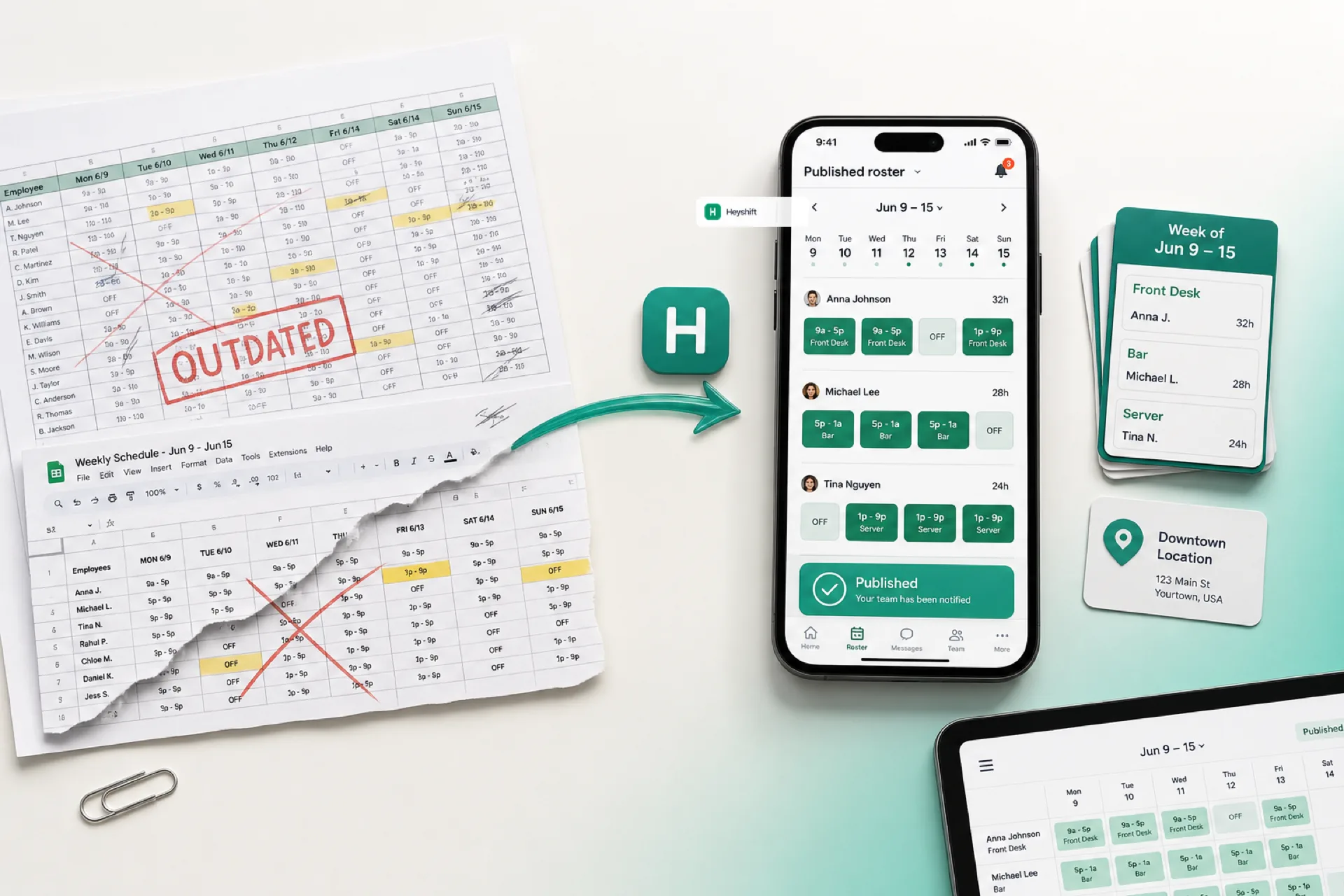
Spreadsheets tolerate chaos until payroll asks what happened to overtime. Scheduling software earns trust when surge weekends stay traceable: templates that reflect reality, buffers that absorb variance, and publish discipline that survives Saturday night adrenaline.
Build surge templates from real floor geometry
Templates should mirror how each site actually runs, not a generic “peak shift block.”
Start by naming the repeating surge shapes:
- Entry + greeting pressure when lines form early.
- Bar vs dining splits when drink volume spikes separately from tables.
- Expeditor / runner moments when kitchen throughput becomes the bottleneck.
- Closing cadence when fewer bodies create outsized risk.
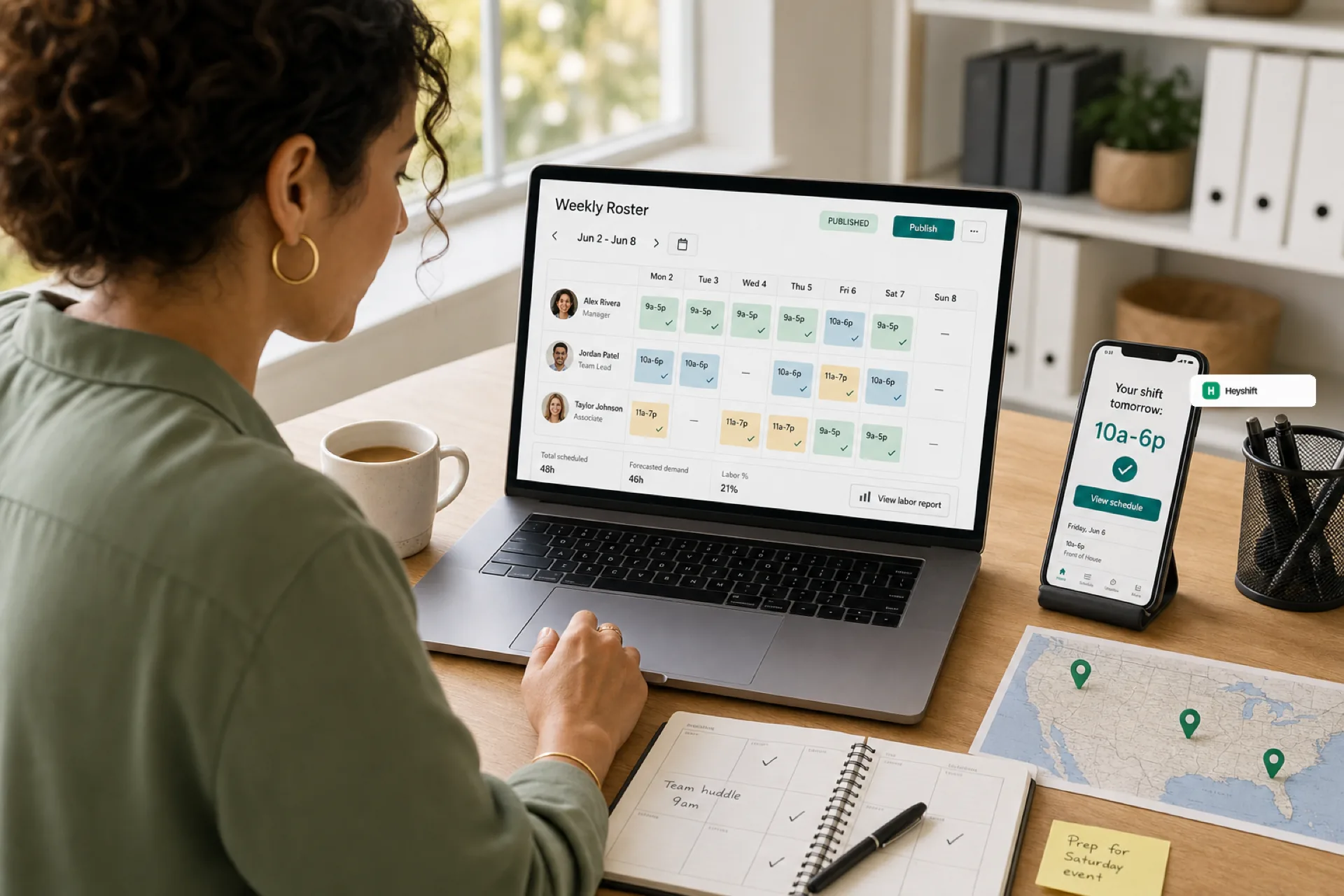
Then encode those shapes as reusable patterns per location and area, because “River North Saturday” is rarely identical to “Airport-adjacent Saturday.” Build templates in shift scheduling and plan against people and availability before you publish surge weekends.
Heyshift’s locations-and-areas model keeps templates honest: managers copy structure without pretending every floor behaves the same.
Add buffers where variance shows up first
Buffers are not laziness, they are risk pricing.
Operators often under-buffer roles that feel expensive until they realize the alternative is managers covering stations, staff fatigue, or compliance-adjacent stretches nobody planned.
Practical weekend buffers usually land in three buckets:
- Coverage overlap at transitions (not every minute needs peak staffing, but transitions do).
- Trainee-adjacent coverage when newer hires still slow service during rush.
- Recovery staffing for Sunday brunch after a brutal Saturday, often overlooked until Monday attendance tells the story.
Buffers should be visible on the grid before publish, not improvised after open shifts explode.
Keep open shifts loud during surge weeks
When weekends slip, teams quietly invent shifts to survive the rush.
That might fix tonight, and create payroll mysteries tomorrow.
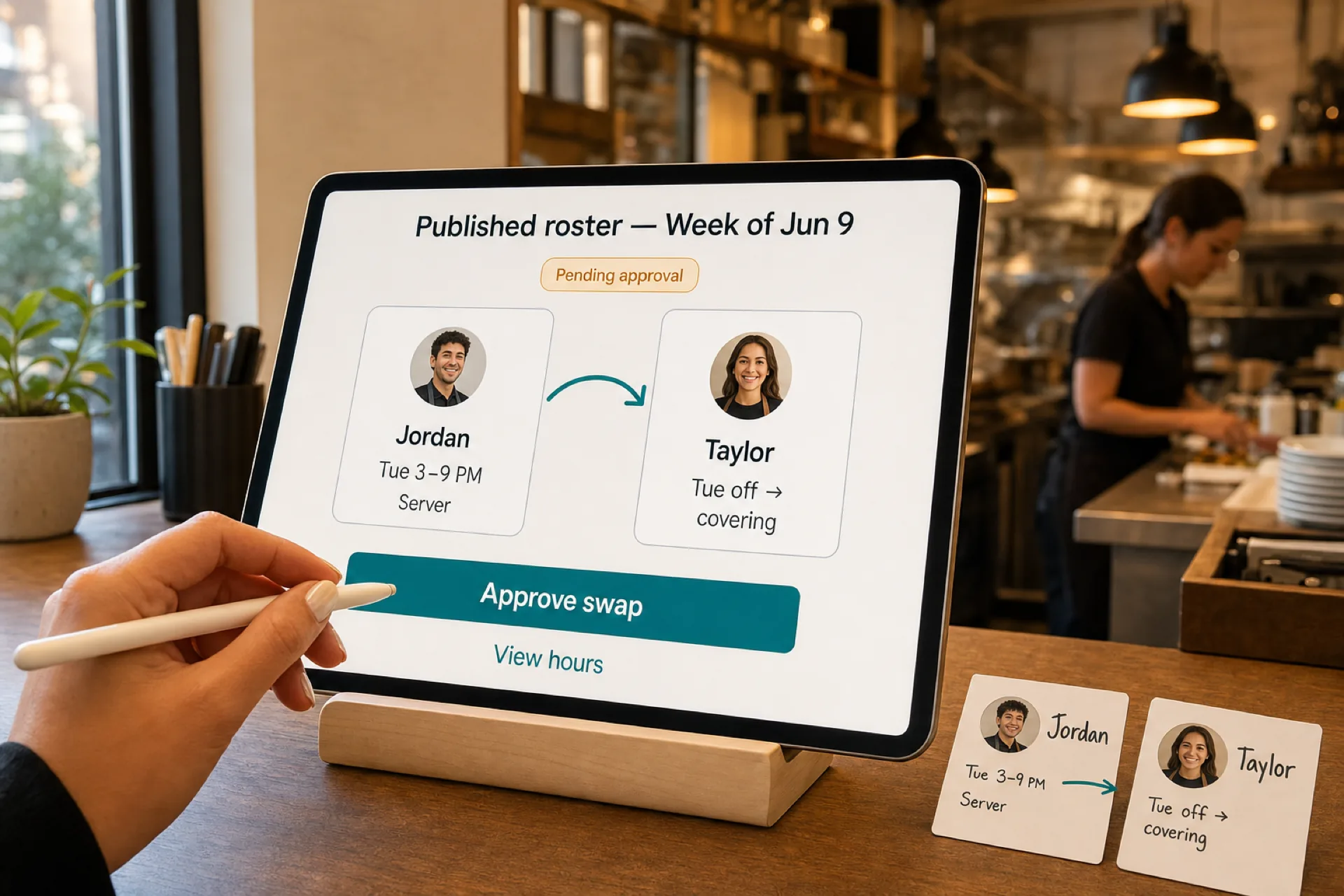
Publish-first scheduling works better when open shifts stay visible with clear ownership rules:
- Who can claim first?
- Which swaps require approval?
- Which roles cannot be filled without a manager sign-off?
If surge weekends route extra coverage through the same approvals path as the rest of the week, operators reduce “quiet fixes” that never reconcile. See open shift and swap approvals on the published roster for the full playbook.