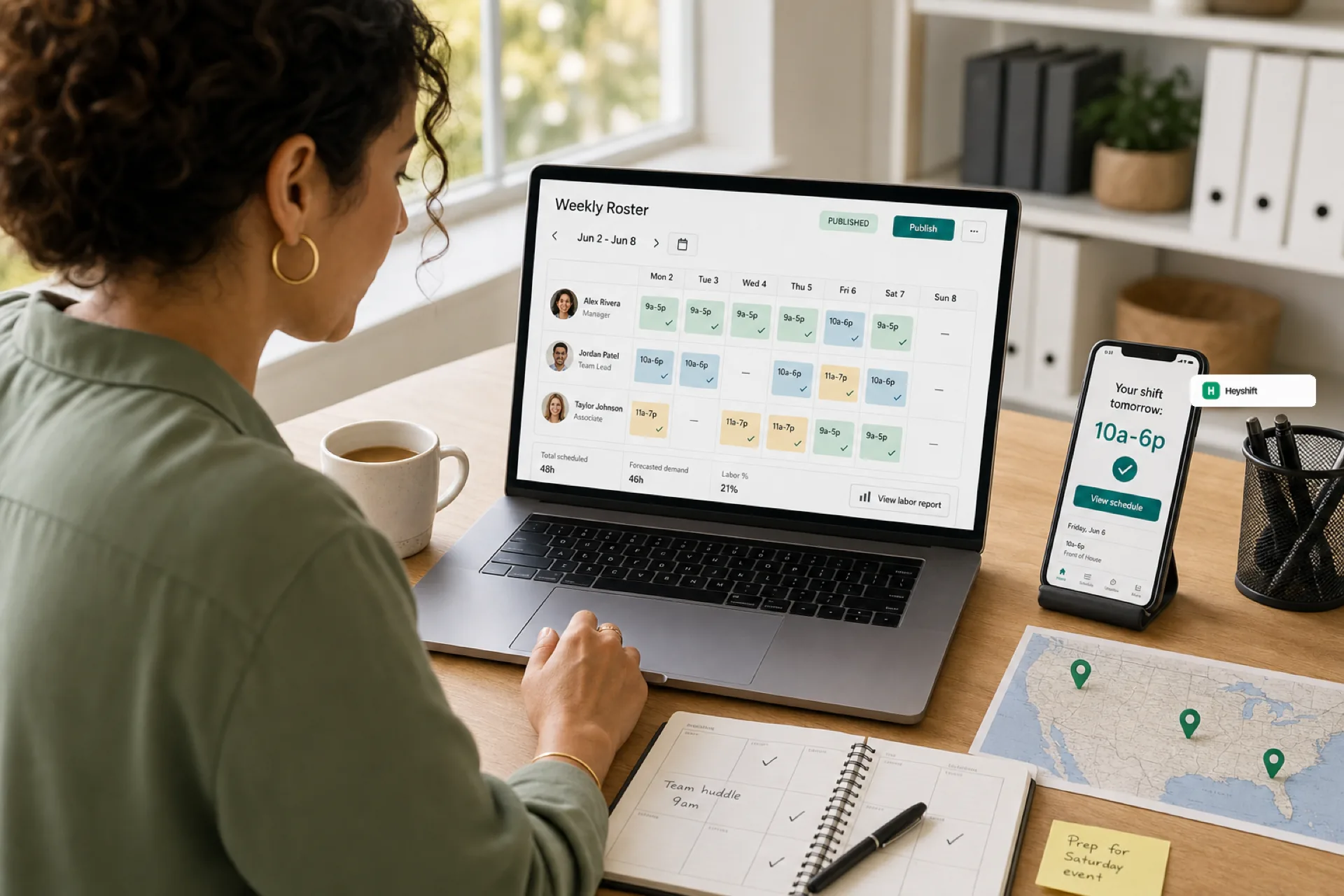
What managers and owners need on mobile
Managers and owners also need mobile access, but their job is different from staff visibility. They need control.
| Role |
Mobile need |
| Manager |
Approve swaps, review open shifts, check current coverage, and respond to callouts |
| Owner |
See whether the week is published, whether coverage is thin, and whether teams are following the plan |
| Area lead |
Switch between sites and understand which location needs attention |
| Back-office operator |
Review what happened without asking every site for screenshots |
This is why pricing language matters. A small business should understand the difference between paid planner/admin seats and included mobile app access. The mobile app is how the team uses the schedule. Paid seats should focus on the people who build, publish, approve, and administer the system.
How seat pricing should work for small businesses
Small business scheduling pricing should be easy to explain before anyone signs.
A clear model separates two things:
- Planner and admin seats: users who create schedules, publish rosters, approve changes, configure locations, and govern operations.
- Mobile app access: staff, managers, and owners using the app to view shifts, receive updates, claim open shifts, clock in, or review approvals.
That structure keeps adoption from becoming a budgeting fight. If every hourly employee becomes a full-priced seat just to see the schedule, managers may avoid inviting the people who need the app most.
On Heyshift’s pricing page, staff, manager, and owner mobile app access is included free on every plan. Paid seats focus on the operational users who plan, publish, approve, or administer schedules.
A simple way to compare scheduling software pricing
Before choosing staff scheduling software, ask these questions:
| Pricing question |
Why it matters |
| Do staff pay extra to use the mobile app? |
Hidden mobile fees can block adoption |
| Can managers approve changes from phone? |
Floor managers should not need a desktop for every request |
| Can owners view the roster on mobile? |
Owners need visibility without becoming schedule builders |
| Are hourly workers counted as full-priced planner seats? |
Seat definitions affect every hiring season |
| Can staff see open shifts and swaps? |
Visibility without workflow still pushes teams into chat |
| Is attendance included in the same mobile flow? |
Roster and worked time should not split after publish |
The best answer is not always the cheapest monthly number. The best answer is the model that lets the whole team use the system without punishing adoption.
For a broader mobile-first buying guide, read shift scheduling mobile app for startups and small businesses.
When included mobile access pays off fastest
Included mobile app access is most valuable when your team has frequent changes.
You will feel the benefit when:
- Staff ask “am I working?” less often.
- Open shifts move through the app instead of group chat.
- Managers approve swaps without losing the published roster.
- Owners can check the current week without requesting a file.
- Attendance and roster questions become easier to trace.
The cost savings are not only licensing. The bigger savings come from fewer interruptions, fewer payroll corrections, and less manager rework. For more on that lens, see reduce operational cost before your startup hires another ops coordinator.
How Heyshift includes mobile app access on every plan
Heyshift is built for USA teams that need scheduling adoption across the whole workforce. Every plan includes staff, manager, and owner mobile app access free, so teams can use the published roster without a separate mobile access fee.
Paid seats focus on planning and governance: building schedules, publishing shifts, approving swaps, configuring locations, and administering the workspace. Mobile access helps everyone else stay aligned with the plan.
Compare pricing, start on the Start 30-day free trial, or book a demo and we will walk through your current roster, staff count, mobile access needs, and which users should be planner/admin seats. For typical monthly ranges, hidden fees, and ROI, see employee scheduling software cost (2026 pricing guide). For plan tiers and feature comparison, see employee scheduling software pricing guide.