The gap between the grid and how finance closes
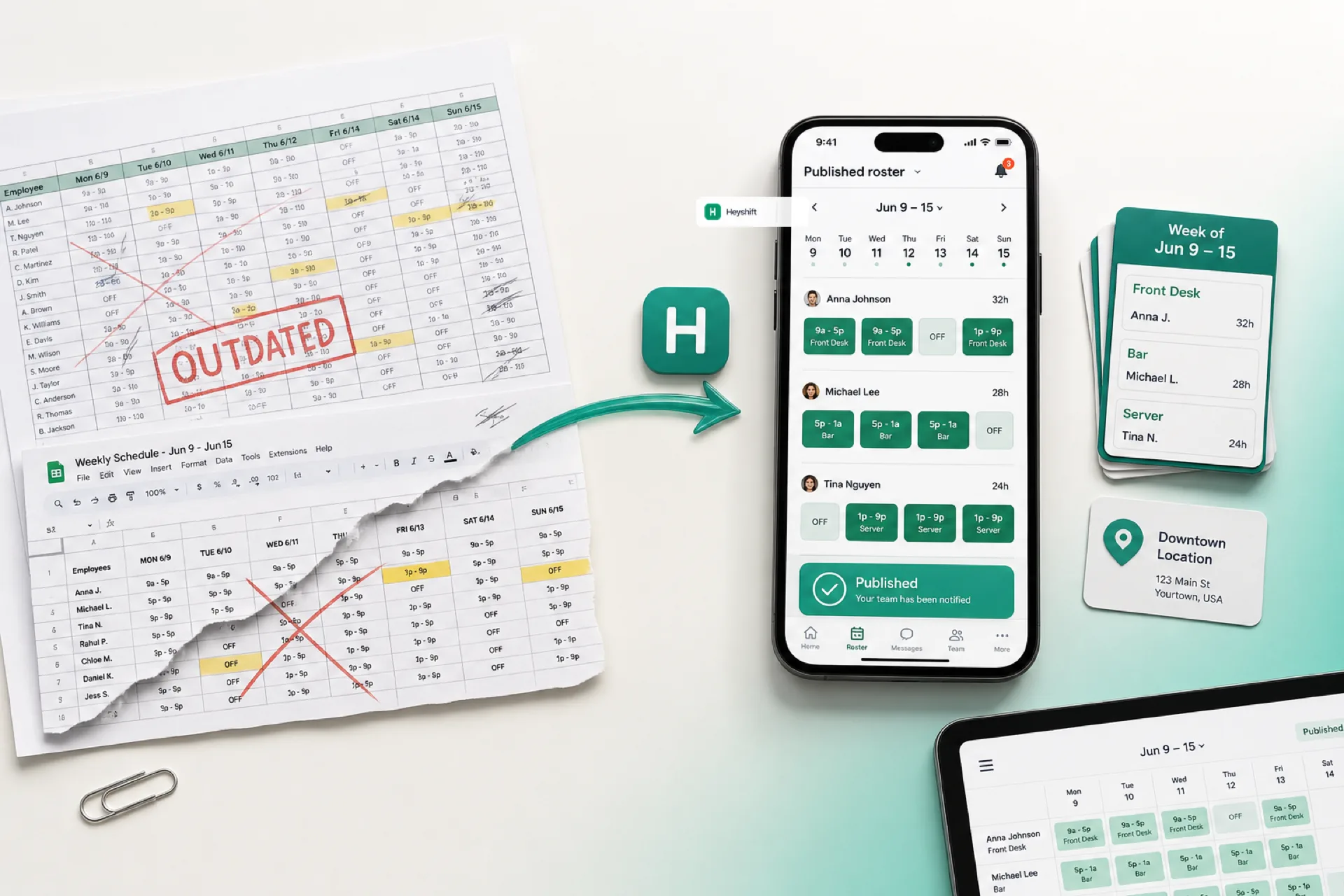
Most scheduling tools stop at pretty calendars. Operations lives in the mess afterward: screenshots in Slack, shadow edits after publish, and exports that Finance rebuilds in spreadsheets because nobody trusts the “final” version.
Heyshift is built for teams where coverage is negotiable every week and labor is one of the biggest variable costs. That means planners need more than drag-and-drop blocks. They need:
- Locations and named areas that match how supervisors walk the floor.
- Leave and availability on the board while staffing decisions happen.
- Signals tied to how your finance week closes, not only calendar-month totals.
If your organization keeps asking “whose spreadsheet is canonical?” after publish, you already feel the gap we designed against.
What Heyshift focuses on first
We concentrate on the scheduling desk: manager seats who publish, approve swaps, and defend labor choices before payroll locks assumptions.
Publish discipline everyone can see
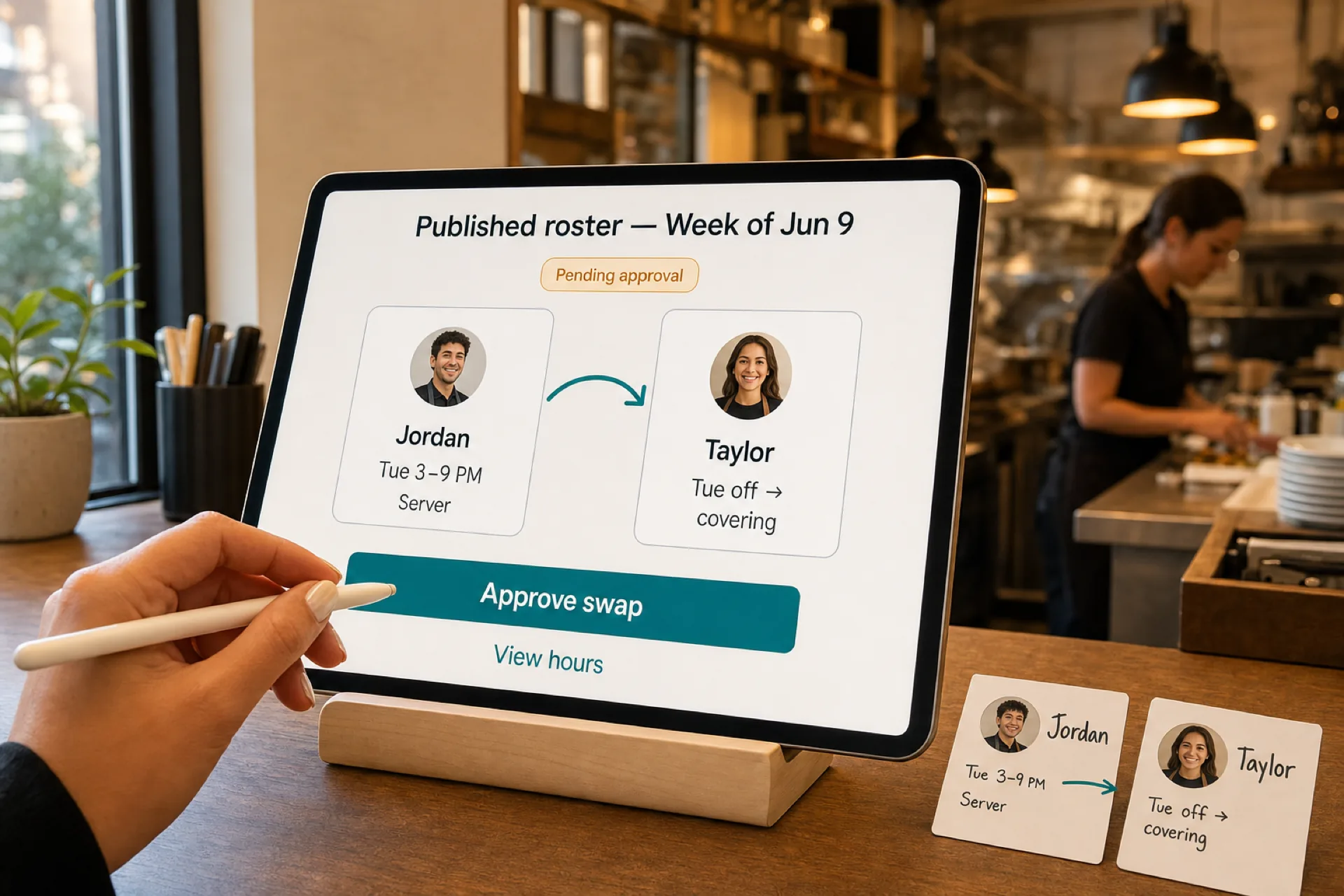
One live roster replaces forked PDFs. After publish, supervisors still manage exceptions, swaps, and approvals inside guardrails instead of whisper networks.
Finance-week context beside coverage
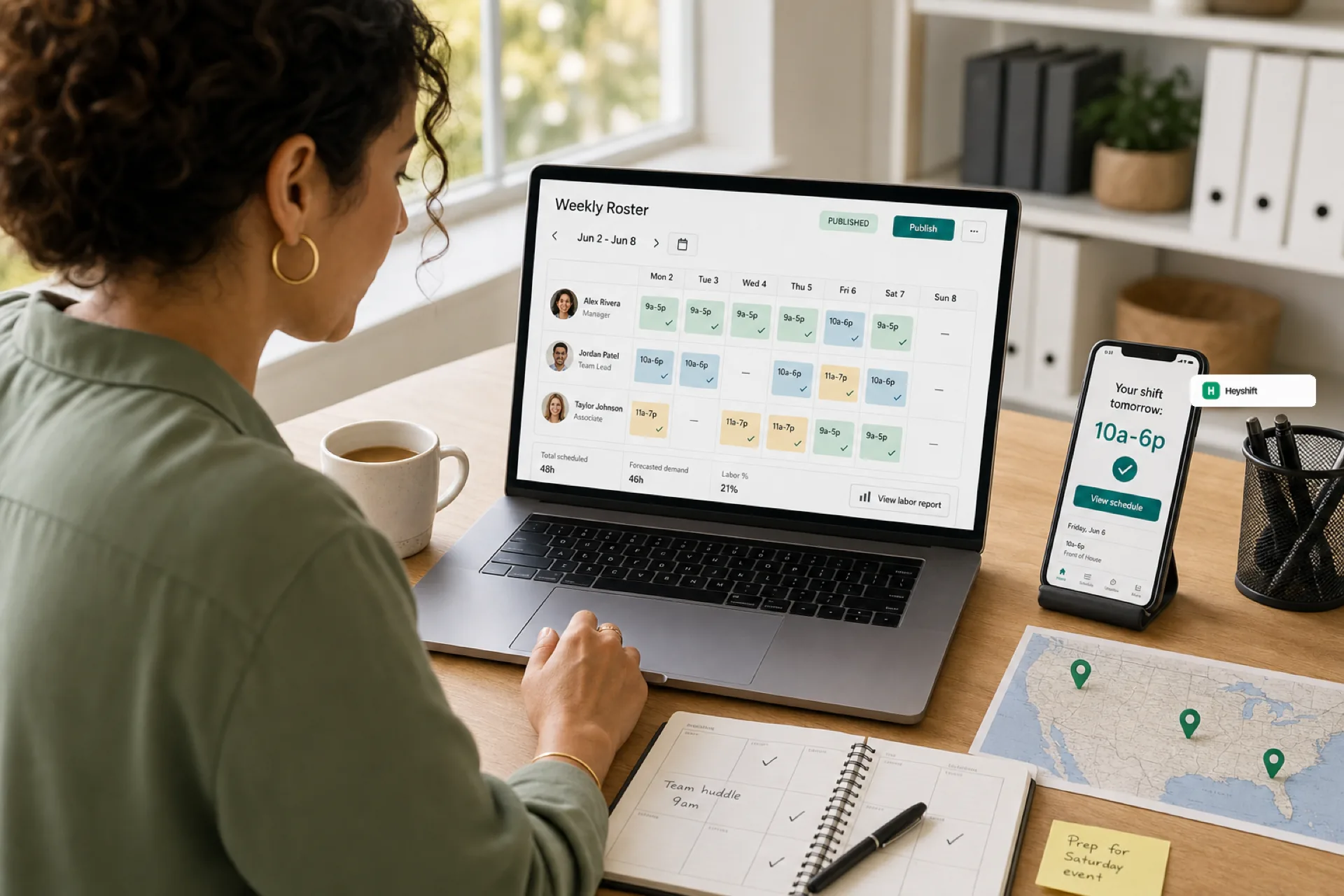
Scheduled hours and labor signals stay comparable to the cadence Finance uses to close. Tradeoffs show up before close, not only after an invoice lands.
Multi-site without cloning chaos
Templates, copy-week flows, and bulk publish keep repeat patterns cheap when you run similar sites or repeating venue layouts.
Attendance that traces to publish
Compare actual punches and worked hours to what was published, so variance becomes operational truth Finance can defend.
Built for USA rollout realities
Heyshift speaks to USA-based workforce scheduling: regional operators, finance-week alignment, and procurement-friendly pilots when you need them. Free trials and annual agreements are spelled out plainly on Pricing, and every quote reflects your seat mix and rollout scope.
We do not pretend scheduling is only an HR calendar problem. For multi-location hospitality, retail, logistics, and service-heavy teams, it is an operations and finance coordination problem shipped weekly.
Where to go next