


Healthcare Workforce Management: The Complete Guide for Hospitals, Clinics & Care Providers (2026)
Learn healthcare workforce management best practices for hospitals, clinics, and care providers: staff scheduling, attendance tracking, labor planning, overtime reduction, compliance, and workforce communication in one guide.
Healthcare workforce planning
Healthcare workforce planning translates patient demand into staffing requirements before names hit the grid.
Planning inputs by setting
| Setting | Primary demand signals |
|---|---|
| Hospitals | Census, acuity, ED boarding, surgical volume |
| Clinics | Appointment templates, procedure days, seasonal demand |
| Nursing homes | Census bands, care level mix, regulatory ratios |
| Assisted living | Resident count, memory care acuity, weekend bands |
| Home health | Authorized visits, geography, on-call windows |
Planning cadence
| Rhythm | Activity |
|---|---|
| Annual | Headcount budget, agency strategy, hiring plan |
| Monthly | OT pacing review with finance |
| Weekly | Publish cycle, fill rate, call-off trends |
| Daily | Unit huddle, open shifts, hour limits |
Pair planning with healthcare overtime management and the overtime risk calculator. Use labor cost percentage calculator when finance sets targets.
SHRM workforce planning guidance connects forecasting to retention and cost control.
From census to shift bands (hospital example)
Hospital workforce planning starts with expected patient volume and acuity, not last week's habit grid.
- Forecast census by unit for the publish week (admissions, discharges, seasonal trend)
- Map acuity to skill mix (RN, LPN, CNA, tech ratios per policy)
- Subtract known leave and education blocks before building names
- Add float rows where cross-coverage is policy, not emergency
- Compare hour totals to budget and OT pace before lock
- Publish with open-shift rows for known gaps
When census drops mid-week, managers adjust through official roster edits and open shifts, not parallel texts. That keeps attendance, OT, and payroll aligned.
Agency and internal labor strategy
Premium labor is a planning decision, not only a crisis response. Document when agency is authorized versus when internal open shifts must exhaust first. Finance should see agency hours beside internal OT in the same weekly report. Operators who treat agency as invisible often discover both agency and doubles running on the same unit.
Workforce planning for ambulatory and LTC
Clinics plan from appointment templates: which providers need MA and RN support on procedure days, which sites run extended hours, and where seasonal demand (flu, sports physicals) changes session length. Under-staffing shows up as wait times and provider burnout; over-staffing shows up in labor cost %.
Nursing homes and assisted living plan from census bands and care level mix. Weekend and night pools need the same rigor as weekday day shift because survey and family expectations do not drop on Saturday. Read assisted living staff scheduling best practices.
Home health plans from authorized visits, drive time, and on-call windows. A visit grid without route realism creates missed windows and overtime at the end of the day. Read best employee scheduling software for home healthcare agencies.
Staff scheduling
Healthcare employee scheduling is the publish discipline at the center of workforce management. Every other function works better when the official week is clear, mobile-visible, and early.
Scheduling by care setting
Hospitals and acute care: Unit templates, float rules, ED surge patterns, 12-hour bands. Read hospital staff scheduling best practices.
Clinics and outpatient: Session demand, extended hours, multi-provider groups. Read clinic staff scheduling best practices and medical office scheduling best practices.
Nursing homes: Weekend pools, CNA mix, rotating 12-hour lines. Read how to create a nursing home staff schedule.
Assisted living: Smaller teams, cross-coverage, fairness on weekends. Read assisted living staff scheduling best practices.
Home health and caregivers: Visit windows, routes, on-call. Read home healthcare scheduling best practices and caregiver scheduling best practices.
Rotation fairness: Night, weekend, and holiday bands need documented rules. Read nurse shift rotation best practices and fair staff rotas.
Scheduling best practices (all settings)
- Publish as early as policy allows
- Staff to demand and acuity, not habit
- Keep availability and leave beside the grid
- Post internal open shifts before doubles
- Use one official roster on mobile
- Review hour totals before publish lock
Scheduling mistakes that break workforce management
| Mistake | Fix |
|---|---|
| Parallel unofficial grids | One publish channel on mobile |
| Staffing to headcount only | Staff to acuity and demand |
| Ignoring float hour totals | Central float visibility |
| Late holiday publish | Holiday pool templates early |
| Agency before open shift | Internal fill policy |
Read why spreadsheets fail for workforce scheduling.
Explore shift scheduling and nurse scheduling software.
Daily workforce workflows by role
Charge nurse / unit manager (morning):
- Confirm published roster matches overnight changes
- Review call-offs against open-shift queue
- Check hour limits before approving extensions
- Escalate unfilled critical roles to staffing office
Scheduler (weekly):
- Build draft from templates and leave calendar
- Run hour totals and OT alerts before publish
- Post internal open shifts for known gaps
- Lock publish by policy deadline
Staffing office (daily):
- Monitor float pool hours across campuses
- Authorize agency only after internal fill attempt
- Balance surge units without breaking rotation fairness
HR (ongoing):
- Ensure leave approvals sync before publish week
- Document policy exceptions on official roster
- Support manager training on swap and attendance rules
Finance (weekly):
- Review OT pacing vs budget by unit
- Flag payroll variance trends early
- Pair with employee scheduling software cost when evaluating platform ROI
These workflows only work when every role references the same system of record.
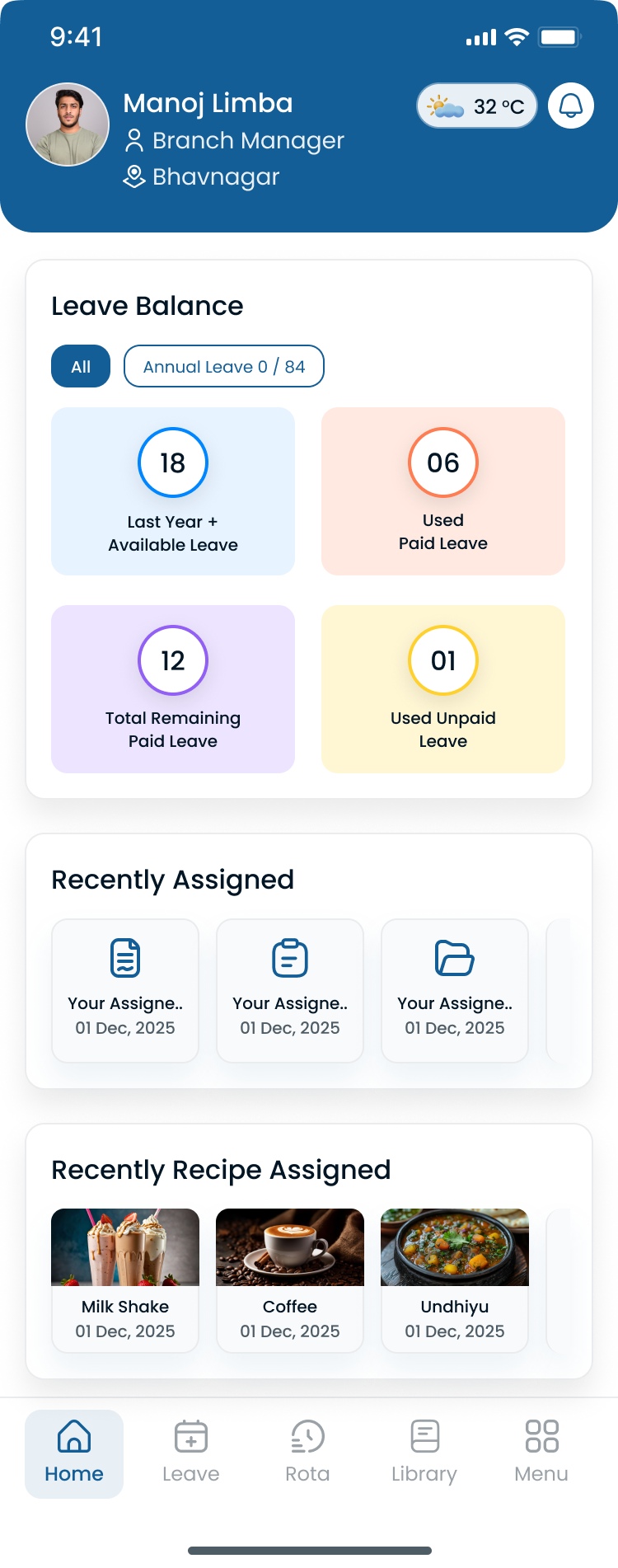
Scheduling is the publish layer every other workforce function references.
Attendance tracking
Healthcare attendance tracking connects who was supposed to work with who actually worked. Without it, payroll variance and compliance questions become guesswork.
Why attendance must tie to schedule
| Problem | When attendance is separate |
|---|---|
| Payroll variance | Finance reconciles two systems |
| OT disputes | Worked hours exceed planned without warning |
| Compliance gaps | Cannot show assignment at punch time |
| Manager distrust | Charge nurses maintain shadow records |
Read healthcare attendance tracking best practices. Compare attendance management software.
Attendance capabilities to prioritize
- Mobile and kiosk options for deskless staff
- Planned shift reference on each punch
- Exception workflows for missed punches
- Manager approval on corrections
- Reports by unit, role, and pay period
Explore attendance tracking, mobile and kiosk attendance, and attendance reports and analytics.
Attendance rollout checklist
| Week | Action |
|---|---|
| 1 | Map punch methods by site (mobile, kiosk, supervisor) |
| 2 | Tie punches to published shift assignment |
| 3 | Train managers on exception approval |
| 4 | Review variance report with finance |
Attendance adoption fails when staff punch without seeing their published band. Mobile schedule access comes first.
Leave management
Leave is a scheduling input, not an HR afterthought. Approved PTO, sick leave, emergency leave, and vacation blocks should appear before assignments lock.
Leave types care operators manage
| Leave type | Scheduling impact |
|---|---|
| PTO / vacation | Planned blocks on roster build |
| Sick leave | Call-off triggers open-shift workflow |
| Emergency leave | Short-notice coverage rules |
| FMLA / extended leave | Long-term capacity planning |
| Education / jury duty | Credential and hour planning |
Leave management best practices
- Sync approved leave before weekly publish
- Block assignments on approved dates automatically where possible
- Train managers to check leave calendar during daily review
- Document emergency leave approvals on official roster
Explore leave management and people and availability. Read healthcare leave management best practices for PTO, sick leave, and approval workflows.
Vacation and surge planning
Holiday and summer vacation stacks collide with flu surges in many care settings. Workforce planning should include:
- Blackout dates by policy documented in software
- Vacation lottery or seniority rules applied consistently
- Surge templates that add float rows without rebuilding the whole month
- Cross-training depth so PTO does not equal mandatory doubles
Leave management is workforce management when it prevents assignments on approved PTO that managers discover at handoff.
Overtime management
Healthcare labor management fails when overtime is a payroll surprise. OT control belongs in planning and daily review.
OT drivers in healthcare
- Late publish and crisis doubles
- Invisible open shifts before agency
- Float movement without hour totals
- Call-off clusters on already thin units
- Manual schedules without threshold alerts
Read the full playbook: healthcare overtime management. Cross-industry habits: prevent overtime before payroll.
OT control habits
| Habit | Outcome |
|---|---|
| Hour totals on draft schedules | Rebalance before lock |
| Daily OT review | Catch stacks before handoff |
| Internal open shifts first | Cheaper than doubles |
| Weekly finance + nursing KPI | Shared pacing report |
| Repeat-name tracking | Fairness and burnout signal |
Explore workforce visibility and cost and labor insights.
Overtime governance
Define who can authorize doubles, agency release, and shift extension beyond threshold. Software should log approvals on the official roster. Finance should receive weekly OT pacing, not monthly surprises.
| Authorization | Typical owner |
|---|---|
| Internal open shift | Nurse manager / scheduler |
| Mandatory double | Charge nurse + staffing office |
| Agency nurse | Staffing office per policy |
| OT above threshold | Director + finance review |
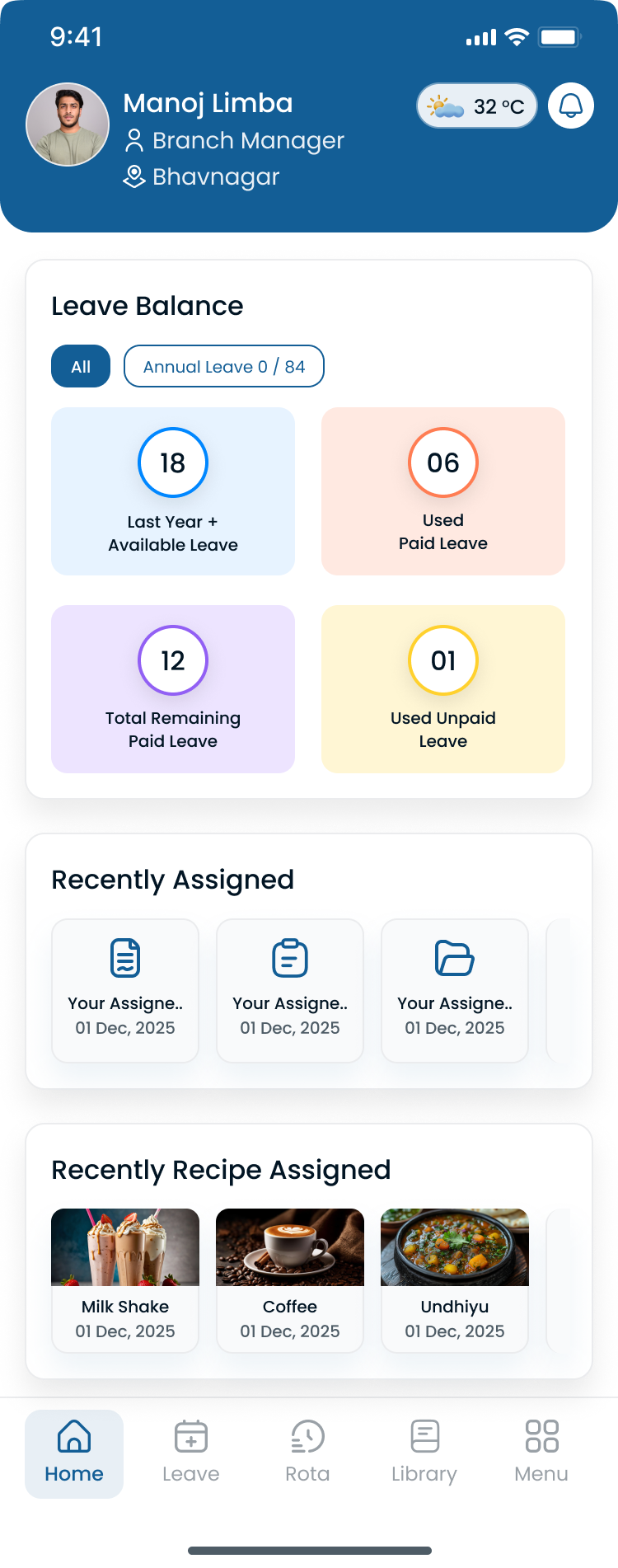
OT pacing should be visible while managers can still change the week.
Workforce communication
Deskless clinical and care staff will not read a schedule buried in email. Workforce communication routes through the same app as the official roster.
Communication channels that work
| Channel | Use for |
|---|---|
| Mobile notifications | Publish, change alerts, open shifts |
| Shift updates | Official roster changes only |
| Open shift posts | Qualified internal fill |
| Announcements | Policy, training, weather, surge prep |
| Approved swaps | Documented flexibility |
Communication mistakes
- Parallel group texts that contradict published week
- Screenshots instead of app notifications
- Managers who call individuals before posting open shift
- No acknowledgment trail for surge assignments
Explore Heyshift mobile app and location communication. Read employee shift swapping best practices and open shift and swap approvals.
Communication policy template
Document for managers:
- Official roster lives in app only
- Open shifts post to qualified staff before individual texts
- Swaps require manager approval on published week
- Surge announcements reference assignment IDs, not names in group chat
- Staff install mobile app before go-live week
Communication discipline is workforce management because trust in the schedule drives attendance and retention.
Workforce analytics and KPIs
Healthcare workforce planning improves when leaders review the same KPIs weekly. Analytics turn workforce management from reactive to measurable.
| KPI | Importance |
|---|---|
| Overtime % | Cost control and pacing vs budget |
| Attendance rate | Reliability and punctuality trends |
| Schedule accuracy | Planned vs worked alignment |
| Shift fill rate | Coverage without doubles |
| Turnover rate | Retention on high-OT units |
| Labor cost % | Financial health vs revenue or budget |
| Absenteeism | Call-off patterns for planning |
| Payroll variance | System integrity signal |
| Agency hours | Premium labor alongside internal OT |
| Time to publish | Operational discipline metric |
Sample weekly leadership review
| Question | Data source |
|---|---|
| Which units exceeded OT pace? | Labor dashboard |
| Where did open shifts go unfilled? | Fill rate report |
| Who worked OT three or more times? | Repeat-name export |
| Did worked hours match plan? | Variance report |
| Are call-offs rising? | Absenteeism trend |
Run scenarios with overtime risk calculator and labor cost percentage calculator. Read employee scheduling software ROI guide.
Benchmarking healthcare labor KPIs
Use benchmarks as direction, not absolutes. Your mix of acute, ambulatory, and LTC sites will shift targets.
| KPI | Typical review question |
|---|---|
| Overtime % of total hours | Are we pacing to annual budget by month? |
| Agency % of nursing hours | Is internal open-shift policy enforced? |
| Fill rate on open shifts | Do qualified staff see posts on mobile? |
| Schedule variance | How often does worked time exceed planned band? |
| Absenteeism rate | Which units show rising call-offs before turnover? |
| Time to publish | Are we meeting union or internal publish SLAs? |
The BLS occupational outlook for healthcare practitioners reinforces why retention metrics belong beside cost metrics. Replacing a trained nurse costs far more than preventing one mandatory double.
Payroll and workforce data flow
Workforce management succeeds when planned hours, worked hours, and pay rules reconcile without manual merges.
| Step | Ideal state |
|---|---|
| Publish | Official assignment with role, site, band |
| Change | Swap, open shift, manager edit logged on roster |
| Punch | Attendance tied to assignment or exception |
| Approve | Manager signs exceptions before export |
| Export | Payroll receives structured hours by pay code |
| Reconcile | Variance report flags mismatches same week |
Explore payroll and attendance corrections workflow. Split systems can work with disciplined exports, but growing care groups usually consolidate when variance exceeds finance tolerance.
Reducing no-shows and last-minute call-offs
Call-offs are a workforce planning input. Track patterns by unit, shift band, and day of week. Pair operational fixes (earlier publish, fair rotation, mobile visibility) with reduce employee no-shows and last-minute call-offs.
Compliance and record keeping
Healthcare employers operate under federal and state wage and hour rules, meal and rest requirements, collective bargaining agreements where applicable, and internal safe staffing policies. Workforce management healthcare systems support record keeping; they do not replace legal counsel.
Compliance areas workforce systems support
| Area | What to document |
|---|---|
| Meal breaks | Break periods relative to shift length |
| Rest periods | Policy-compliant spacing |
| Overtime rules | Thresholds, premiums, approvals |
| Record keeping | Planned assignment, changes, worked time |
| State variations | Confirm rules for each operating state |
CMS quality programs under Medicare quality initiatives increase leadership visibility on organized operations. The Occupational Safety and Health Administration publishes healthcare worker safety guidance relevant to long shifts and fatigue.
Explore labor compliance management and smart attendance rules. Pair with attendance corrections workflow when disputes arise.
Record keeping for surveys and audits
Workforce records should show:
- Published assignment for each worked shift
- Approved changes (swap, open shift pickup, manager edit)
- Punch or attendance exception with approver
- Leave block that prevented assignment
Scheduling software does not replace clinical staffing standards or licensure compliance. It helps leaders produce coherent workforce records when leadership, finance, or survey processes ask for evidence.
State-specific meal, rest, and overtime rules vary. Confirm requirements for each state where you employ staff during vendor and policy setup.
Choosing healthcare workforce management software
Buyers evaluating healthcare workforce management software should score platforms on connected workflow, not feature checklists alone.
Capability comparison
| Capability | Why it matters |
|---|---|
| Scheduling | Publish-first official roster |
| Attendance | Planned vs worked on one timeline |
| Leave | Blocks visible before publish |
| Payroll | Export or integration path |
| Mobile | Deskless staff adoption |
| Reporting | OT, fill, variance by unit |
| Multi-location | District roll-up without merges |
| Integrations | HRIS, payroll, time clocks as needed |
Evaluation scorecard (weight for your setting)
Score each vendor 1 to 5 on the criteria that matter most to your organization. Add weighting for hospital float, home health mobile, or multi-site LTC as needed.
| Criterion | Hospital weight | Clinic weight | LTC weight |
|---|---|---|---|
| Publish and templates | High | High | High |
| Float / multi-unit visibility | High | Medium | Medium |
| OT alerts on draft | High | High | High |
| Attendance + schedule unity | High | High | High |
| Leave on grid | High | High | High |
| Mobile adoption | High | Medium | High |
| District reporting | High | Medium | High |
| Implementation time | Medium | High | Medium |
| Price transparency | High | High | High |
Low scores on attendance-schedule unity or OT alerts are common reasons buyers churn within year one.
Build vs buy vs bolt-on
| Approach | When it fits |
|---|---|
| Spreadsheets | Under ~15 hourly staff, single site, stable roster |
| Scheduling-only tool | Scheduling pain only; attendance elsewhere |
| Connected WFM platform | OT, variance, multi-site, or retention pain |
| Enterprise suite | 1,000+ staff, deep HRIS integration, long IT cycle |
Most readers of this guide are moving from spreadsheets or scheduling-only toward a connected platform. Read workforce scheduling software vs Excel and shift scheduling software buyer's guide.
Vendor short list
For bottom-funnel comparison of six vendors, read best healthcare staff scheduling software (2026). For earlier pillar angle, see best employee scheduling software for healthcare teams.
Heyshift fits growing care organizations (roughly 20 to 500 employees) that want scheduling, attendance, leave, overtime visibility, mobile access, and multi-location support in one platform without enterprise implementation overhead.
Demo questions
- Show planned vs worked on the same screen before payroll.
- How do overtime alerts fire on draft schedules?
- Can we template hospital units and clinic sites in one account?
- How do open shifts notify only qualified staff?
- What does district roll-up look like for five locations?
- How are swap and leave approvals logged?
Review pricing. Start 30-day free trial or book a demo.
90-day workforce management implementation roadmap
| Phase | Weeks | Focus |
|---|---|---|
| Measure | 1-4 | Baseline OT, variance, fill rate by unit |
| Pilot | 5-8 | One site, publish + attendance + mobile |
| Expand | 9-12 | Remaining departments, leave blocks, OT alerts |
| Optimize | 13+ | District analytics, rotation rules, finance cadence |
Do not skip the measure phase. Buyers who cannot state current OT by unit rarely prove ROI after rollout.
Common rollout mistakes to avoid
- Buying software before publish rules exist on paper
- Piloting only the easiest manager, not the highest-pain unit
- Leaving attendance on a legacy clock while scheduling moves to new platform
- Skipping mobile adoption targets for CNAs and caregivers
- Treating finance as a month-end export recipient instead of weekly OT partner
How a multi-location care group unified workforce management
Before: 450 employees, five locations, fragmented systems
A healthcare organization with roughly 450 employees across five locations faced staffing shortages, rising overtime, fragmented scheduling, and attendance tracked separately from published weeks. Nurse managers, clinic leads, and HR each maintained partial records. Finance reported payroll variance monthly. Staff cited unpredictable schedules in retention conversations.
What they centralized
Leadership implemented healthcare workforce management software that connected:
- Publish-first scheduling across hospital, clinic, and LTC sites
- Attendance tied to planned assignments
- Leave visible before weekly publish
- Overtime alerts while building schedules
- Mobile open shifts and approved swaps
- Weekly KPI dashboard for nursing and finance
| Area | Before | After |
|---|---|---|
| Scheduling | Excel per department | One official roster per site |
| Attendance | Paper and separate time system | Planned vs worked aligned |
| Leave | HR email approvals | Blocks on scheduling grid |
| Overtime | Payroll surprise | Planning-time alerts |
| Communication | Text chains | Mobile on official app |
| Reporting | Manual merges | District roll-up |
Outcome
Managers gained visibility into staffing across departments. Manual administration fell. Attendance tracking improved. Patient care coverage stabilized because coverage decisions used one timeline, not five files.
Lessons for other multi-site care groups
- Pilot the messiest site, not the most cooperative manager
- Finance joins week two, not month three
- Stop email PDF rosters on a fixed cutover date
- Track agency and OT together in weekly review
- Link fairness rules to nurse shift rotation and fair staff rotas during rollout
By organization size
| Size | Workforce management priority |
|---|---|
| 15-50 staff | Publish discipline, mobile, basic attendance |
| 50-150 staff | Leave visibility, OT alerts, open shifts |
| 150-500 staff | Multi-department templates, district reporting |
| 500+ staff | May add enterprise WFM; still evaluate growing-platform fit per site |
Heyshift targets growing care organizations roughly 20 to 500 employees where nurse managers lead rollout without six-month IT projects.
Healthcare schedule templates
Templates complement software rollout and capture long-tail search demand. Start standardizing columns before you migrate.
| Template | Best for |
|---|---|
| Nurse schedule template | General nursing weekly grids |
| 12-hour nurse schedule template | Hospital and LTC 12-hour lines |
| Hospital staff roster template | Inpatient unit rosters |
| Clinic staff schedule template | Outpatient session staffing |
| Healthcare employee schedule template | Cross-role healthcare grids |
| Medical office schedule template | Small practice scheduling |
Browse the full templates hub for 2-2-3 Panama and 4-on 4-off rotation patterns.
Template rollout sequence
Use templates as a bridge between spreadsheets and software, not a permanent workaround.
- Week 1: Standardize shift band labels across managers (7a-3p, 3p-11p, 11p-7a, or your local convention)
- Week 2: Add leave and PTO columns beside name rows
- Week 3: Add hour totals row and OT highlight rules
- Week 4: Pilot one unit in software using the same column structure
Templates capture long-tail search for queries like nurse schedule template and hospital staff schedule template while training managers on publish discipline. After this pillar goes live, dedicated template pages for caregiver, nursing home, and home health grids can extend the cluster further.
Frequently asked questions
What is healthcare workforce management?
The process of planning, scheduling, tracking, and optimizing healthcare employees for appropriate staffing, compliance, payroll accuracy, and patient care quality.
What is healthcare workforce management software?
Platforms that combine scheduling, attendance, leave, overtime visibility, communication, and reporting for care organizations.
Why is workforce management important in healthcare?
It affects patient safety, staff retention, labor cost, compliance, and operational efficiency in 24/7 and field-based care environments.
How is workforce management different from scheduling?
Scheduling is one component. Workforce management includes planning, attendance, leave, OT, communication, analytics, and compliance.
What is healthcare workforce planning?
Translating patient demand into staffing requirements before rosters publish.
Which software is best for hospitals?
Operators need multi-department scheduling, float visibility, OT alerts, and attendance alignment. Compare best healthcare staff scheduling software and nurse scheduling software.
Can workforce software reduce overtime?
Yes, when hour totals and open shifts are visible while planning. Read healthcare overtime management.
Is mobile access required?
Yes for nurses, CNAs, caregivers, and field staff who rarely use desktop email.
What KPIs should healthcare leaders track?
Overtime %, attendance rate, schedule accuracy, fill rate, turnover, labor cost %, absenteeism, and payroll variance.
How do clinics approach workforce management?
Match staffing to appointment demand with earlier publish and support-role visibility. See clinic staff scheduling best practices.
How do nursing homes differ from hospitals?
LTC emphasizes weekend pools, CNA ratios, and stable census bands. See nursing home staff schedule guide.
How does home health workforce management work?
Route planning, visit windows, mobile field staff, and on-call bands. See home healthcare scheduling.
Should attendance and scheduling be one system?
Yes, when payroll variance and OT control matter. Split systems recreate spreadsheet chaos.
What compliance areas matter most?
Meal and rest periods, overtime rules, accurate time records, and state-specific wage and hour requirements.
How do float pools fit workforce management?
Float adds flexibility but requires credential tags and hour visibility centrally. See hospital staff scheduling.
Does Heyshift support multi-location healthcare?
Yes. Heyshift supports multi-location areas, mobile access, and district reporting for growing care groups.
What is the first step to improve workforce management?
Measure OT, variance, and fill rate by unit for 90 days, then fix publish discipline before buying software.
How long does implementation take?
Pilot one high-pain site for four weeks, then expand by department over 60 to 90 days.
Where should buyers compare vendors?
Read best healthcare staff scheduling software (2026) and shift scheduling software buyer's guide.
Can small clinics use workforce management software?
Yes. Practices with 15+ hourly staff benefit when call-offs, leave, and a second site add complexity.
What is the difference between WFM and HRIS?
HRIS holds employee records, benefits, and core HR. Workforce management runs daily schedule, attendance, leave impact on coverage, and labor KPIs. They integrate but do not replace each other.
How does dental workforce management compare?
Dental groups need simpler session grids but still benefit from attendance, leave, and swap policy on one platform. See best employee scheduling software for dental practices.
Should we replace spreadsheets before buying software?
Standardize shift band labels and publish rules first using healthcare employee schedule template, then migrate. Software amplifies discipline; it does not invent it.
How do we measure workforce management ROI?
Track manager hours on scheduling, OT hours per unit, payroll variance, fill rate, and turnover on high-OT units before and after rollout. See employee scheduling software ROI guide.
Final thoughts
Healthcare workforce management is the operating system behind patient care coverage. Scheduling, attendance, leave, overtime, communication, and analytics are not separate projects. They are one timeline that either works or drains managers, finance, and clinical staff.
Organizations that publish early, track attendance beside the plan, control overtime with alerts, and replace fragmented files with connected healthcare workforce management software spend less time administering schedules and more time supporting teams and patients.
This guide is the pillar for the Heyshift healthcare cluster. Every setting-specific playbook links here; start with the section that matches your pain, then compare platforms when you are ready to buy.
Healthcare workforce management becomes more complex as organizations grow. Heyshift helps hospitals, clinics, nursing homes, and care providers manage employee scheduling, attendance, leave, overtime, and workforce communication from a single platform.
Review pricing. Start a 30-day free trial, book a demo, or contact Heyshift with your locations, care settings, and workforce goals.
One line to keep: workforce management is one timeline from plan to punch to payroll, not five tools held together by email.
Related Healthcare Resources
Continue with related topics
Pulled from shared tags when possible, otherwise the newest notes from the blog.

Best Healthcare Staff Scheduling Software (2026): Compare the Top Solutions
Compare the best healthcare staff scheduling software for hospitals, clinics, nursing homes, assisted living, and home healthcare agencies. Features, pricing factors, and buying guidance for growing care organizations.
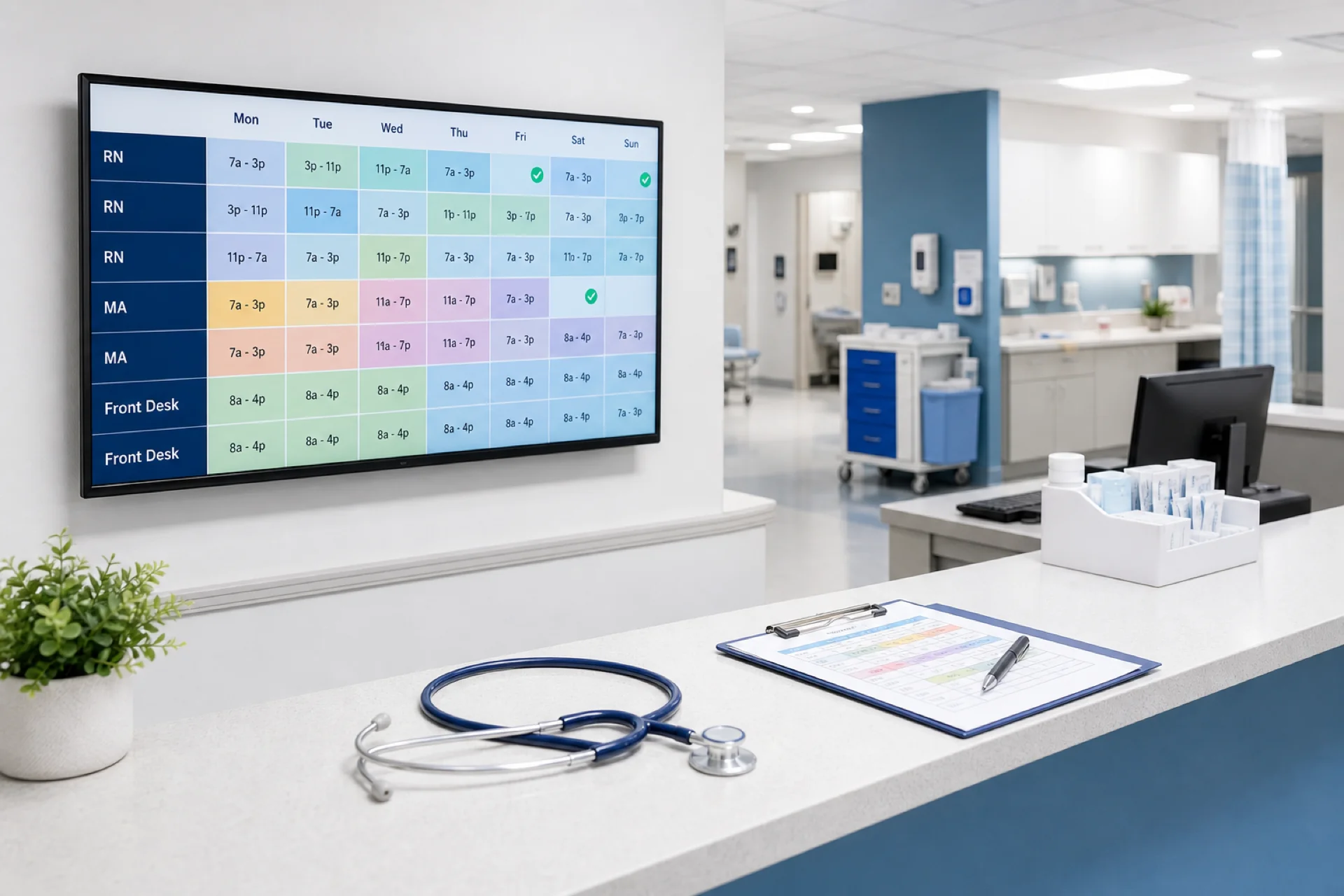
Best employee scheduling software for healthcare teams (2026 guide)
Compare the best employee scheduling software for healthcare teams in 2026: clinic staffing, attendance, shift swaps, multi-location coverage, and labor visibility.

Healthcare Leave Management: Best Practices for Hospitals, Clinics & Care Providers (2026)
Learn healthcare leave management best practices to reduce scheduling conflicts, improve staffing coverage, manage PTO, and simplify workforce scheduling for hospitals, clinics, nursing homes, and care providers.