New York City: thin margins, thick weekends
New York City operators run restaurants, cocktail bars, boutique hotels, and fast-growing concepts on the same pressure: high rent, fast callouts, and staff who often work more than one job. The roster has to separate bar, dining, and BOH and survive brunch through late night without a shadow spreadsheet.
| Venue type |
What the grid must hold |
Typical crunch |
| Restaurant |
Floor, bar, kitchen, expo |
Brunch flip, reservation spikes, patio weather |
| Bar |
Well, floor, door, barback |
Late volume, event nights, day-job juggling |
| Hotel |
Desk, housekeeping, F&B, events |
Turnover windows, conference blocks |
Weekends are separate products, not “Saturday with more people.” Operators who avoid OT surprises usually template repeating windows, post open shifts with claim rules, and run a pre-weekend publish checkpoint so Sunday night matches what crews see on mobile.
Full NYC playbook: shift scheduling for restaurants, hotels, and bars.
Geo page: New York City scheduling.
Los Angeles: spread sites and moving volume
Los Angeles groups often run multiple rooms, patios, and concepts under one ownership. Volume moves between indoor and outdoor service; long windows mean handoffs matter as much as headcount.
Model areas and templates so a weather swing does not force a rebuild from scratch. When hiring is constant, open shifts with clear escalation beat broadcasting “who can cover?” to every server at once.
Geo page: Los Angeles scheduling.
Chicago: season, events, and close discipline
Chicago schedules fight seasonality and event nights: day service, game nights, cold-weather Saturdays. The risk is not only understaffing; it is unclear close when day and night managers each think they own the last hour.
Publish checkpoints mid-week matter here, same as in warmer markets, because the official roster is what both leads and payroll reference. Pair structure with Tuesday publish habits so Friday close is already locked.
Geo page: Chicago scheduling.
Miami: spikes, late hours, turnover
Miami hospitality rides tourism swings, late service, and rapid hiring. Turnover makes “text the group” expensive: new hires never learn which thread is official.
Roster apps earn trust when claim rules for open shifts are visible on mobile and managers approve swaps on the published grid, not on a screenshot from Tuesday. That is how you keep coverage during peak weeks without rebuilding the board every morning.
Geo page: Miami scheduling.
Multi-city groups: one language, many ratios
If you operate beyond those metros, the playbook does not change: map locations and areas, publish once per site (or roll up with clear ownership), and route changes through approvals so regional leads see the same vocabulary from Phoenix to Boston.
Rollout at scale: one publish calendar across sites.
Product fit for structure: locations and areas, shift scheduling, mobile, and attendance when worked time must match what was published.
Evaluate on your floor, not in a slide deck
Before you sign annual spend, run a 30-day free trial with real data, not a toy site.
- Import one location and name stations the way supervisors talk about coverage.
- Build next week from availability, not memory.
- Publish and confirm hourly staff see the same grid on mobile.
- Process one swap and one open shift through approvals.
- Compare scheduled hours to what finance expects for that week.
You are testing adoption, not checkbox features. A roster that managers avoid on Thursday will not fix itself after go-live.
Habits that keep the published week honest
Software sticks when the week has verbs:
Pair those with open shift and swap discipline so crews stop treating chat as the system of record.
Where Heyshift fits
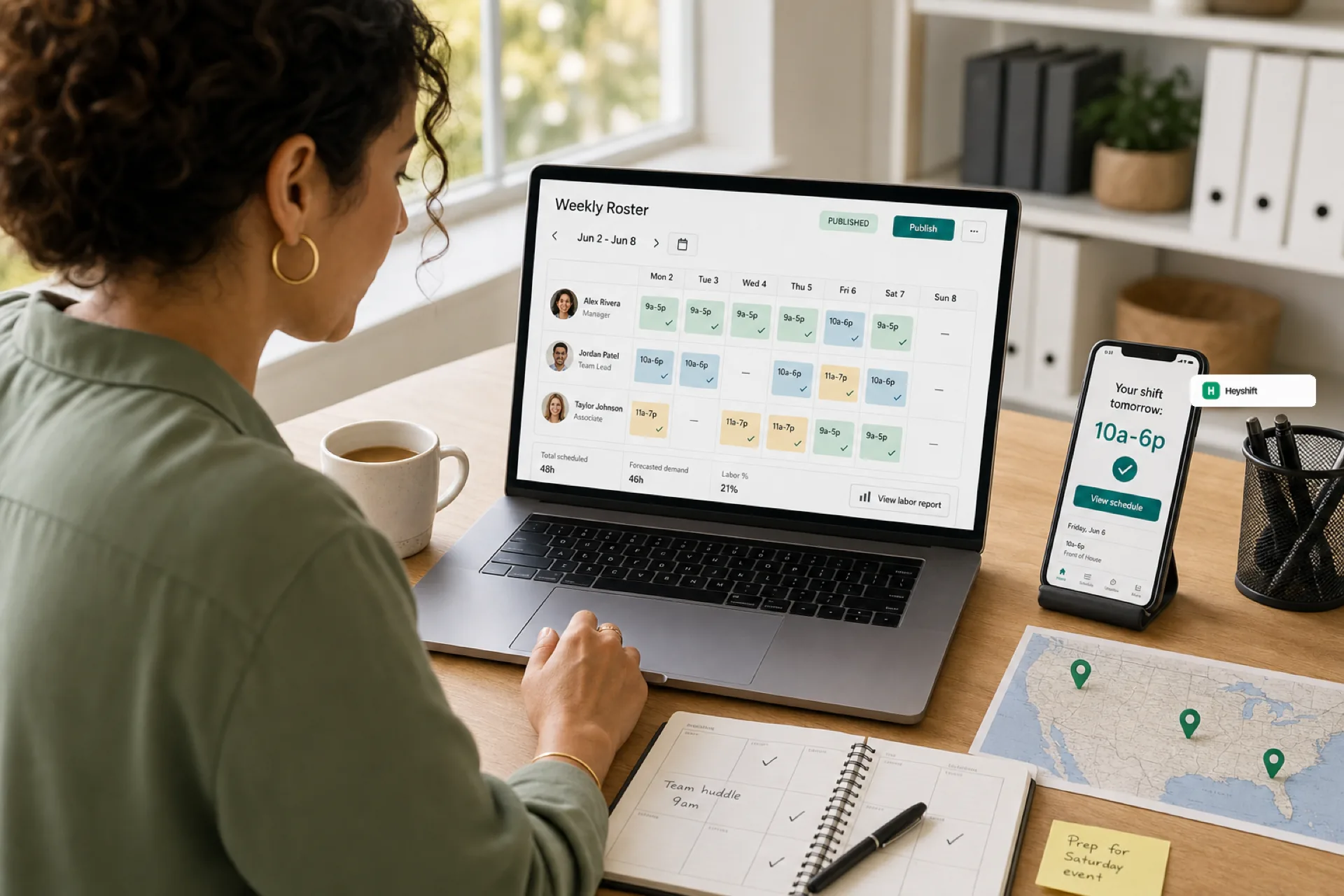
Heyshift is staff scheduling software built for USA teams that need publish-first rosters across locations: structured shifts, manager approvals, mobile visibility for crews, and labor context beside the grid.
Start with pricing, a Start 30-day free trial on your real locations, or book a demo and we will map stations the way your city actually runs service.