10 ways facility management companies can reduce overtime
1. Forecast staffing requirements
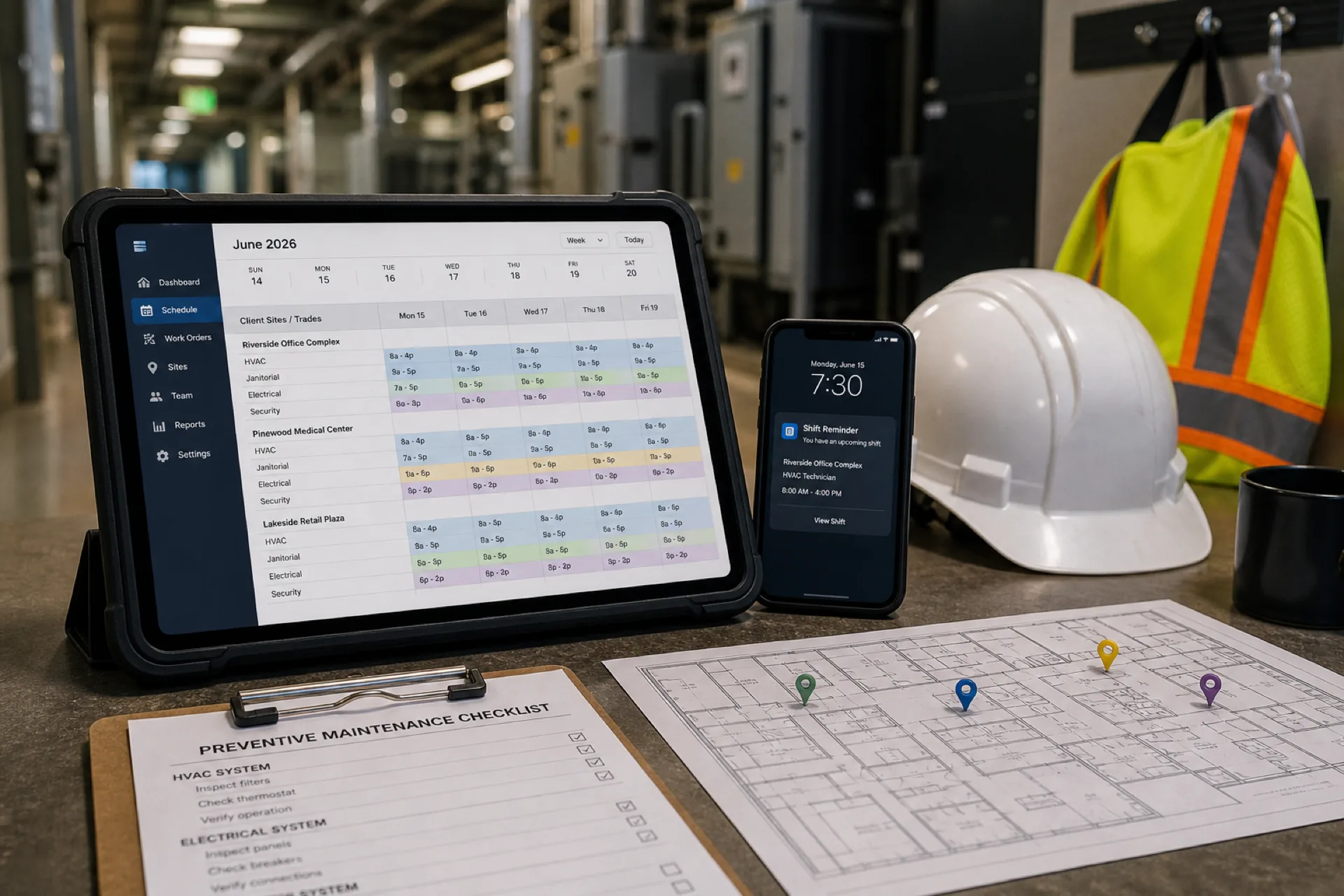
Review upcoming maintenance schedules, seasonal demand, special projects, and building inspections before you build the week. Labor cost management improves when preventive work sits on the published roster instead of becoming after-hours heroics.
Block capacity by trade and client site so emergency tickets pull from float or on-call bands, not from employees already near hour limits.
2. Build schedules earlier
Creating schedules one to two weeks ahead gives managers time to fill open shifts, balance workloads, approve leave, and adjust staffing levels. Last-minute scheduling almost always increases overtime because coverage defaults to whoever is available now.
Publish-first discipline means one official roster field staff trust on mobile. Learn the workflow in shift scheduling.
3. Track employee availability accurately
Maintain updated records for vacation, sick leave, personal time, preferred shifts, and on-call rotation. Outdated availability creates conflicts that managers fix with overtime adds at the last minute.
Keep availability beside the grid in the same system you publish from.
4. Balance workloads across the team
Instead of assigning extra work to the same HVAC tech or janitorial lead every week, distribute assignments fairly across qualified employees. Balanced schedules improve satisfaction while reducing hour stacking on a few names.
Review running hour totals by employee while building the week, not after close.
5. Use structured shift swaps
Allow employees to exchange shifts with manager approval instead of informal texting. Structured swaps improve flexibility, reduce manager phone tag, and keep coverage auditable.
See employee shift swapping best practices and open shift and swap approvals.
6. Monitor attendance daily
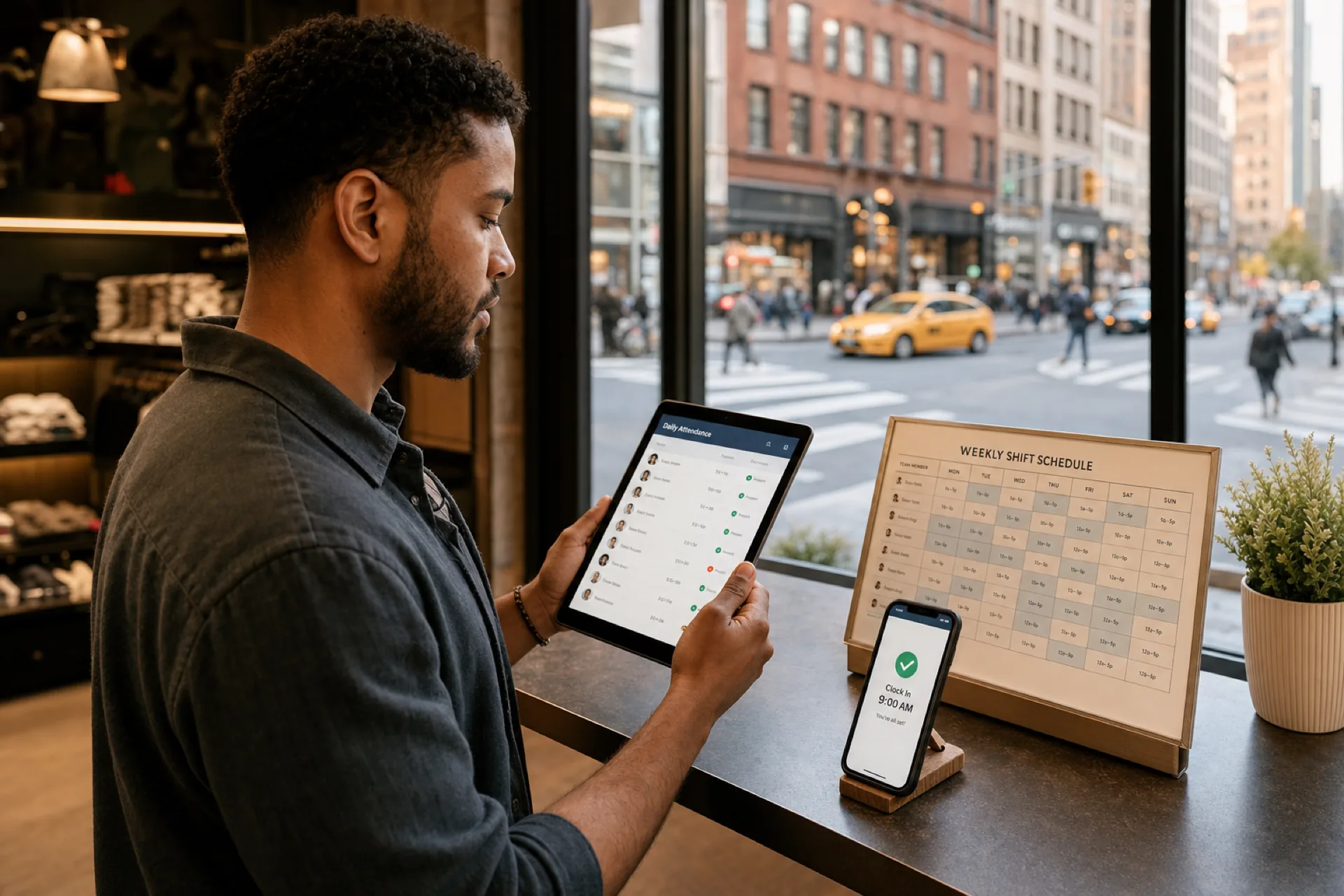
Real-time attendance tracking for facility management helps managers spot no-shows, late arrivals, and patterns before they force reactive overtime. Quick action on call-offs means open shifts fill through approved paths, not automatic double-time.
7. Improve workforce communication
Field employees need instant notifications about schedule changes, new assignments, open shifts, and emergency work through the same app as the official roster. Delays and confusion drive overtime when managers assume someone saw a text that never arrived.
Read mobile workforce management guide and Heyshift mobile app.
8. Use mobile scheduling software
Maintenance techs, janitorial crews, and security officers should view schedules, accept open shifts, request leave, and receive alerts without calling the office. Mobile access reduces lag between a coverage gap and a fill.
Heyshift includes staff mobile access on every plan without billing every hourly employee as a separate mobile seat. See pricing and employee scheduling software ROI guide.
9. Review overtime reports weekly
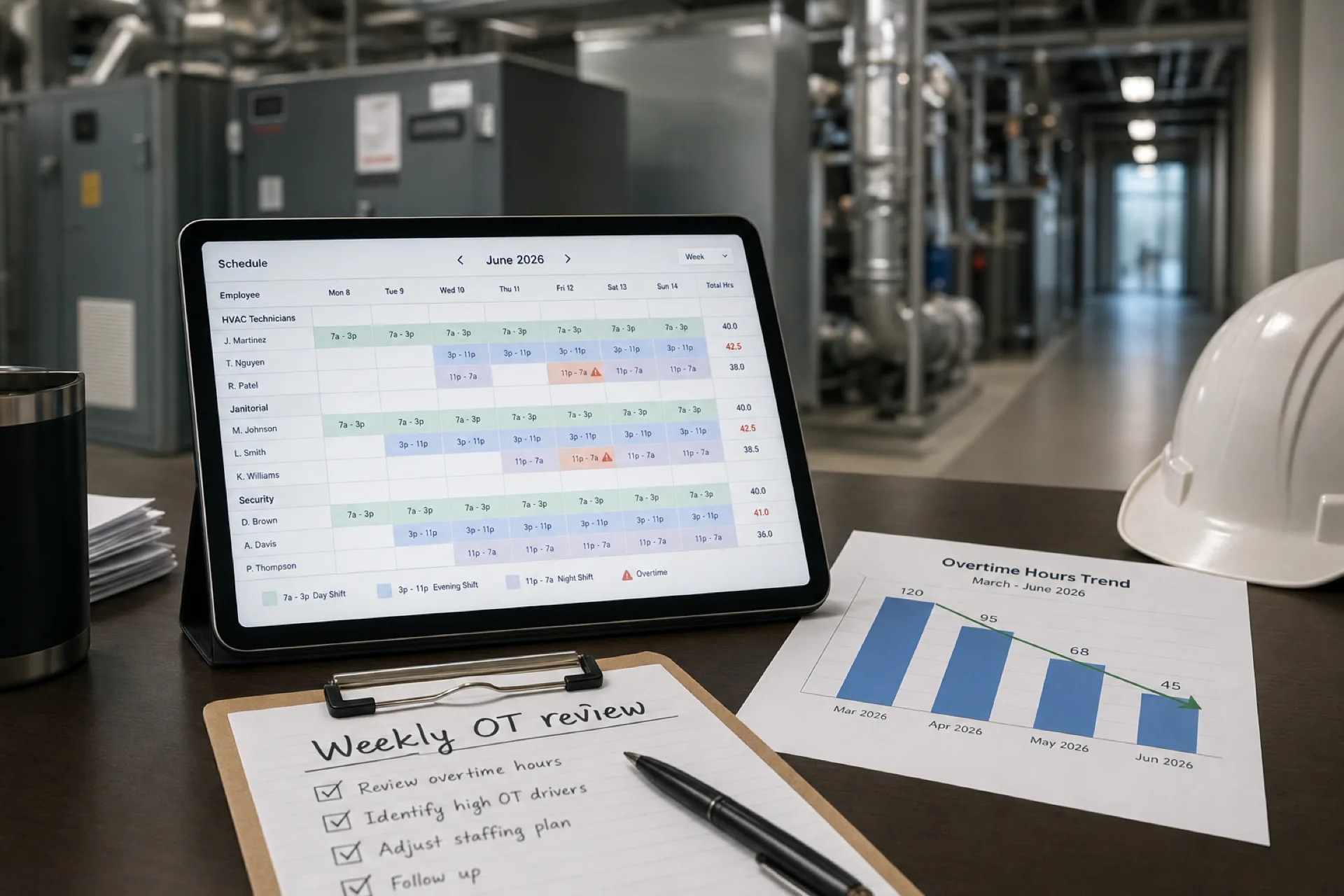
Track total overtime hours, departments or trades with the highest overtime, employee trends, and labor cost against budget. Small weekly adjustments beat one painful correction after payroll.
Workforce reporting scales on higher Heyshift tiers; compare plans on pricing.
Weekly overtime review checklist
| Signal |
Action |
| Employee near hour threshold |
Move assignments or approve swap before the week ends |
| Trade with repeated OT |
Rebalance preventive blocks or add float capacity |
| Site with chronic short coverage |
Adjust templates or staffing ratios for that client |
| Call-off pattern |
Address attendance root cause and open-shift fill rate |
| Emergency ticket spike |
Review on-call rotation and after-hours bands |
10. Invest in workforce management software
Modern workforce management for facility companies provides employee scheduling, attendance tracking, leave management, shift swaps, workforce communication, reporting, and multi-location scheduling in one platform.
Compare vendors in best workforce management software for facility management companies when you are ready to replace spreadsheet rotas.
How scheduling software helps reduce overtime
Unlike spreadsheets, workforce management software gives managers complete visibility before overtime occurs.
Managers can quickly identify:
- Employees approaching overtime thresholds
- Available staff by trade and location
- Open shifts waiting for pickup
- Attendance issues driving reactive coverage
- Pending leave requests affecting next week
That visibility enables smarter scheduling decisions while building the week, not only after payroll closes.
Pair software with the habits in prevent overtime before payroll for a full labor control loop.
How Heyshift helps facility management companies reduce overtime
Heyshift is built for mobile, shift-based workforces across multiple locations. Facility management companies use Heyshift to:
- Create schedules faster with hour visibility while planning
- Track attendance accurately beside published shifts
- Manage leave requests with approval paths
- Route shift swaps and open shifts through the official roster
- Coordinate multiple facilities from one account
- Improve workforce communication on mobile
- Monitor labor patterns through workforce reporting on higher tiers
Instead of reacting to staffing problems, managers can proactively plan schedules that protect margin and service levels.
Start 30-day free trial with your client sites and trades, or book a demo to map overtime signals on one publish week.
Frequently asked questions
Why is overtime common in facility management?
Unexpected maintenance requests, employee absences, multiple client locations, and manual scheduling often push managers toward reactive overtime coverage.
Can scheduling software reduce overtime?
Yes. Better workforce visibility helps managers distribute work more efficiently, fill gaps through open shifts, and identify overtime risks before payroll.
How can facility managers improve scheduling?
Use centralized scheduling software, track attendance daily, forecast staffing needs by site and trade, and review labor reports weekly.
What features matter most for overtime control?
Employee scheduling with hour totals visible while planning, attendance tracking, leave management, shift swaps, mobile access, workforce communication, reporting, and multi-location support.
How is facility management overtime different from other industries?
FM overtime often spikes from emergency tickets across client sites and multi-trade coordination. Site-level visibility and trade-specific float capacity matter more than in single-location retail scheduling.
Final thoughts
Reducing overtime is not about asking employees to work less. It is about scheduling smarter with forecasted capacity, balanced workloads, digital attendance, and weekly labor review.
Facility management companies that improve workforce planning, attendance tracking, and employee scheduling often reduce labor costs while improving productivity and employee satisfaction.
Modern scheduling software provides the visibility needed to make informed staffing decisions every day, not only when payroll surprises arrive.
One line to keep: see overtime risk while building the week, not while exporting payroll.
Related guides: Best workforce management software for facility management companies · Prevent overtime before payroll · Employee attendance tracking guide · Multi-location workforce management · Mobile workforce management · Employee shift swapping best practices