

Free 2-2-3 Shift Schedule Template (Panama Schedule)
Create balanced 2-2-3 rotating shift schedules using our free Excel, Google Sheets, and PDF templates. Ideal for hospitals, healthcare facilities, manufacturing plants, warehouses, emergency services, utilities, and other businesses that require 24/7 workforce coverage.
Free download · No account required · CSV opens in Google Sheets
- Hospitals and healthcare facilities
- Manufacturing and production plants
- Warehouses and distribution centers
- Emergency services and public safety
- Utilities and energy operations
- Security and critical infrastructure
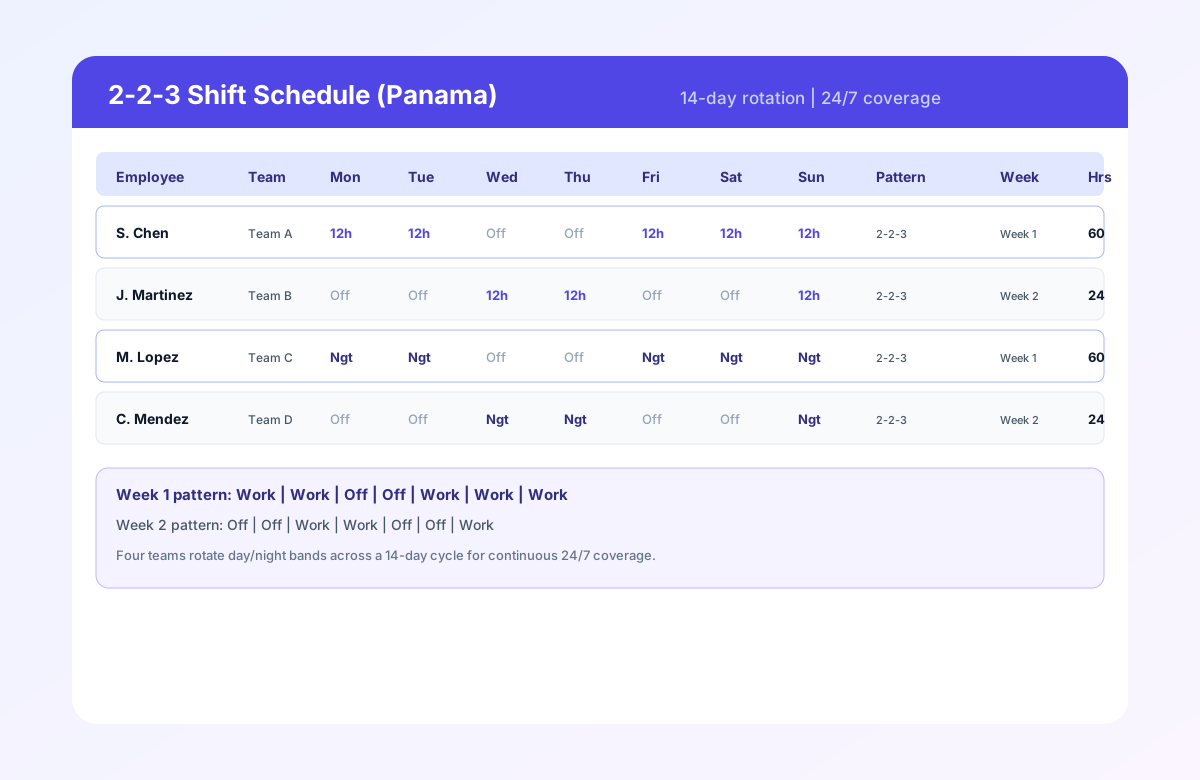
Table of contents
- Quick overview
- What is a 2-2-3 shift schedule template?
- How does the 2-2-3 schedule work?
- Who should use this template?
- What's included?
- Template features
- Four-team rotation example
- Template preview
- Benefits of the 2-2-3 schedule
- Common challenges
- Best practices
- Common mistakes
- Getting started checklist
- 2-2-3 staffing math
- Industry quick-start guide
- Deep dive: healthcare Panama rotations
- Deep dive: manufacturing and warehousing
- Deep dive: public safety and utilities
- Day and night rotation planning
- Breaks, handoffs, and fatigue
- Overtime and compliance basics
- How to build a 2-2-3 rotation week
- Spreadsheet vs scheduling software
- Compare shift patterns
- Related templates
- Frequently asked questions
Quick overview
| Feature | Details |
|---|---|
| Best for | Healthcare, manufacturing, warehouses, utilities |
| Shift pattern | 2-2-3 (Panama) |
| Coverage | 24/7 operations |
| Formats | Excel, Google Sheets, PDF |
| Editable | Yes |
| Printable | Yes |
| Cost | Free |
Featured answer: A free 2-2-3 shift schedule template (also called the Panama Schedule, 223 schedule, or 2-2-3 rotation calendar) gives managers a weekly grid for rotating 12-hour shifts across four teams, with day/night indicators, rotation week labels, weekly hours, overtime, supervisor, and notes in Excel, Google Sheets, or PDF.
This guide explains 2 2 3 shift schedule planning, Panama shift pattern rotations, and four-team 24/7 coverage for hospitals, plants, warehouses, and emergency services.
What is a 2-2-3 shift schedule template?
A 2-2-3 shift schedule template, also known as the Panama Schedule or Panama shift pattern, is a workforce scheduling format used to organize employees working 12-hour rotating shifts across a 14-day cycle.
The schedule follows a repeating two-week pattern where employees work:
- 2 consecutive days
- 2 days off
- 3 consecutive days
During the following week, the pattern reverses.
Organizations use this schedule because it offers:
- Predictable rotations employees can memorize
- Balanced workloads across teams over a full cycle
- Consistent 24-hour coverage without excessive consecutive workdays
- Fairer weekend distribution than fixed weekend assignments
Unlike an 8-hour shift schedule built around three daily bands, a 10-hour template for compressed workweeks, or a fixed 12-hour nurse schedule for 3x12 clinical lines, the 2-2-3 rotation calendar targets four-team Panama rotations for continuous operations.
How does the 2-2-3 schedule work?
The 223 schedule repeats every 14 days (two calendar weeks).
Week 1
| Mon | Tue | Wed | Thu | Fri | Sat | Sun |
|---|---|---|---|---|---|---|
| Work | Work | Off | Off | Work | Work | Work |
Week 2
| Mon | Tue | Wed | Thu | Fri | Sat | Sun |
|---|---|---|---|---|---|---|
| Off | Off | Work | Work | Off | Off | Work |
Each employee alternates between working and resting while the four-team model maintains full operational coverage. On Week 1, a single employee on 12-hour shifts works five days (60 hours). On Week 2, the same employee works two days (24 hours). Over the full cycle, that averages 42 hours per week.
Document whether you are publishing Week 1 or Week 2 in the Rotation Week column so crews do not apply the wrong block.
Who should use this template?
The 2-2-3 schedule is commonly used by organizations operating around the clock.
Healthcare
- Hospitals and health systems
- Emergency departments and trauma centers
- Intensive care units
- Laboratories and imaging support
- Long-term care facilities
Pair with the hospital staff roster template when you schedule multiple departments on one campus.
Manufacturing
- Production plants and assembly lines
- Food processing facilities
- Chemical and continuous-process operations
See manufacturing shift scheduling software when you operate multiple plants.
Warehousing and logistics
- Distribution centers
- Fulfillment and e-commerce hubs
- Shipping and sortation operations
See warehouse scheduling software for multi-building coverage.
Public safety
- Fire departments
- Emergency medical services
- Police and campus safety departments
Utilities
- Power plants and grid operations
- Water treatment facilities
- Energy and pipeline operations
Security
- Corporate and campus security
- Critical infrastructure protection
- Contract security firms
What's included?
| Column | Purpose |
|---|---|
| Employee Name | Identifies scheduled staff |
| Team Assignment | Team A, B, C, D (or custom labels) |
| Department | Unit, plant, or cost center |
| Shift Rotation | 2-2-3 (Panama), custom variant |
| Start / End / Break (Mon through Sun) | 12-hour bands by day |
| Weekly Hours | Totals 60 (Week 1) or 24 (Week 2) at 12h |
| Overtime Hours | Payroll review column |
| Day/Night Indicator | Day, Night, or Rotating |
| Rotation Week | Week 1 or Week 2 of the 14-day cycle |
| Supervisor | Manager or lead of record |
| Notes | Certifications, coverage flags, handoff notes |
| Leave Status | PTO, training, or active |
Template features
Weekly and 14-day planning
Publish one calendar week at a time while labeling Rotation Week (Week 1 or Week 2). Duplicate sheet tabs for a full 2-2-3 rotation calendar spanning 14 days.
Four-team rotation
Assign Team Assignment labels (A, B, C, D) so day, night, and off-rotation blocks stay visible on one grid.
Day and night bands
Enter 12-hour start and end times for each scheduled day. Use Day/Night Indicator for quick scanning.
Overtime tracking
Monitor Weekly Hours before publish. Week 1 rows often total 60 hours at 12-hour shift length.
Printable layout
Export PDF for nurse stations, plant floors, and security posts. Branded download includes sample Panama rows.
Four-team rotation example
Many businesses assign employees into four rotating teams so day and night bands stay covered every hour.
| Team | Week 1 | Week 2 |
|---|---|---|
| Team A | Days | Nights |
| Team B | Nights | Days |
| Team C | Off rotation | Days |
| Team D | Days | Off rotation |
This ensures continuous coverage while allowing regular recovery periods. Adjust team labels to match your union contract or internal naming (Red, Blue, Gold, Green, etc.).
When Team A works days on Week 1, Team B typically covers nights on Week 1. Teams C and D fill gaps so no band drops below minimum staffing.
Template preview
| Employee | Team | Mon | Tue | Wed | Thu | Fri | Sat | Sun | Week | Hours |
|---|---|---|---|---|---|---|---|---|---|---|
| S. Chen | A | 12h | 12h | Off | Off | 12h | 12h | 12h | Wk 1 | 60 |
| J. Martinez | B | Off | Off | 12h | 12h | Off | Off | 12h | Wk 2 | 24 |
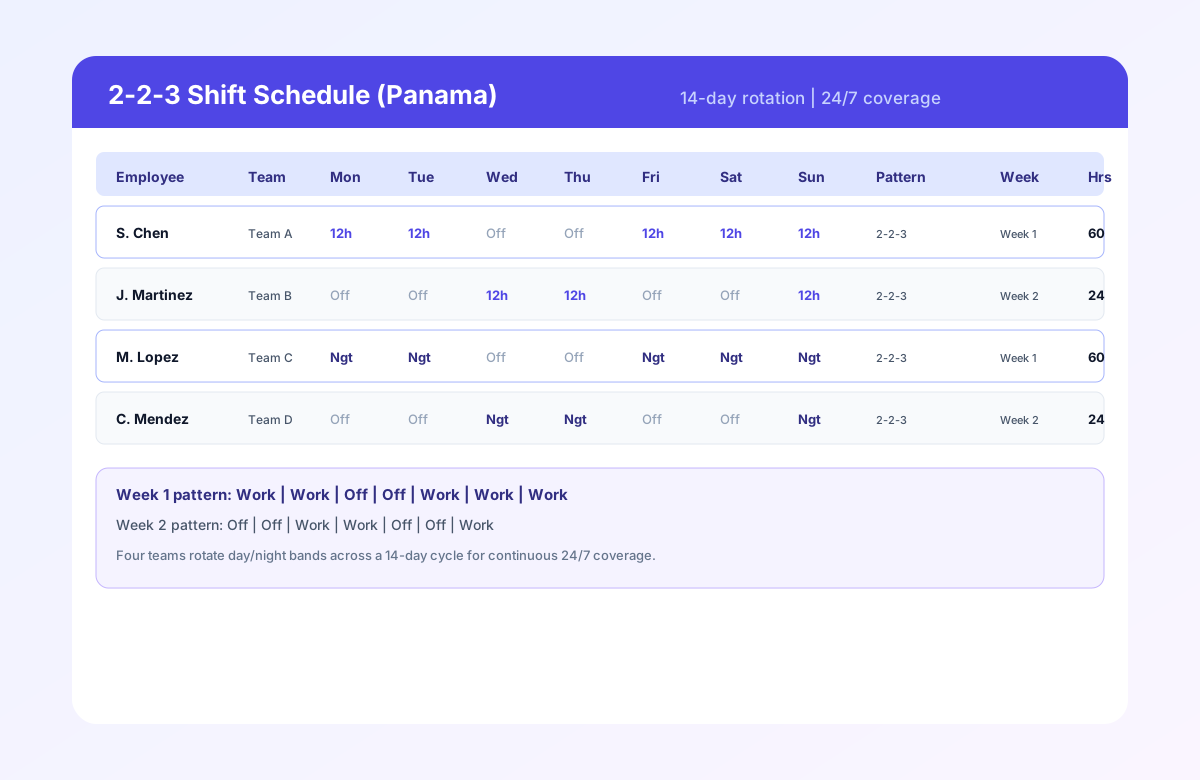
2-2-3 Panama rotation with four teams, 12-hour day and night shifts, and Week 1 / Week 2 blocks.
How to build a 2-2-3 rotation week
Follow these five steps to publish a Panama rotation week with balanced 24/7 coverage and clear Week 1 / Week 2 blocks.
Confirm rotation week
Set Week Of, Facility / Site, and Rotation Week (Week 1 or Week 2) in the header. The pattern reverses every seven days within the 14-day cycle.
Assign teams
Label Team Assignment (A, B, C, D) so each crew knows whether they are on day, night, or off-rotation blocks this week.
Enter 12-hour bands
Use common bands such as 7 AM to 7 PM (day) or 7 PM to 7 AM (night). Mark Off on rest days. Document breaks in daily Break columns.
Review hours and overtime
Week 1 typically totals 60 hours; Week 2 totals 24 hours for full Panama blocks at 12 hours per shift. Flag Overtime before you add pickup shifts.
Overtime risk calculatorPublish and share
Export PDF for the floor, share read-only Google Sheets with leads, and communicate which rotation week you are publishing.
Mobile schedule access
Benefits of the 2-2-3 schedule
24/7 coverage
Four rotating teams provide uninterrupted staffing without scheduling gaps across day and night bands.
Fair weekend rotation
Employees rotate through weekends instead of permanently working Saturday and Sunday shifts.
Predictable pattern
The repeating 14-day cycle makes it easier for employees to plan personal commitments and childcare.
Reduced burnout
Alternating work and rest periods help reduce fatigue compared with long stretches of consecutive shifts.
Balanced workload
Work hours distribute more evenly across teams over a full rotation cycle.
Easier workforce planning
Managers can forecast staffing needs weeks or months ahead using Week 1 and Week 2 templates.
Related resources
More templates, guides, and tools for building and running your schedule.
- TemplateRotating shift schedule template (hub)
- Template8-hour shift schedule template
- Template10-hour shift schedule template
- Template12-hour nurse schedule template
- Template4-On 4-Off shift schedule template
- TemplateHospital staff roster template
- TemplateHealthcare employee schedule template
- ResourceHealthcare staff scheduling software
- ResourceWarehouse scheduling software
- ResourceManufacturing scheduling software
- ResourceEmployee scheduling software
- FeatureShift scheduling
- ResourceOvertime risk calculator
- ResourceStart 30-day free trial