


Restaurant Scheduling Software for New York City Restaurants (2026)
How restaurant scheduling software helps New York City restaurants reduce labor costs, simplify shift planning, manage FOH and BOH coverage, and improve staff communication.
Restaurant scheduling software for New York City restaurants (2026)
A West Village bistro opens Saturday brunch short one line cook because the swap lived in a group chat, not on the official roster. A Queens fast-casual concept publishes three versions of the same week across two managers. A Manhattan fine dining room learns about a server no-show when guests are already at the door.
If you search restaurant scheduling software New York City, you need more than a colored spreadsheet. You need FOH and BOH shift blocks, mobile visibility for hourly staff, swap approvals, open shift fill, and labor hour visibility in a market where scheduling mistakes hit margin fast.
This guide explains what restaurant employee scheduling software NYC operators should evaluate in 2026: why restaurant scheduling is hard in the city, common problems, features every concept needs, benefits, how Heyshift helps, how to choose software, FAQ, and links into the broader NYC workforce cluster.
Featured answer: What is the best restaurant scheduling software for NYC restaurants? The best fit combines drag-and-drop FOH and BOH shift building, publish-first roster discipline, mobile schedules for hourly staff, manager-approved swap requests, open shift notifications, availability beside the grid, attendance tied to shifts, and multi-location support for growing groups.
Who should read this: Owners and managers at independent restaurants, cafes, fast food locations, fine dining rooms, food trucks, bakeries, bars, pubs, and multi-location restaurant groups in New York City comparing restaurant staff scheduling software before demos.
Executive summary
Restaurant scheduling software New York City teams trust in 2026 publishes one official week for FOH and BOH, fills call-offs through open shifts on mobile, and keeps attendance beside the roster finance exports.
In this guide you will find:
- Why restaurant scheduling is challenging in NYC
- Common problems from shift conflicts to multi-unit drift
- Features every restaurant concept should prioritize
- Benefits for labor cost, accuracy, and staff satisfaction
- How Heyshift helps NYC restaurants
- Choosing the right software and FAQ
Table of contents
- Why restaurant scheduling is challenging in NYC
- Common scheduling problems
- Features every restaurant needs
- Benefits of restaurant scheduling software
- How Heyshift helps restaurants
- Choosing the right software
- Templates vs software
- How restaurant scheduling fits the NYC cluster
- Frequently asked questions
- Final thoughts
Why restaurant scheduling is challenging in NYC
New York City restaurants run on thin margins, sharp demand curves, and hourly teams that often work multiple jobs. Scheduling is not an admin task you finish at a desk. It is a service operation you run from the floor.
| NYC restaurant reality | Scheduling implication |
|---|---|
| Peak lunch and dinner shifts | Coverage must match rushes, not flat eight-hour blocks |
| Weekend demand | Friday through Sunday grids differ from weekday templates |
| Staff availability | Side gigs and transit make static rotas fail |
| Last-minute call-outs | Open shifts must fill without manager phone trees |
| Seasonal fluctuations | Patio, holidays, and tourism swing cover needs |
| Labor cost pressures | Overtime and overstaffing hurt weekly in a premium market |
Peak service windows and station coverage
NYC concepts schedule by station: line, prep, expo, dish, host, server sections, bar wells, and coffee bars. A grid that lists names without roles hides coverage gaps until ticket times slip.
Shift scheduling software for restaurants should let managers build station-aware blocks and publish one roster hosts, servers, bartenders, and cooks open on mobile before service.
Labor cost and New York context
Restaurant labor is often the largest variable cost. When hour totals hide until payroll, managers overstaff quiet Tuesday lunches and underbuild Saturday brunch in the same month.
The National Restaurant Association publishes industry workforce trends useful for benchmarking hospitality labor practices. The U.S. Bureau of Labor Statistics shows how competitive NYC hiring remains for food service roles.
New York wage and hour rules differ from many states. Scheduling software supports hour visibility and record keeping; confirm specific requirements with HR advisors and the New York State Department of Labor. The U.S. Small Business Administration offers general resources for growing restaurant employers.
Multi-concept and multi-location growth
Groups that add a second concept in another borough inherit separate spreadsheet habits fast. Restaurant workforce management at scale needs consistent publish rules and roll-up reporting, not three group chats named after neighborhoods.
For operational publish discipline across restaurants, hotels, and bars, read NYC hospitality shift scheduling. For national vendor comparisons, see best employee scheduling software for restaurants.
Concept types and scheduling priorities
NYC restaurant formats share hourly labor pressure but schedule differently.
| Concept type | Scheduling priority | Software focus |
|---|---|---|
| Independent full service | FOH sections plus BOH stations | Station templates, swap approvals |
| Fast casual and quick service | Rush windows, cross-trained crew | Peak templates, open shifts |
| Fine dining | Precise FOH ratios, tasting menus | Role clarity, publish discipline |
| Cafes and bakeries | Early opens, pastry vs counter | Split-shift visibility |
| Bars and pubs | Late close, bar well coverage | Bar staff schedule patterns in software |
| Food trucks and pop-ups | Location and event variance | Mobile roster, quick republish |
| Multi-location groups | Consistent publish across units | Multi-site roll-up reporting |
Common scheduling problems
Most NYC restaurants hit the same wall when headcount, stations, and locations grow together.
| Problem | What breaks |
|---|---|
| Shift conflicts | Double-booked stations or uncovered expo |
| No-shows | Service starts before managers learn about gaps |
| Overtime costs | Premium hours stack before anyone sees totals |
| Manual scheduling | Spreadsheet versions multiply every Sunday |
| Communication gaps | Texts contradict the published week |
| Multiple restaurant locations | Each unit runs its own grid |
Shift conflicts and station gaps
When FOH and BOH schedules live in separate files, managers discover conflicts at pre-shift, not while building. Integrated scheduling app for restaurants keeps stations visible on one publish workflow.
No-shows and weak publish discipline
Hourly staff stop opening schedules they do not trust. Publish-first discipline means one official week beats screenshots in group chat. Read open shift and swap approvals on the published roster.
Overtime and labor surprises
Overtime is a scheduling problem before it is a payroll problem. See prevent overtime before payroll and time tracking software for NYC small businesses.
Manual scheduling and spreadsheet drift
Many operators start with restaurant staff schedule templates or kitchen staff schedule templates. Templates help you design coverage patterns. They break when swaps, call-offs, and multi-unit edits outpace copy-paste.
Read why spreadsheets fail for workforce scheduling.
FOH vs BOH on one publish workflow
Split files create the classic expo gap: kitchen thinks service starts at five, floor thought four-thirty. Restaurant staff scheduling software should let chefs and GMs build station coverage in one publish event, or at minimum merge views finance and leadership trust.
Front-of-house roles (host, server, runner, bartender) and back-of-house roles (prep, line, dish, expo) need different templates but one official week on mobile.
Features every restaurant needs
Score platforms on how your concept actually runs service, not on generic calendar features.
| Feature | Why NYC restaurants need it |
|---|---|
| Drag-and-drop scheduling | Build FOH and BOH blocks quickly |
| Mobile schedules | Hourly staff live on phone between shifts |
| Shift swap requests | Approved changes stay on the official roster |
| Open shift notifications | Fill call-offs before service |
| Availability management | Side gigs and school schedules visible while building |
| Time tracking | Worked hours tied to published shifts |
| Attendance monitoring | Planned vs worked before payroll close |
| Labor cost insights | Hour totals and OT visibility while scheduling |
FOH and BOH shift building
Restaurants need station-aware grids: server schedule templates and bar staff schedule templates show the coverage patterns software should support digitally.
Managers should copy last week's brunch template, adjust for reservations and events, and publish once.
Mobile schedules and swap workflows
Servers, bartenders, and cooks clock life on mobile. If your restaurant scheduling software for small business choice assumes managers-only desktop access, hourly adoption fails.
Staff should request swaps and pick up open shifts in app with manager approval.
Availability and leave beside the grid
Approved PTO and recurring availability should appear while managers build coverage. Explore leave management and attendance management software for NYC.
Attendance and time beside publish
Punches disconnected from the roster force finance to reconcile fiction every pay period. Attendance tracking tied to shifts keeps planned and worked aligned.
For the full NYC workforce stack, read workforce management software for NYC small businesses.
Labor cost insights
Hour totals while scheduling, fill-rate visibility, and variance reports help operators right-size labor against covers and checks. Workforce visibility turns roster data into weekly decisions.
Benefits of restaurant scheduling software
Reliable restaurant scheduling software New York City operators adopt pays back in manager time, labor cost, staff satisfaction, accuracy, and peak coverage.
Reduce scheduling time
Copy-week workflows, templates for recurring brunch and dinner structures, and mobile self-service for swaps cut Sunday rebuild cycles. Managers spend less time answering "what shift am I on?" texts.
Lower overtime costs
Visible hour totals while assigning shifts surface overtime risk before publish. In NYC, small labor efficiency gains matter on tight margins.
Improve employee satisfaction
Predictable schedules and fair swap rules reduce churn in a competitive hiring market. Staff plan transit and second jobs around one official roster.
Handle seasonal and event-driven coverage
NYC restaurants swing with weather patios, holiday prix fixe menus, private events, and tourism peaks. Software beats spreadsheets when you rebuild the same week three times in one month. Save templates for brunch, dinner, and event service, then republish instead of re-merge files.
Increase schedule accuracy
One published week eliminates version conflicts. FOH and BOH see the same service plan before doors open.
Maintain adequate staffing during busy periods
Open shift notifications and fill-rate visibility help managers cover rushes without scrambling through manager phone trees ten minutes before service.
Read restaurant staff scheduling: the complete guide for operational best practices beyond software selection.
How Heyshift helps restaurants
Heyshift fits growing NYC restaurants that need scheduling, attendance, leave, swaps, and multi-location visibility without enterprise rollout timelines.
| Capability | Restaurant fit |
|---|---|
| Employee scheduling | Publish-first FOH and BOH grids |
| Shift swaps | Manager-approved swaps on the official roster |
| Attendance tracking | Mobile clock-in beside published shifts |
| Leave management | PTO visible while building coverage |
| Mobile access | Hourly staff open roster on phone |
| Multi-location scheduling | Borough and concept roll-up for groups |
| Team communication | Shift context tied to publish, not parallel chat threads |
Built for hourly hospitality teams
Heyshift targets concepts from independent cafes to multi-location groups roughly 10 to 500 employees. A 30-day free trial lets you pilot one location with real stations and roles.
Part of the NYC commercial cluster
| If you need | Read |
|---|---|
| General NYC startup vendor comparison | Best employee scheduling software for NYC startups |
| Shift swaps and open shifts (all industries) | Shift scheduling software for NYC |
| Punches and buddy punching | Attendance management software for NYC |
| Hours and payroll export | Time tracking software for NYC |
| Restaurant scheduling in NYC | This guide |
Review pricing for seat and location bands.
Many NYC restaurants pilot Heyshift at their busiest unit first (often the flagship or highest-cover location), then roll publish rules to sibling sites once swap and open-shift workflows stick.
Choosing the right software
Use this framework in demos and trials. Score your worst Saturday brunch, not your quietest Tuesday.
Ease of use
- Can a floor manager build and publish a service week in under an hour?
- Do servers and cooks open shifts on mobile without training sessions?
- Is FOH and BOH coverage clearer than your current spreadsheet?
Mobile experience
- Do staff receive shift reminders and roster updates on phone?
- Can they request swaps and claim open shifts in app?
- Does mobile work on subway commutes between boroughs and shifts?
Scalability
- Can you add locations or concepts without new spreadsheet habits per site?
- Do permissions support chef, GM, and area manager roles?
- Will reporting roll up when you expand beyond one neighborhood?
Customer support
- Is support responsive during your publish window (often Thursday for following week)?
- Does the vendor document hospitality rollout patterns?
Pricing
- Are seats and locations priced for independent restaurants, not only enterprise groups?
- Read employee scheduling software pricing guide.
Integration capabilities
- Can you export clean hours for payroll before live integration?
- Does attendance tie to published shifts without a second punch tool?
Demo questions for NYC restaurant buyers
- Walk me through building Saturday brunch FOH and BOH and publishing to mobile.
- Show a server swap request from phone to manager approval.
- How do open shift notifications reach qualified staff?
- Where do I see hour totals and overtime risk while scheduling?
- What does multi-location reporting look like at three NYC units?
Red flags during evaluation
- FOH and BOH schedules require separate exports to merge
- Swaps and open shifts happen only in chat
- Hour totals hidden until payroll export
- No mobile roster for hourly staff
- Leave requests do not appear when building coverage
Pilot plan for NYC restaurants
| Week | Focus |
|---|---|
| Week 1 | Import staff and stations; build one service day template |
| Week 2 | Publish first full week; staff open mobile roster |
| Week 3 | Route swaps and open shifts through approvals only |
| Week 4 | Compare planned vs worked; tune OT alerts before payroll |
Pick one publish deadline (many NYC restaurants publish Thursday for the following week) and enforce it. Consistency beats perfect templates on day one.
Templates vs software
Templates remain useful for designing coverage patterns. Software runs the live week.
| Resource | Best for |
|---|---|
| Restaurant staff schedule template | Overall roster structure |
| Kitchen staff schedule template | BOH station planning |
| Server schedule template | FOH section coverage |
| Bar staff schedule template | Beverage service windows |
| Heyshift | Publish, swaps, attendance, leave, multi-location |
Move to software when template edits, swap texts, and attendance reconciliation consume more time than subscription cost.
How restaurant scheduling fits the NYC cluster
Heyshift is building a New York City commercial hub around distinct buying keywords. Restaurant operators often search industry terms before general workforce phrases.
| NYC guide | When restaurant GMs should read it |
|---|---|
| Employee scheduling software NYC | Startup vendor comparison across industries |
| Workforce management software NYC | Full stack: schedule, attendance, leave, reporting |
| Shift scheduling software NYC | Swaps, open shifts, peak blocks (all industries) |
| Attendance management software NYC | Punches, buddy punching, planned vs worked |
| Time tracking software NYC | Hours, timesheet approval, payroll export |
| Restaurant scheduling software NYC | Hospitality FOH and BOH |
| Retail employee scheduling software NYC | Floor, register, stock, peak traffic |
| Healthcare staff scheduling software NYC | Clinics, urgent care, session coverage |
| Hotel staff scheduling software NYC | Front office, housekeeping, 24/7 departments |
Start here if you run a restaurant, cafe, bar, or food truck in the city. For retail stores, read retail employee scheduling software for NYC stores. For healthcare providers, read healthcare staff scheduling software for NYC providers. For hotels, read hotel staff scheduling software for NYC hotels. Branch to attendance or time tracking when payroll accuracy becomes the primary pain.
Final thoughts
Restaurant scheduling software New York City operators choose in 2026 should publish one official FOH and BOH week, fill call-offs through open shifts on mobile, and keep attendance beside the roster finance exports.
NYC rent, labor cost, and hiring competition make schedule chaos expensive early. Moving from spreadsheets to publish-first restaurant employee scheduling software NYC teams trust gives owners clearer labor visibility, fewer payroll surprises, and cleaner growth when the second location opens.
In New York City restaurants, scheduling software wins when the published roster is the only week your crew opens before service, not the screenshot your manager texts on Sunday night.
Frequently Asked Questions
Continue with related topics
More articles on topics related to this one.
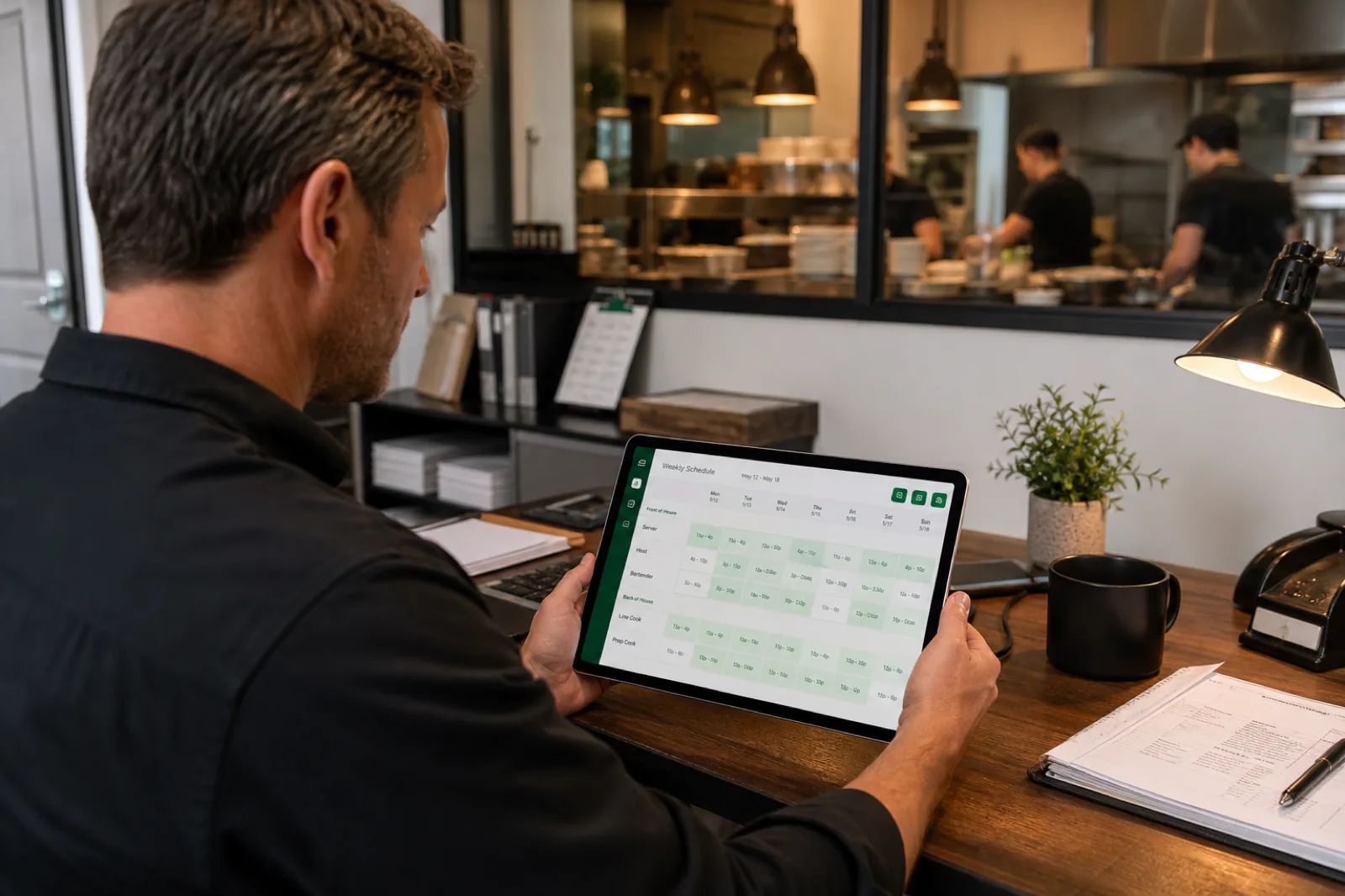
Restaurant staff scheduling: the complete guide for restaurant managers
Restaurant staff scheduling best practices help managers match FOH and BOH coverage to demand, control labor cost, handle call-offs, and keep hourly teams on one published roster.
Read article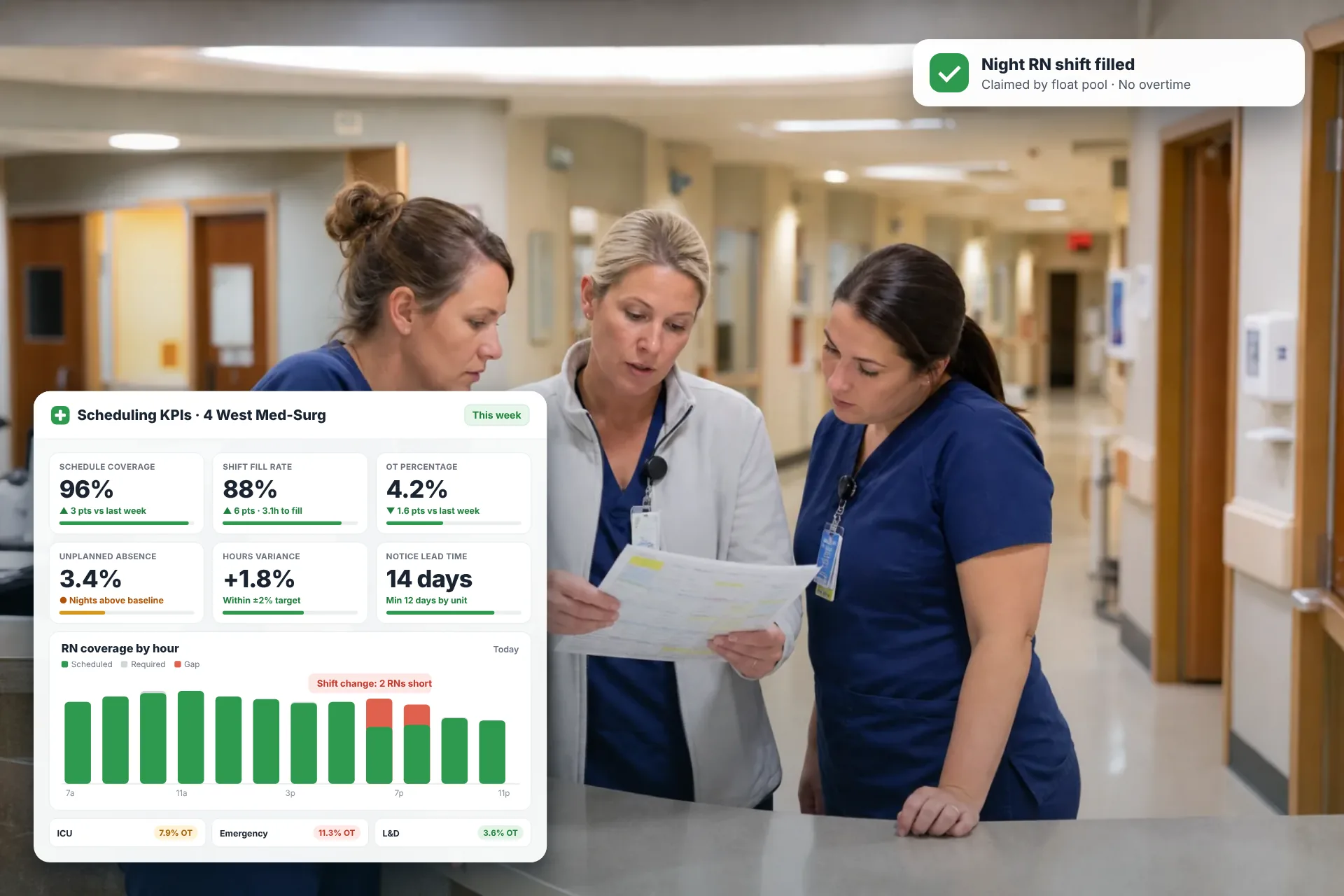
Employee Scheduling KPIs: 12 Metrics Every Operations Manager Should Track
Twelve employee scheduling KPIs with formulas, review cadences, and first actions, plus the trade-offs between them that most KPI lists skip.
Read article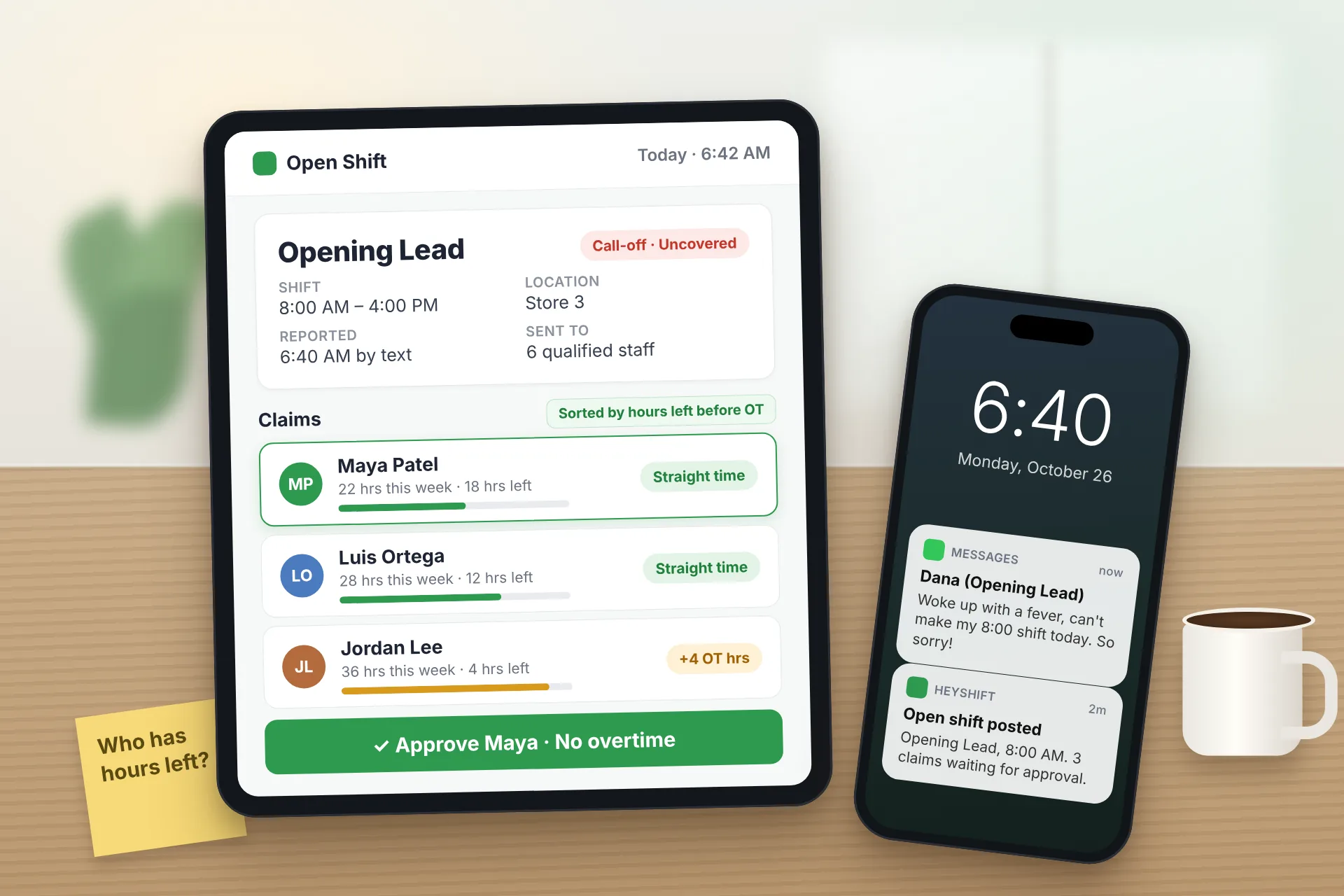
Same Day Employee Call Off Coverage: How to Handle Call-Offs Without Creating Overtime
A 30-minute response sequence for same-day call-offs: build a qualified list, post an open shift to everyone at once, and check overtime before you approve anyone.
Read article