


Nurse Shift Rotation: Best Practices to Improve Staff Well-Being and Patient Care (2026)
Learn nurse shift rotation best practices to reduce burnout, improve staffing coverage, balance workloads, and create fair healthcare schedules with publish-first nurse scheduling software.
Nurse shift rotation: best practices to improve staff well-being and patient care (2026)
The same three nurses worked every third weekend. Night shift stacked four consecutive bands before anyone noticed the rotation log was a sticky note on the staffing office door. When a day-shift nurse called off, the charge nurse texted the usual names instead of posting an open shift. Nurse shift rotation is not a calendar preference problem. It is a patient safety, retention, and labor cost problem that shows up first as fairness complaints and later as overtime spreadsheets finance cannot explain.
Hospitals, nursing homes, assisted living communities, clinics, and long-term care facilities all need continuous coverage. They differ in acuity and shift length, but they share the same rotation failure modes: uneven weekends, fatigue from back-to-back nights, late publish, and rosters that live outside the official system.
This guide covers nurse shift rotation best practices for nurse managers, staffing coordinators, and operations leaders evaluating nurse scheduling software and fair rotation rules across healthcare settings.
Featured answer: What is nurse shift rotation? Nurse shift rotation is the process of rotating nurses between day, evening, night, weekend, and holiday shifts to ensure continuous patient care while balancing workloads and reducing employee fatigue.
Who should read this: Leaders building rotation policy before software rollout, or teams fixing burnout and weekend fairness without adding another spreadsheet tab.
Compare nurse scheduling software and healthcare staff scheduling software. For setting-specific playbooks, read hospital staff scheduling best practices, clinic staff scheduling best practices, and how to create a nursing home staff schedule. Use the overtime risk calculator before you publish the next rotation cycle.
Executive summary
Fair and well-planned nurse shift rotation improves employee well-being, reduces burnout, maintains patient care quality, and helps healthcare organizations retain experienced staff. Rotation is where scheduling policy meets daily operations: who works nights, how weekends distribute, and whether fatigue limits are real or aspirational.
In this guide you will learn:
- What nurse shift rotation includes across healthcare settings
- Why rotation matters for safety, retention, and labor cost
- 2026 workforce trends shaping rotation decisions
- Common rotation challenges from night fatigue to holiday gaps
- Six rotation pattern types with a comparison table
- Eight best practices you can apply this month
- Benefits of digital scheduling for rotation discipline
- How a 300-bed hospital balanced night and weekend bands for 220 nurses
- Software buying checklist, common mistakes, and fifteen FAQs
Table of contents
- What is nurse shift rotation?
- Why nurse shift rotation matters
- Common nurse rotation challenges
- Types of nurse shift rotations
- Nurse shift rotation best practices
- Benefits of digital scheduling for rotations
- How a hospital improved nurse shift rotation
- Choosing nurse scheduling software
- Common nurse rotation mistakes
- 30-day rotation improvement checklist
- Compliance and well-being notes
- Frequently asked questions
- Final thoughts
What is nurse shift rotation?
Nurse shift rotation assigns nurses across day, evening, night, weekend, and holiday bands on a repeating or structured pattern so units stay covered without permanently locking the same people into the hardest shifts.
Rotation planning typically includes:
- Shift band definitions (8-, 10-, or 12-hour lines)
- Weekend and holiday distribution rules
- Night rotation limits and recovery days
- Fixed versus rotating assignment models
- Per-diem and float staff layered on core rotation
- Published roster discipline tied to attendance and leave
Rotating nurse shifts differ from one-off schedule edits. Rotation is the rule set managers use before they assign names to cells. Without documented rules, every new manager reinvents fairness from memory.
Nurse roster discipline means one official published week that nurses, payroll, and leaders share. Parallel notebooks and group texts are not rotation systems.
How rotation differs by healthcare setting
| Setting | Typical rotation focus |
|---|---|
| Hospitals | 3x12 day/night lines, weekend pools, float overlay |
| Nursing homes | 12-hour bands, every-other-weekend rules, CNA mix |
| Assisted living | Smaller teams, broader cross-coverage, weekend fairness |
| Clinics | Session coverage, extended hours, provider-nurse alignment |
| Home healthcare | Visit windows, on-call bands, geographic clusters |
| Long-term care | Stable census lines with holiday surge adjustments |
Rotation policy should be written for your setting, then adapted per unit. A Panama cycle that works in a 24/7 skilled nursing wing may be unnecessary in a weekday-only clinic.
Download starting grids from the 12-hour nurse schedule template, 2-2-3 shift schedule template, or 4-on 4-off shift schedule template before you codify rules in software.
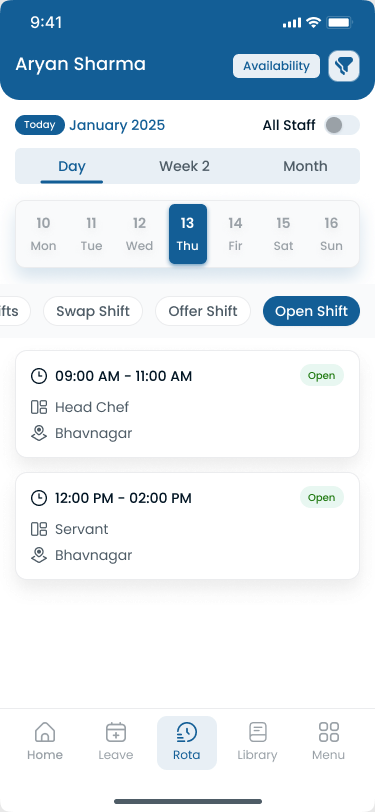
Rotation works when the official roster shows band history, not only this week's names.
Why nurse shift rotation matters
Patient safety: Fatigued nurses miss early warning signs. Consecutive night stacks and short turnarounds raise error risk even when headcount looks sufficient on paper.
Employee well-being: Predictable rotation respects sleep, family obligations, and recovery time. Unpredictable weekend assignment trains staff to disengage.
Burnout prevention: Burnout is often a rotation fairness problem before it is a compensation problem. The same nurses should not carry every holiday by default.
Fair scheduling: Documented rotation rules reduce favoritism perceptions and grievance volume.
Staff retention: Nurses leave units where weekends and nights feel permanently uneven. Retention saves more than reactive sign-on bonuses.
Compliance: Union contracts, rest rules, and internal policies assume you can show how shifts were assigned and changed.
Labor costs: Poor rotation drives overtime, incentive pay, and agency use when internal open shifts are invisible.
Explore shift scheduling and workforce visibility when you connect rotation policy to publish-first software.
Nurse workforce context in 2026
The BLS registered nurse outlook projects continued demand across hospitals, nursing homes, and ambulatory settings with ongoing replacement needs. The American Hospital Association workforce resources describe staffing pressure that makes fair rotation a retention strategy, not only an HR talking point.
When vacancy rates stay elevated, rotation fairness becomes operational risk: the same willing nurses absorb nights, weekends, and holidays until they leave. Software does not hire nurses for you, but it stops hiding who carried the hard shifts.
| Trend | Rotation implication |
|---|---|
| Higher turnover | Document weekend and night history before new managers reset fairness |
| Mixed experience levels | Pair preceptor tags with rotation bands on the official roster |
| Multi-site health systems | One rotation standard per site type beats per-spreadsheet chaos |
| Overtime scrutiny | Build hour review into publish workflow, not payroll cleanup |
| Mobile-first staff | Nurses expect phone access to the official week |
Common nurse rotation challenges
| Challenge | What breaks in practice |
|---|---|
| Night shift fatigue | Consecutive nights without recovery days |
| Weekend fairness | Same names on every Saturday-Sunday band |
| Holiday scheduling | Last-minute grids and premium pay disputes |
| Last-minute absences | Rotation plan ignored; usual suspects on overtime |
| Staff shortages | Rules collapse into whoever answers the phone |
| Overtime | Premium hours used to patch rotation gaps |
| Multiple departments | Each unit runs its own rotation notebook |
| Burnout | High performers punished with permanent hard shifts |
Pair rotation fixes with healthcare attendance tracking best practices and prevent overtime before payroll.
Types of nurse shift rotations
No single pattern fits every unit. Choose rotation type based on setting, union rules, patient volume, and whether nurses prefer fixed lines or rotating bands.
Fixed shifts
Nurses stay on a consistent band (for example, permanent nights or permanent days).
Best for: Staff who chose a line for lifestyle fit; stable outpatient clinics with predictable hours.
Risk: Hard shifts become permanently staffed by the same people unless you audit fairness.
Rotating shifts
Nurses move between day, evening, and night on a defined cycle.
Best for: Units that need cross-coverage and shared weekend load.
Risk: Physiological adjustment cost if cycles change too fast without recovery days.
2-2-3 (Panama schedule)
A 24/7 pattern often summarized as two on, two off, three on, then two off, two on, three off across a four-week cycle.
Best for: Facilities that want every-other-weekend off and continuous coverage without three static shift lines.
Risk: Requires clear documentation so nurses understand long-cycle math. Use the 2-2-3 shift schedule template.
4-on 4-off
Four consecutive work days followed by four days off, common in compressed scheduling outside classic three-shift hospital models.
Best for: Some LTC, residential, and support-heavy lines with 10- or 12-hour blocks.
Risk: Four consecutive long shifts can spike fatigue if rest rules are weak. See 4-on 4-off shift schedule template.
3x12 shifts
Three 12-hour shifts per week, common in hospitals and many nursing homes.
Best for: Inpatient units with established 12-hour day/night lines.
Risk: Weekend and holiday fairness still needs explicit rules; 3x12 alone does not solve rotation equity. Use the 12-hour nurse schedule template.
Weekend rotation pools
Dedicated weekend bands or every-third-weekend rules layered on top of base shift lines.
Best for: Units where weekday lines are stable but weekend coverage drives disputes.
Risk: Pool math errors create accidental double weekends.
Operational tip: Publish weekend pool assignments at the same time as weekday lines. Nurses should not discover weekend duty from a supplemental text three days after the main roster drops.
Holiday rotation overlay
Holiday bands need the same discipline as weekends, with earlier publish and explicit skill mix. Many facilities use a holiday pool that rotates separately from the base 3x12 or Panama cycle so December does not become a manual rebuild.
Document which holidays use premium pay and tie approved assignments to the published roster so payroll does not reconstruct shifts from memory.
Nurse shift rotation patterns compared
| Rotation type | Advantages | Disadvantages | Typical settings |
|---|---|---|---|
| Fixed shifts | Predictable sleep; strong for lifestyle preference | Uneven hard-shift load if unmanaged | Clinics, chosen night lines |
| Rotating shifts | Shared burden; cross-trained staff | Adjustment fatigue if cycles are aggressive | Hospitals, med-surg |
| 2-2-3 (Panama) | Every-other-weekend off; continuous 24/7 coverage | Complex to explain without software | Hospitals, LTC 24/7 |
| 4-on 4-off | Long recovery blocks | Four long days in a row | Residential, some LTC |
| 3x12 | Full-time hours in three days | Weekend/holiday rules still required | Hospitals, nursing homes |
| Weekend pools | Targets fairness pain directly | Adds admin if tracked manually | All 24/7 settings |
For hospital-specific float and ED patterns, read hospital staff scheduling best practices. For outpatient session grids, see clinic staff scheduling best practices.
Choosing a rotation pattern: decision guide
Use this sequence when leadership asks which model to standardize:
- Map required coverage bands (24/7 versus weekday-only, 8 vs 12-hour lines).
- List non-negotiables (union rules, consecutive night caps, minimum recovery hours).
- Pilot one unit for four weeks before hospital-wide mandate.
- Measure fairness (weekend count per nurse, night stacks, OT hours).
- Publish in software once the pilot stabilizes.
| If your priority is... | Start with... |
|---|---|
| Every-other-weekend off in 24/7 units | 2-2-3 Panama template |
| Hospital inpatient 12-hour lines | 3x12 with weekend pool overlay |
| Lifestyle-stable day teams | Fixed day lines with audited holiday pool |
| Long recovery blocks | 4-on 4-off where clinical policy allows |
| Outpatient extended hours | Fixed plus small rotating evening pool |
Fixed versus rotating: when to use which
Fixed shifts work when nurses self-select a band and the unit can still cover weekends and holidays through a documented pool. Audit fixed night lines quarterly so one cohort does not carry permanent hardship.
Rotating shifts work when fairness requires shared exposure to nights and weekends, or when cross-training depends on nurses experiencing multiple bands. Slow the cycle if error reports or fatigue complaints rise after pattern changes.
Many health systems use a hybrid: fixed weekday day lines plus a rotating weekend and night pool. Write the hybrid explicitly so charge nurses do not improvise fairness at shift change.
Nurse shift rotation best practices
1. Publish schedules early
Give nurses maximum notice allowed by policy and contracts. Late publish forces swaps, doubles, and resentment before the rotation cycle starts.
Publish-first means one official roster on mobile, not a PDF buried in email.
2. Rotate fairly
Track weekend, holiday, and night history in the system. Fairness is measurable when rotation logs live beside assignments.
3. Respect employee availability
Availability is not the same as preference, but ignoring documented constraints guarantees last-minute holes. Maintain PTO, education leave, and secondary job blocks in the same tool you publish from.
Explore people and availability and leave management.
4. Limit consecutive night shifts
Set a maximum consecutive night count per policy. Charge nurses should not need to remember who worked four nights in a row; the roster should show it.
5. Monitor overtime while planning
Review hour totals before publish, not after payroll export. Use the overtime risk calculator when building rotation weeks.
6. Enable manager-approved shift swaps
Swaps add flexibility without abandoning rotation rules. Route requests through the published roster with approval and skill checks.
Read employee shift swapping best practices and open shift and swap approvals.
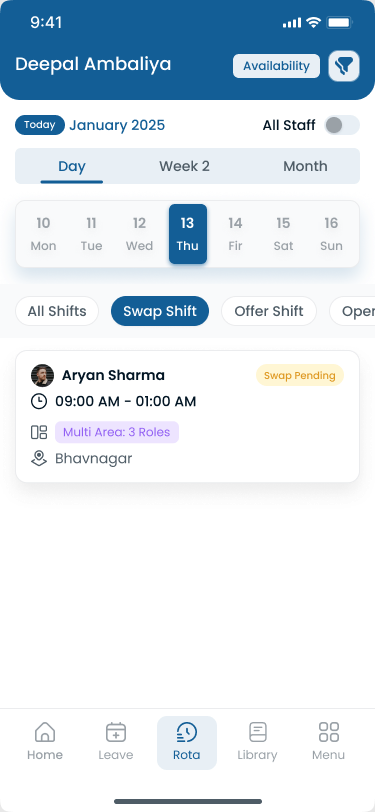
Approved swaps should update the same published week payroll and leaders trust.
7. Use scheduling software for rotation rules
Nurse scheduling software stores templates, rotation history, credentials, and hour totals where managers build the week. Spreadsheets cannot enforce fairness at scale across departments.
Compare nurse scheduling software and healthcare staff scheduling software.
8. Review schedules regularly
Weekly rotation review beats quarterly burnout surveys. Confirm weekend pool math, night stacks, open shifts, and hour limits before handoffs stack.
Weekly rotation review checklist
| Step | Question |
|---|---|
| Night stacks | Did anyone exceed consecutive night limits? |
| Weekend pool | Is this week's weekend assignment consistent with rotation history? |
| Holidays | Are holiday bands staffed per published rules? |
| Open shifts | Did internal qualified staff get first visibility? |
| Overtime | Who is near limits before the next cycle publishes? |
Benefits of digital scheduling for rotations
Digital healthcare shift scheduling helps organizations:
- Improve visibility with one official roster across units
- Allocate shifts fairly using rotation history, not manager memory
- Reduce manual work when templates repeat cycle logic
- Process shift changes faster with mobile open shifts and swaps
- Give mobile access so nurses see band changes immediately
- Improve communication with app notifications instead of text chains
- Lower overtime by filling gaps before automatic doubles
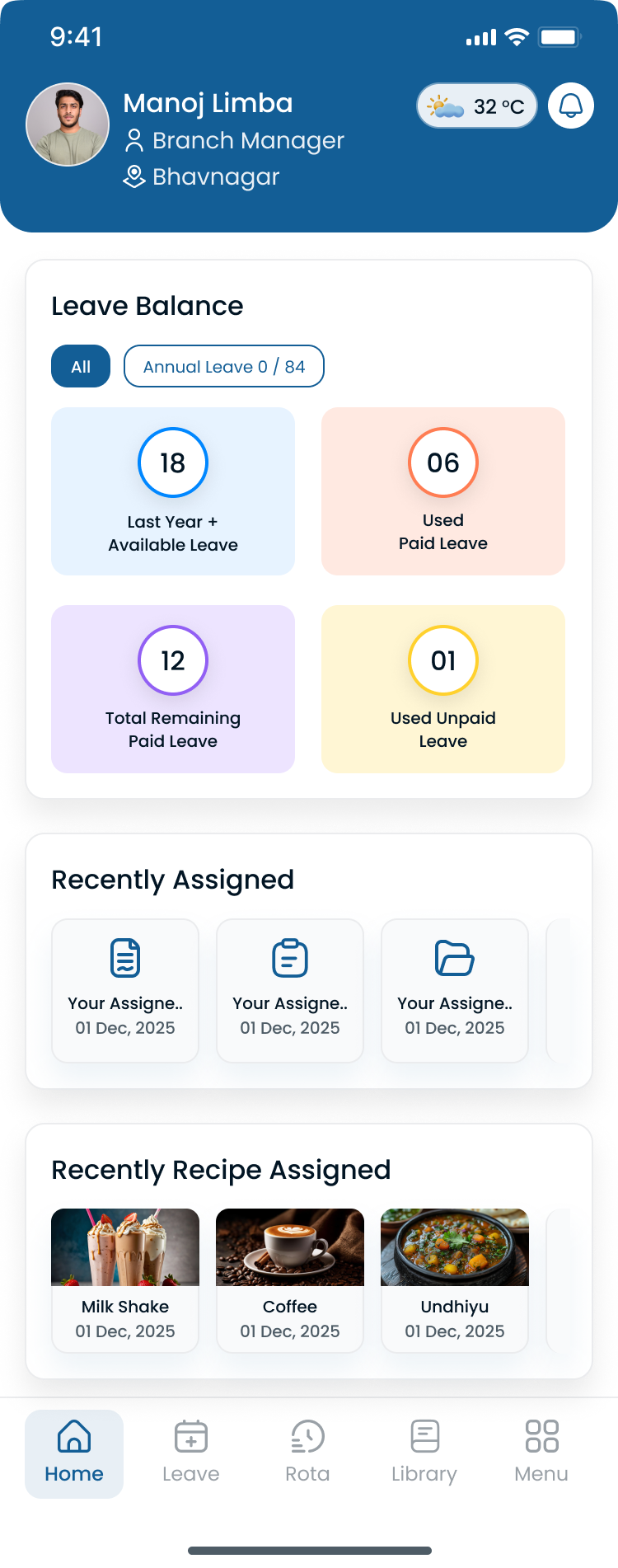
Hour totals should be visible while the rotation week is still a draft.
How a hospital improved nurse shift rotation
Before: 300 beds, 220 nurses, uneven nights and weekends
A 300-bed hospital with roughly 220 nurses ran nurse shift rotation through unit-specific spreadsheets and staffing office texts. Night bands stacked on the same names because those nurses always said yes. Weekend assignments felt permanent. Overtime rose when call-offs hit units without a visible open-shift list. Nurses described the schedule as fair on paper and unfair in practice.
The month rotation rules broke down
A flu surge collided with three concurrent weekend call-offs. Med-surg pulled night nurses into overtime while day-shift staff were unaware of open bands on other units. Finance flagged premium hours on nurses already above targets. Exit interviews cited weekend load, not base pay.
After: structured rotation rules and centralized scheduling
The hospital documented rotation limits (consecutive nights, weekend pool cadence, holiday band rules) and moved publishing to centralized nurse scheduling software with mobile open shifts, manager-approved swaps, leave visible before publish, and hour totals on the draft roster.
| Challenge | Before | After |
|---|---|---|
| Weekend fairness | Sticky-note rotation log | History tracked on official roster |
| Night stacks | Four consecutive nights common | Policy limits visible while scheduling |
| Call-off fill | Texts to usual overtime names | Open shifts to qualified staff on mobile |
| Multi-unit visibility | Parallel Excel files | One staffing office publish channel |
| Overtime | Surprises at payroll | Hour review before each cycle publishes |
| Nurse satisfaction | Fairness complaints recurring | Predictable rotation with documented rules |
Software did not replace clinical judgment or union agreements. It made rotation rules operational instead of aspirational.
Lessons the staffing office reused
The hospital kept three habits after rollout:
- Rotation history on the roster: weekend and night counts visible while building the next cycle
- Open shifts before doubles: qualified internal staff received mobile notifications before mandatory overtime
- Friday hour review: nurse managers confirmed OT risk before Sunday publish
Those habits linked rotation policy to attendance management software expectations finance already had.
Choosing nurse scheduling software
Evaluate nurse scheduling software for rotation-heavy healthcare teams on:
| Requirement | Why it matters for rotation |
|---|---|
| Automated shift rotation | Templates repeat cycle logic without manual rebuild |
| Availability tracking | PTO and constraints before names are placed |
| Shift swapping | Flexibility within fairness rules |
| Mobile scheduling | Nurses see band changes and open shifts |
| Attendance tracking | Planned vs worked hours on one timeline |
| Leave management | Leave blocks visible before rotation publish |
| Overtime monitoring | Hour alerts while building cycles |
| Multi-department scheduling | One account for hospital, clinic, or LTC sites |
Demo questions for nurse managers
- Can we template 3x12, Panama, and weekend pool rules per unit?
- Does the system show weekend and night history per nurse?
- How are open shifts filtered to qualified credentials?
- Do swaps and pickups update hour totals immediately?
- Can we roll up rotation OT trends across departments?
Fair nurse scheduling takes planning and flexibility. Heyshift helps healthcare organizations create balanced schedules, manage attendance, reduce overtime, and coordinate shift rotations across departments from one platform.
Rollout beats big-bang when unions, per-diem habits, or multi-site variation exist. Start where fairness complaints are loudest.
Implementation phases for rotation software
| Phase | Focus | Outcome |
|---|---|---|
| Phase 1 | Document rules | Night caps, weekend pool, holiday policy written |
| Phase 2 | Template one unit | 3x12 or Panama live on mobile |
| Phase 3 | History and swaps | Fairness visible; approved swaps update hours |
| Phase 4 | Attendance and analytics | Planned vs worked; OT trends by unit |
Read employee scheduling software ROI guide when you build the business case.
Common nurse rotation mistakes
Too many consecutive night shifts: trains fatigue and errors.
Uneven weekend rotations: drives turnover faster than small pay bumps fix.
Ignoring documented availability: creates predictable last-minute holes.
Spreadsheet rotation at scale: version conflicts across units.
Publishing too late: forces crisis swaps that break fairness.
Overusing overtime: patches rotation gaps instead of fixing rules.
No rotation history: every new manager resets fairness from zero.
Treating all settings the same: clinic session grids are not inpatient 3x12.
Skipping mobile adoption: nurses never see the official roster.
Separating attendance from schedule: payroll and fairness disputes multiply.
Holiday one-offs: December rebuilt from scratch each year instead of reusing holiday pool rules.
Night shift rotation: practical limits
Night rotation is where fairness and safety collide. Policies vary by employer and contract, but operators stabilizing units often adopt limits similar to these planning defaults (confirm with your HR and legal counsel):
| Rule type | Example planning default |
|---|---|
| Consecutive nights | Cap at three or four before required recovery day |
| Turnaround rest | Minimum hours between end of night and next day assignment |
| Weekend cadence | Every second or third weekend in pool, tracked in software |
| Holiday pool | Rotate annually with visible assignment history |
Charge nurses should see violations while building the week, not during handoff when replacement options are thin.
Read reduce employee no-shows and last-minute call-offs when night call-offs repeatedly break rotation limits.
30-day rotation improvement checklist
| Week | Focus | Actions |
|---|---|---|
| Week 1 | Document rules | Write night limits, weekend pool, holiday policy |
| Week 2 | One roster | Pick official publish channel; stop parallel notebooks |
| Week 3 | History tracking | Log weekend and night assignments for four weeks |
| Week 4 | Software pilot | Template one unit; mobile open shifts live |
Pilot med-surg or your highest-churn unit first if hospital-wide rollout is heavy.
Compliance and well-being notes
Healthcare employers operate under federal and state wage and hour rules, meal and rest requirements, collective bargaining agreements where applicable, and internal safe staffing policies. Rotation software supports operational discipline; it does not replace legal counsel, licensure compliance, or clinical staffing standards.
The American Nurses Association publishes workforce and healthy work environment resources relevant to scheduling and fatigue. The American Hospital Association describes hospital workforce pressure and sustainable staffing approaches. The BLS registered nurse outlook projects continued demand with replacement needs across settings. SHRM workforce planning guidance connects fair scheduling practices to retention. The Occupational Safety and Health Administration publishes healthcare worker safety guidance relevant to long shifts and fatigue.
Pair rotation policy with healthcare attendance tracking and payroll planning when finance needs clean handoffs.
Frequently asked questions
What is nurse shift rotation?
Nurse shift rotation is the process of rotating nurses between day, evening, night, weekend, and holiday shifts to ensure continuous patient care while balancing workloads and reducing employee fatigue.
How often should nurse shifts rotate?
Frequency depends on setting and policy. Many inpatient units use 4- to 12-week cycles for weekend pools; night rotations often limit consecutive nights before a recovery block. Document your rule and apply it consistently.
What is the healthiest shift rotation?
There is no universal winner. Fixed lines work for staff who chose them; slower rotating cycles with recovery days often beat rapid flip-flops. Limit consecutive nights and track weekend fairness in software.
How can hospitals reduce nurse burnout?
Publish early, balance weekends and holidays, cap consecutive nights, fill open shifts fairly, and give mobile access to the official roster. Read hospital staff scheduling best practices.
Should nurses have fixed or rotating shifts?
Depends on unit needs and staff preference. High-acuity 24/7 units often need rotating pools for fairness; stable outpatient clinics may use fixed day lines. Many hospitals mix both with explicit rules.
Can scheduling software automate shift rotation?
Yes. Nurse scheduling software can store templates for 3x12, Panama, weekend pools, and rotation history so managers are not rebuilding logic in Excel each cycle. Compare nurse scheduling software.
What is a 2-2-3 nurse schedule?
A 2-2-3 or Panama pattern rotates on/off blocks across a multi-week cycle for 24/7 coverage, often yielding every-other-weekend off. Use the 2-2-3 shift schedule template.
How do nursing homes handle nurse rotation?
Many LTC sites use 12-hour bands with weekend rotation pools. See how to create a nursing home staff schedule and assisted living staff scheduling.
How do clinics differ from hospital rotation?
Clinics staff outpatient sessions; rotation often means provider and nurse coverage across extended hours, not inpatient night stacks. See clinic staff scheduling best practices.
Should rotation rules live in policy or software?
Both. Policy defines limits; software makes limits visible while scheduling. Spreadsheets alone rarely enforce fairness at scale.
How do I evaluate ROI on nurse scheduling software?
Track overtime per unit, weekend complaint volume, manager hours on scheduling, payroll corrections, and turnover on high-OT units before and after rollout.
Can caregivers use the same rotation practices?
Yes. Home and residential caregivers face similar weekend and fatigue fairness issues. Read caregiver scheduling best practices and home healthcare scheduling.
Does Heyshift support multi-department nurse rotation?
Yes. Heyshift supports multi-department scheduling, mobile access, swaps, attendance, leave, and workforce visibility for growing healthcare operators.
Where should teams start without software?
Download the 12-hour nurse schedule template, document weekend and night limits, publish one unit on one channel for four weeks, then evaluate software.
How does rotation relate to hospital float pools?
Float staff add flexibility on top of base rotation. Hospitals should tag float credentials and hour limits centrally. Read hospital staff scheduling best practices.
Final thoughts
Better nurse shift rotation improves patient care, reduces burnout, supports fair workloads, and helps healthcare organizations retain staff across hospitals, nursing homes, assisted living, clinics, and long-term care settings.
Teams that publish early, document rotation rules, limit consecutive nights, balance weekends deliberately, and replace spreadsheet rotas with modern nurse scheduling software gain the visibility to keep coverage fair without burning out the same nurses every month.
One line to keep: rotation fairness is a system, not a favor. Write the rules, publish once, and review history every week.
Related Healthcare Resources
Continue with related topics
Pulled from shared tags when possible, otherwise the newest notes from the blog.
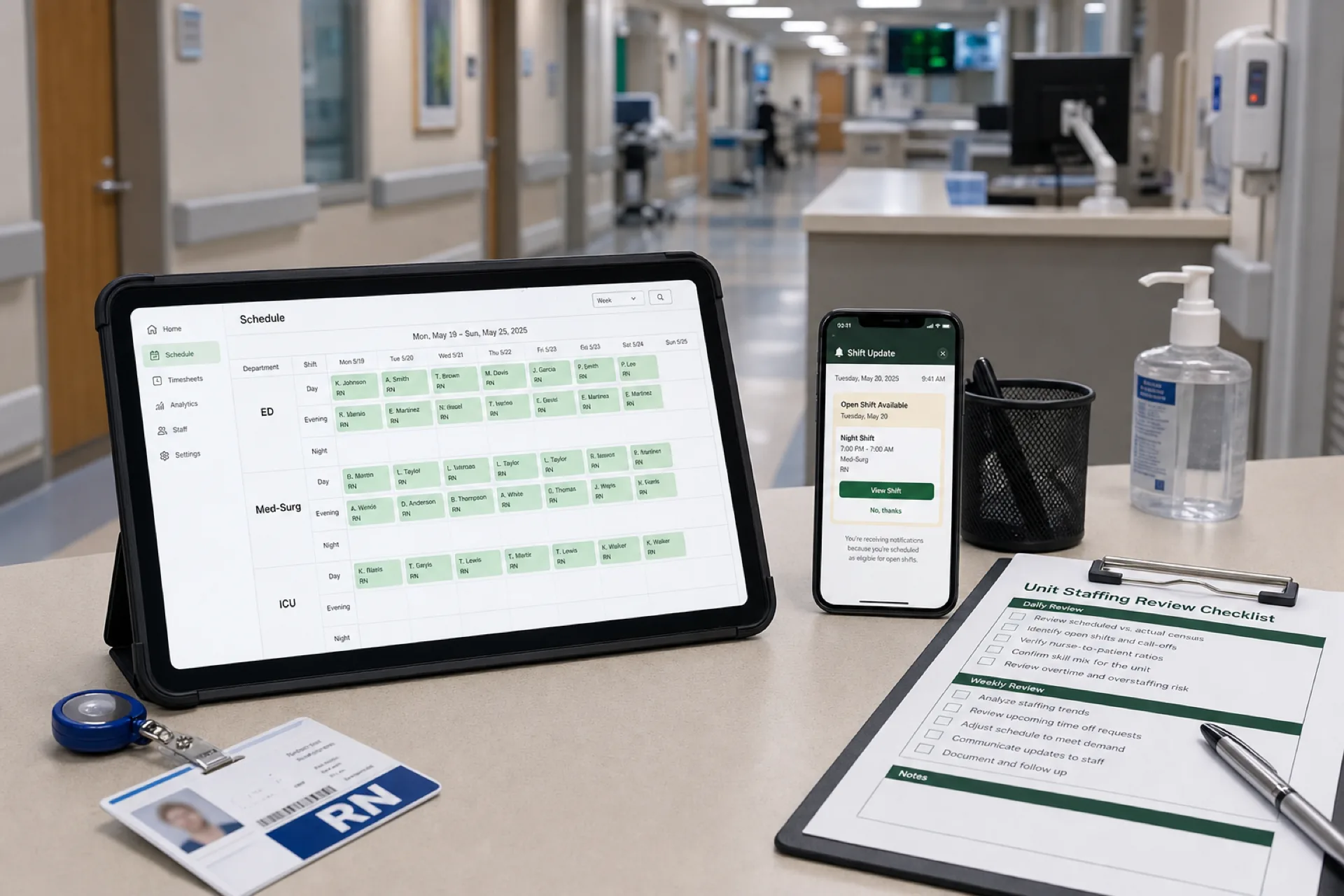
Hospital Staff Scheduling: Best Practices to Improve Coverage and Reduce Labor Costs (2026)
Learn hospital staff scheduling best practices to improve nurse coverage, reduce overtime, optimize workforce planning, and enhance patient care across inpatient, emergency, and surgical units with publish-first scheduling software.
How to Create a Nursing Home Staff Schedule That Reduces Overtime (2026 Guide)
Learn how nursing homes build efficient staff schedules, reduce overtime, improve shift coverage, and manage nurses, CNAs, and caregivers with modern scheduling strategies.

Healthcare Leave Management: Best Practices for Hospitals, Clinics & Care Providers (2026)
Learn healthcare leave management best practices to reduce scheduling conflicts, improve staffing coverage, manage PTO, and simplify workforce scheduling for hospitals, clinics, nursing homes, and care providers.