


Healthcare Attendance Tracking: Best Practices for Hospitals, Clinics, and Care Facilities (2026)
Learn healthcare attendance tracking best practices to reduce payroll errors, improve compliance, monitor nurse and caregiver attendance, and streamline workforce management across hospitals, clinics, and care facilities.
Healthcare attendance tracking: best practices for hospitals, clinics, and care facilities (2026)
A nurse clocks in twelve minutes late. A caregiver forgets to punch out after a double. A clinic manager approves a correction from memory instead of the published shift. Payroll exports a week that does not match what the floor thought was official. In healthcare, those gaps are not only finance problems. They are staffing, safety, and compliance problems.
Healthcare attendance tracking is how you connect who was scheduled, who showed up, who worked overtime, and who took leave on one record payroll and operations can trust. When attendance sits beside scheduling, patient care stays covered, labor cost stays visible, and administrators stop reconciling three versions of the same Tuesday.
This guide covers healthcare attendance tracking best practices for hospitals, outpatient clinics, nursing homes, assisted living communities, home health agencies, and other care settings with roughly 20 to 500 employees evaluating healthcare attendance software.
Featured answer: What is healthcare attendance tracking? Healthcare attendance tracking is the process of monitoring employee clock-ins, clock-outs, shift attendance, breaks, overtime, and leave to ensure healthcare organizations maintain adequate staffing, accurate payroll, and regulatory compliance.
Who should read this: Practice administrators, nurse managers, HR and payroll leads, and operations directors at USA healthcare organizations who need attendance discipline that supports scheduling, compliance, and labor cost control.
Compare platforms on healthcare staff scheduling software, nurse scheduling software, and attendance management software. Download the healthcare attendance sheet template to reconcile punches beside your published schedule. For related playbooks, see healthcare leave management best practices, home healthcare scheduling best practices, assisted living staff scheduling best practices, and how to create a nursing home staff schedule. Use the overtime risk calculator while reviewing hour totals.
Executive summary
Accurate hospital attendance tracking and clinic punch discipline affect patient safety, payroll accuracy, staffing levels, compliance confidence, and labor margin. Organizations that track attendance digitally, link punches to published shifts, and review exceptions daily spend less time on manual corrections and more time on coverage and care quality.
In this guide you will learn:
- What healthcare attendance tracking includes and who it affects
- Why attendance matters across hospitals, clinics, and residential care
- Healthcare workforce trends shaping attendance expectations in 2026
- Common challenges from missed punches to multi-site blind spots
- Nine attendance best practices you can apply this month
- How attendance tracking methods compare (paper through workforce software)
- Benefits of digital attendance for payroll and compliance
- How a regional provider with four clinics simplified attendance
- What to look for in nurse attendance software and buying checklists
- Common mistakes and fourteen FAQs
Table of contents
- What is healthcare attendance tracking?
- Healthcare workforce trends in 2026
- Why attendance tracking matters in healthcare
- Common attendance challenges in healthcare
- Attendance challenges by care setting
- Healthcare attendance tracking best practices
- Attendance tracking methods compared
- Benefits of digital attendance tracking
- Compliance and workforce planning notes
- How a regional healthcare provider improved attendance
- Choosing healthcare attendance software
- Common healthcare attendance mistakes
- How Heyshift supports healthcare attendance
- 30-day rollout checklist
- Frequently asked questions
- Final thoughts
What is healthcare attendance tracking?
Healthcare attendance tracking records when clinical and support staff start work, end work, take breaks, arrive late, leave early, miss scheduled shifts, or work beyond planned hours.
It typically includes:
- Clock-in and clock-out events tied to scheduled shifts
- Late arrivals, early departures, and no-shows
- Break and meal period tracking where policy requires it
- Overtime and extra hours beyond the published roster
- Approved leave, PTO, and call-offs
- Manager corrections with audit history
- Roll-up reporting across departments, wings, or clinic sites
Healthcare attendance software adds mobile clock-in, geofencing or location validation, automated overtime alerts, dashboards, and export paths toward payroll. The strongest implementations link attendance to the same published schedule nurses and caregivers already follow.
For a general small-business primer on attendance basics, see employee attendance tracking guide. For multi-site rollout patterns, read attendance management software for multi-location teams.
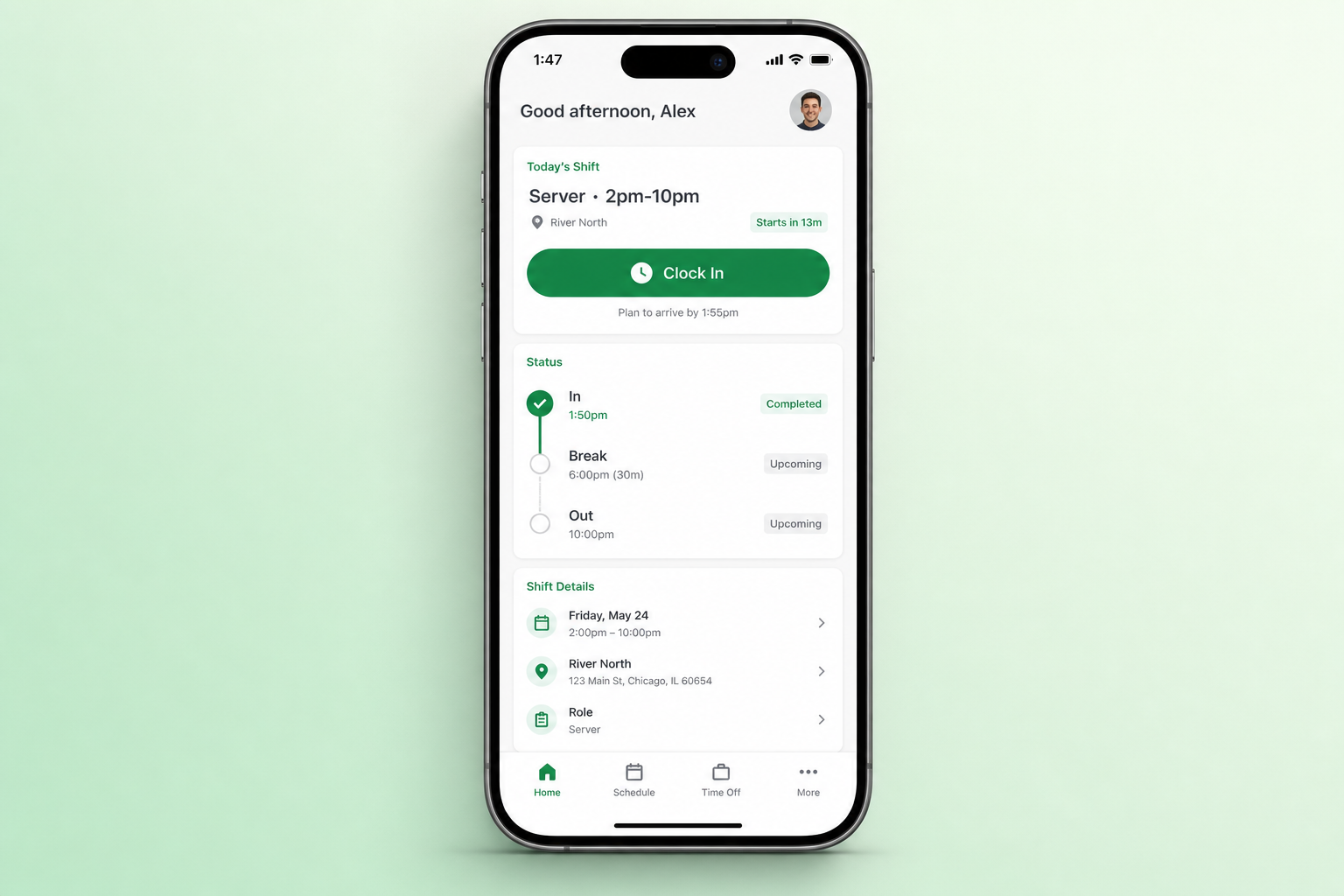
Mobile attendance works when clock events reference the shift managers already published.
Healthcare workforce trends in 2026
Hospitals, clinics, and care facilities enter 2026 with staffing shortages, rising labor cost, and scrutiny that makes "we'll fix hours in payroll" a risky habit. Operators stabilizing attendance connect punches to published shifts, review exceptions daily, and give deskless staff one mobile path they trust.
| Trend | What operators see | Attendance implication |
|---|---|---|
| Nurse and aide shortages | Thin benches; overtime fills gaps | Track hours while scheduling, not after export |
| Deskless clinical staff | Nurses and caregivers ignore email | Mobile clock-in beside official roster |
| Multi-site outpatient growth | Attendance siloed per clinic | Central dashboards with site roll-up |
| Payroll dispute volume | Planned vs worked diverges weekly | One source of truth for schedule and punches |
| Compliance documentation | Surveyors and payers ask for consistency | Audit trail on corrections and approvals |
| Manager bandwidth limits | Supervisors reconcile tabs at night | Automate alerts; standardize policies |
Clinical labor demand stays elevated
The BLS registered nurse outlook projects continued demand across hospitals, outpatient centers, and long-term care. The nursing assistant outlook describes persistent replacement needs in residential and hospital settings. When hiring lags demand, attendance visibility prevents overtime from compounding on the same staff every week.
Outpatient and ambulatory volume shifts punch patterns
Clinics with variable patient volume see staggered starts, split shifts, and per-diem pools that paper timesheets handle poorly. Digital attendance with role tags and site labels beats manual tally sheets when Tuesday looks nothing like Thursday.
Quality programs raise the bar on operational discipline
Medicare-certified providers and survey-driven care settings operate under CMS quality expectations that reward organized, documented care delivery. Attendance software does not replace clinical documentation or licensure rules. It helps leadership prove planned coverage matched worked hours when questions arise.
Roles healthcare organizations track attendance for:
- Registered nurses and licensed practical nurses
- Nursing assistants and caregivers
- Medical assistants and patient care technicians
- Therapists and diagnostic staff
- Medication aides and pharmacy technicians
- Environmental services and dietary teams
- Front desk and patient access staff
- Per-diem and agency workers (where policy allows shared visibility)
Attendance tracking does not replace your EMR, timekeeping compliance counsel, or payroll provider. It gives operators one workforce layer scheduling, punches, leave, and reporting can share. Read employee scheduling software ROI guide when you frame labor savings during evaluation.
Why attendance tracking matters in healthcare
Attendance is the bridge between the schedule you published and the hours you pay. In healthcare, that bridge carries extra weight.
Patient safety: Understaffed bands and unknown absences delay medications, assistance, and clinical response. Knowing who is on the floor now matters as much as knowing who was supposed to be.
Payroll accuracy: Missed punches, buddy punching, and manual corrections create paycheck disputes that drain HR and manager time.
Compliance: State licensure, union agreements, meal and rest rules, and internal policies all assume you can show who worked when.
Staffing shortages: When backups are thin, attendance visibility helps you fill gaps internally before mandatory overtime.
Labor costs: Unplanned overtime, shift overruns, and early clock-ins compress margin without anyone noticing until close.
Employee accountability: Fair discipline starts with consistent records, not supervisor memory.
Explore shift scheduling and attendance tracker when you want schedule and punch data on one timeline.
Common attendance challenges in healthcare
| Challenge | What breaks in care settings |
|---|---|
| Missed punches | Payroll guesses hours; disputes follow |
| Buddy punching | Pay for staff who were not on the unit |
| Late arrivals | Med passes and handoffs start behind |
| Early departures | Coverage gaps mid-shift |
| No-shows | Last-minute overtime on already tired teams |
| Shift overruns | Unplanned OT when staff stay without approval |
| Overtime stacking | Same nurses exceed thresholds weekly |
| Manual corrections | Managers fix hours in side spreadsheets |
| Multi-location blind spots | Regional leads cannot see clinic exceptions live |
| Attendance separate from scheduling | Planned shift and worked hours never match |
Pair fixes with attendance corrections workflow and prevent overtime before payroll.
Attendance challenges by care setting
Healthcare attendance breaks differently depending on whether staff work inpatient units, outpatient clinics, residential wings, or patient homes. The punch path and review rhythm should match the setting.
Hospital units and inpatient floors
Inpatient settings run 24/7 bands with handoffs that make late arrivals visible fast. Charge nurses need a live view of who punched in for the official shift, not a text confirming arrival. Buddy punching on busy units can hide coverage gaps until medication or response delays surface.
Hospital habits that work:
- Tie every punch to the published unit assignment, not only a building-wide clock
- Review missed punches at shift change, not end of pay period
- Route overtime on inpatient units through the same approval path as scheduled extra shifts
- Keep per-diem and float pool hours visible on the regional dashboard when nurses work across units
Outpatient clinics and ambulatory sites
Clinic attendance is staggered: first patients arrive at 7 a.m., therapists run midday blocks, and administrators close charts after last appointment. Paper sign-in sheets fail when four providers share one front desk and per-diem medical assistants cover lunch gaps.
Clinic habits that work:
- Publish staggered start times on one roster per site
- Use mobile clock-in when providers move between exam rooms and telehealth blocks
- Apply site-level geofencing when policy requires on-premises punches
- Roll up attendance exceptions weekly by clinic for regional comparison
Nursing homes, assisted living, and residential care
Residential care attendance ties directly to med passes, dining service, and night rounds. A missing caregiver punch is a coverage question, not only a payroll line.
Read how to create a nursing home staff schedule and assisted living staff scheduling best practices for publish patterns that make attendance trustworthy.
Home health and field caregivers
Home health adds travel and visit windows. Attendance may need to align with EVV or payer requirements from separate vendors. Heyshift focuses on schedule-linked shift attendance for coordinators; pair with your EVV process where Medicare or state rules require visit verification.
See home healthcare scheduling best practices for field coordination patterns.
Healthcare attendance tracking best practices
1. Publish schedules early
Attendance disputes often start with a schedule staff never saw. Publish one to two weeks ahead when possible so clock events reference shifts employees recognize.
Read home healthcare scheduling best practices and assisted living staff scheduling best practices for publish rhythm patterns in care settings.
2. Track attendance digitally
Move off paper sign-in sheets and standalone Excel tabs as soon as you have more than one department or site. Digital records create audit history managers and payroll can review.
3. Use mobile clock-in for deskless staff
Nurses, caregivers, and clinic staff need phone-friendly punch paths tied to the official roster. Explore mobile and kiosk attendance and the mobile app.
4. Apply geofencing or location validation where appropriate
For fixed campuses and clinic sites, location validation reduces off-site punches while preserving flexibility for legitimate float assignments. Learn geo-fencing and device validation.
5. Review attendance daily
Morning review catches no-shows, late arrivals, and missing punches while supervisors can still adjust coverage. Do not wait until payroll export.
Daily supervisor checklist
| Step | Question |
|---|---|
| No-shows | Who missed a scheduled shift today? |
| Late / early | Which punches need manager review? |
| Open coverage | Did attendance gaps trigger schedule changes on the official roster? |
| Overtime | Who is approaching hour limits today and this week? |
| Corrections | Are pending correction requests assigned to an approver? |
6. Automate overtime alerts
Configure alerts when staff approach daily or weekly thresholds. Use the overtime risk calculator while building the schedule, not only after punches arrive.
See smart attendance rules for policy guardrails on late, early, and unscheduled hours.
7. Monitor attendance trends weekly
Review late patterns, missed punches by department, overtime by role, and correction volume. Attendance reports and analytics and workforce visibility help regional leads spot drift before it becomes payroll noise.
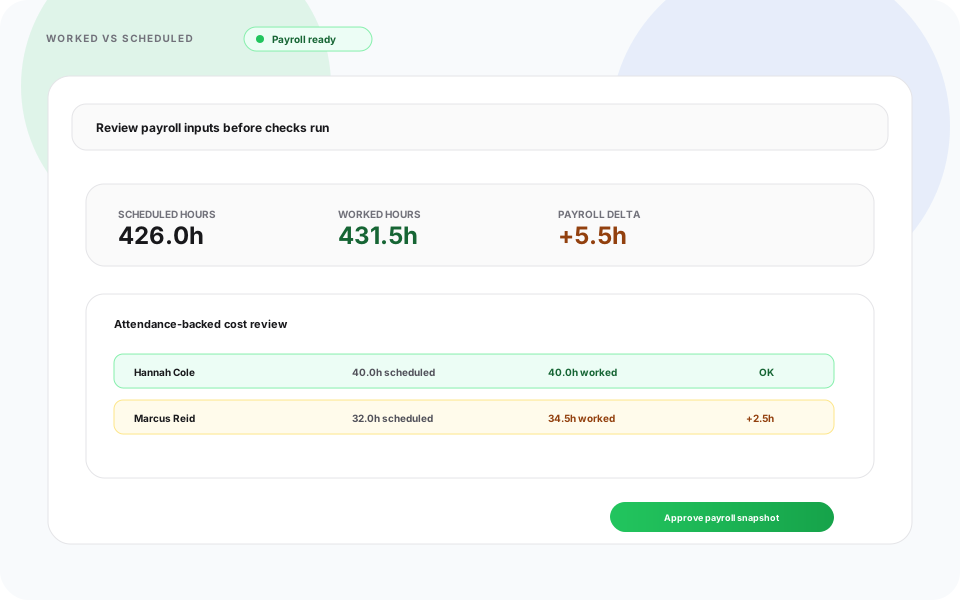
Planned vs worked visibility is the fastest path to fewer payroll corrections.
8. Standardize attendance policies
Document punch expectations, correction deadlines, approver roles, break rules, and overtime authorization. Publish the policy beside the tool you use so managers enforce one standard.
SHRM workforce planning guidance consistently ties labor forecasting and policy discipline to retention and cost control. Your attendance policy should name who approves exceptions and by when each pay period.
9. Reduce buddy punching and attendance fraud
Healthcare settings with shared time clocks or honor-system sign-in sheets invite buddy punching and rounded hours that payroll cannot defend.
Practical controls:
- Require individual app or kiosk login tied to employee identity
- Compare punches to published shift start and end windows
- Flag punches outside geofence or site boundaries when policy requires on-site work
- Review exception reports weekly for repeat late patterns on the same unit
- Train managers to reject unsigned paper corrections after pay period close
Smart attendance rules automate many of these checks so supervisors focus on coverage, not spreadsheet detective work.
Attendance tracking methods compared
| Method | Pros | Cons | Best fit in healthcare |
|---|---|---|---|
| Paper timesheets | Simple; no software cost | Error-prone; no real-time view; weak audit trail | Single-site pilots only |
| Excel | Low cost; familiar | Manual; version conflicts; no mobile | Temporary bridge, not scale |
| Biometric clocks | Reduces buddy punching | Hardware cost; fixed locations; weak schedule link | Hospital entrances, large clinics |
| Mobile app | Flexible; deskless-friendly | Requires smartphones; needs policy | Nurses, caregivers, clinic staff |
| Workforce management software | Scheduling + attendance + leave + reporting | Subscription cost | Multi-department and multi-site operators |
Most growing healthcare organizations outgrow paper and Excel when they add a second clinic, wing, or per-diem pool. Workforce software wins when attendance management healthcare teams need one official week for scheduling, punches, leave, and payroll handoff.
Benefits of digital attendance tracking
| Benefit | Healthcare outcome |
|---|---|
| Accurate payroll | Fewer corrections and paycheck disputes |
| Reduced administrative work | Less manager time on tabs and texts |
| Better workforce visibility | Regional view across clinics or wings |
| Faster approvals | Corrections routed with audit history |
| Lower overtime | Alerts while hours accrue, not after close |
| Improved compliance | Consistent records for policy and survey questions |
| Real-time dashboards | Supervisors see exceptions during the shift |
Digital staff attendance software also supports faster onboarding: new hires learn one punch path tied to the schedule they see on mobile.
Payroll handoff without duplicate entry
Healthcare payroll teams lose days re-keying hours when attendance lives outside scheduling. A single export of approved worked hours, tied to the published week, cuts duplicate entry and gives finance one number supervisors already reviewed.
When your organization uses an external payroll provider, confirm how payroll integration or structured exports map roles, sites, and overtime codes before you roll out campus-wide. Run one pay period in parallel with your old process so variances surface on pilot clinics, not on every site at once.
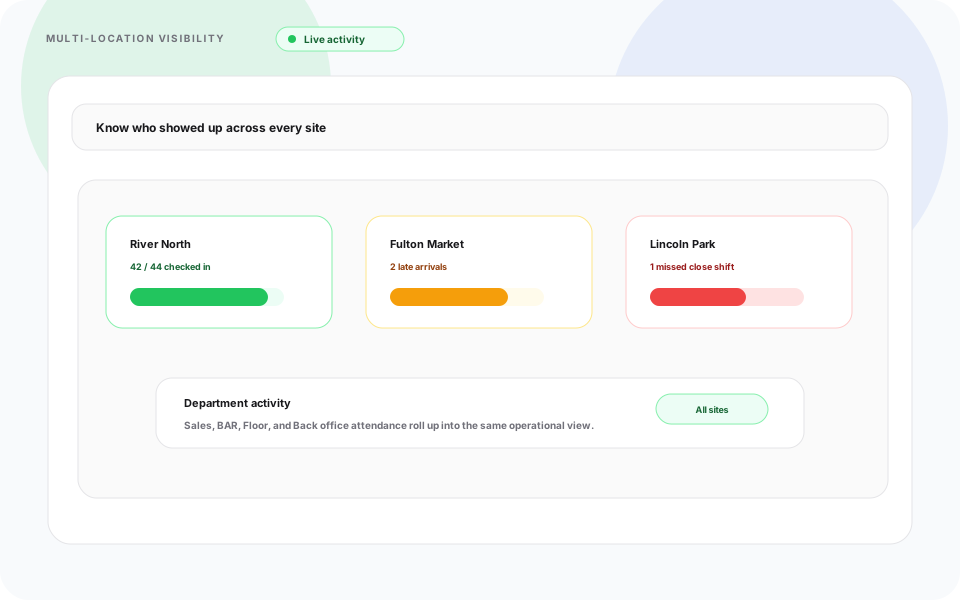
Regional operators should review attendance exceptions without exporting files from every clinic.
Compliance and workforce planning notes
Healthcare attendance sits inside a wider compliance picture. Requirements vary by setting: hospitals, federally qualified health centers, Medicare-certified home health, licensed assisted living, and private medical practices each carry different rules.
Meal and rest periods: State labor rules may require documented breaks. Smart attendance rules and labor compliance management help enforce policy when your counsel defines thresholds.
Overtime and hour limits: Track scheduled and worked hours together so approvals happen before premium pay stacks.
Infection control and safety: The Occupational Safety and Health Administration publishes healthcare worker safety guidance relevant to shift length, fatigue, and safe work practices. During outbreaks, align schedule and attendance changes with CDC healthcare worker resources and local health department rules.
Documentation for surveys and audits: Attendance records support questions about who was on duty. They do not replace clinical records, care plans, or licensure filings.
Scheduling software and attendance tools support operational discipline. They do not replace legal advice, union contract interpretation, or payroll tax compliance.
How a regional healthcare provider improved attendance
Before: four clinics, manual timesheets, payroll surprises
A regional healthcare provider with roughly 180 employees across four outpatient clinics ran attendance on paper timesheets and clinic-specific Excel files. Managers collected sheets weekly. Payroll approvals lagged. Overtime surprises appeared after export because scheduled hours lived in one tool and punches in another.
The week that exposed the gap
A clinic manager approved handwritten corrections from memory after a flu-season surge. Two medical assistants were paid for shifts they left early. A per-diem nurse was not paid for approved extra hours. Finance escalated. Leadership realized they could not answer how many hours each clinic worked against plan for the same week.
After: centralized attendance with mobile clock-ins
The organization moved to centralized healthcare attendance software with published schedules, mobile clock-in/out, manager alerts for late and missed punches, and correction requests with approval routing. Payroll still ran through their existing provider, but export prep started from one attendance summary.
| Challenge | Before | After |
|---|---|---|
| Timesheet collection | Paper per clinic; late submissions | Digital punches tied to published shifts |
| Payroll corrections | Frequent retro fixes | Fewer disputes; audit trail on changes |
| Overtime visibility | Discovered at export | Alerts while hours accrue |
| Regional visibility | Four separate files | Roll-up dashboard across clinics |
| Schedule alignment | Planned vs worked often diverged | One timeline for schedule and attendance |
| Manager time | Hours reconciling sheets | Faster daily review; fewer escalations |
Software did not replace their EMR or payroll vendor. It gave operators one workforce layer clinics and finance could trust.
Evaluate platforms on attendance management software and healthcare staff scheduling software.
Choosing healthcare attendance software
When you evaluate nurse attendance software and broader healthcare workforce management tools, prioritize:
| Requirement | Why it matters |
|---|---|
| Attendance tracking | Core punch capture with history |
| Mobile clock-in/out | Deskless clinical staff need phone access |
| Geofencing or location validation | Site-level accuracy for fixed campuses |
| Shift scheduling integration | Planned vs worked on one roster |
| Leave management | PTO visible before attendance exceptions |
| Overtime monitoring | Alerts and reports before payroll |
| Payroll integration or export | Clean handoff to your payroll provider |
| Multi-location support | Clinic or wing roll-up for regional leads |
| Reporting dashboards | Trends, exceptions, and labor signals |
| Correction workflow | Requests, approvals, and audit trail |
Optional needs such as biometric hardware, EVV for home health, or deep HRIS integration depend on your setting and existing stack. Heyshift focuses on publish-first scheduling, attendance tracking, leave management, payroll-ready exports, and mobile access. Compare tiers on pricing.
Evaluation questions to ask on demos
Use these questions during vendor demos so healthcare attendance software matches how your sites actually run:
- Schedule link: Does every punch reference the published shift, or can staff clock in without a scheduled block?
- Mobile path: Can nurses and caregivers punch from phone without a fixed kiosk?
- Multi-site roll-up: Can regional leads see exceptions across all clinics or wings in one view?
- Correction workflow: Can managers approve changes with audit history before payroll export?
- Overtime signals: Do alerts fire while hours accrue, not only in retrospective reports?
- Leave visibility: Does approved PTO appear before supervisors assign shifts?
- Export handoff: How do approved hours reach your payroll provider or payroll integration workflow?
- Policy rules: Can you configure late, early, and unscheduled thresholds per role or site?
Run one real pay week on pilot units before you expand. Compare scheduled hours, worked hours, and corrections exported against what finance expects.
Connect attendance to the scheduling workflow
The highest ROI in healthcare attendance comes from linking punches to the roster supervisors already publish:
| Workflow step | Without integration | With schedule-linked attendance |
|---|---|---|
| Publish week | Schedule in one file; punches elsewhere | Official roster is punch reference |
| Staff arrives | Clock may not match assignment | Mobile view shows unit and band |
| Call-off | Attendance gap discovered late | No-show visible against published shift |
| Extra hours | OT discovered at export | Alerts during shift or same day |
| Payroll prep | Merge schedule and timesheet files | Export from one attendance summary |
If scheduling is still informal, stabilize publish discipline first using shift scheduling habits, then layer attendance. Jumping to punches without a trusted schedule recreates disputes in a new system.
For broader scheduling comparisons, read nurse scheduling software and employee scheduling software. Start a 30-day free trial, book a demo, or contact Heyshift with your sites and roles.
Common healthcare attendance mistakes
Using paper timesheets at scale: works until you add sites, per-diem staff, or weekend coverage complexity.
Tracking attendance separately from scheduling: guarantees planned vs worked mismatches.
Ignoring overtime alerts: premium pay becomes the default correction path.
Delaying attendance approvals: corrections pile up after staff forget context.
No mobile access: deskless teams invent shadow punch habits.
No attendance reporting: patterns repeat until finance escalates.
Buddy punching unchecked: labor cost and compliance risk rise quietly.
Letting each clinic invent its own process: regional operators cannot compare or improve.
Skipping correction audit trails: disputes become word against word.
Treating payroll export as the first review: fix exceptions daily, not on close day.
How Heyshift supports healthcare attendance
Heyshift connects scheduling and attendance for USA healthcare teams that need publish-first discipline without enterprise HR bloat:
| Capability | Healthcare outcome |
|---|---|
| Shift scheduling | One published roster nurses and caregivers follow |
| Attendance tracker | Punches tied to scheduled shifts |
| Mobile and kiosk attendance | Deskless clock-in paths |
| Smart attendance rules | Policy guardrails on exceptions |
| Attendance corrections | Requests and approvals with history |
| Leave management | PTO beside the grid |
| Workforce visibility | Supervisors see coverage and hours live |
| Attendance reports | Weekly trends and exception review |
| Payroll integration | Cleaner handoff to payroll workflows |
Managing attendance should not require spreadsheets and manual corrections. Heyshift combines employee scheduling, attendance tracking, leave management, overtime visibility, and workforce communication in one platform so healthcare organizations stay organized while focusing on quality care.
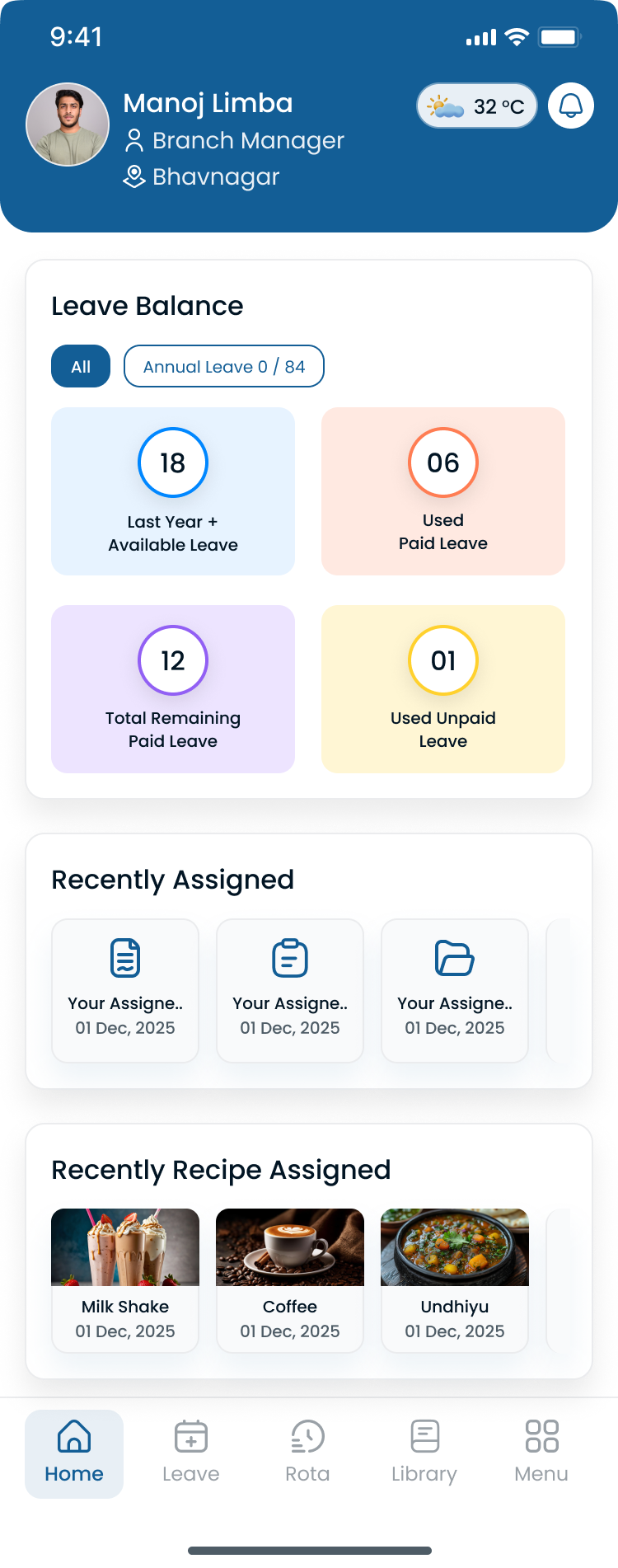
Review hour totals beside attendance exceptions before payroll export.
30-day rollout checklist
| Week | Focus | Actions |
|---|---|---|
| Week 1 | Baseline | Document sites, roles, current punch paths, and correction owners |
| Week 2 | Schedule link | Publish one official week; stop parallel schedule screenshots |
| Week 3 | Mobile punch | Train staff on mobile clock-in tied to published shifts |
| Week 4 | Review rhythm | Daily exception review; weekly trend report; name payroll export owner |
Pilot one clinic or wing before campus-wide rollout if change management is tight. Pair rollout with attendance corrections workflow so managers know how to approve changes.
When you are ready, start a 30-day free trial with your real locations and roles.
Frequently asked questions
What is healthcare attendance tracking?
Healthcare attendance tracking is the process of monitoring employee clock-ins, clock-outs, shift attendance, breaks, overtime, and leave to ensure adequate staffing, accurate payroll, and regulatory compliance.
Why is attendance tracking important in hospitals?
Hospitals need to know who is on each unit, when shifts started and ended, and whether hours match plan. Accurate records support patient safety, payroll, overtime control, and policy enforcement.
Can attendance software reduce payroll errors?
Yes. When punches tie to published shifts and corrections carry audit history, payroll teams export cleaner data and spend less time on retro fixes.
How does mobile clock-in work?
Staff open the workforce app, see their published shift, and punch in and out from mobile. Managers review exceptions against the same roster.
What is geofencing?
Geofencing validates that clock events occur within an approved geographic area around a clinic or campus. It reduces off-site punches while supporting legitimate float work when policy allows.
How can healthcare organizations reduce attendance fraud?
Use individual logins, mobile or kiosk punches tied to identity, manager review of exceptions, audit trails on corrections, and smart attendance rules that flag irregular patterns.
Does attendance software help with compliance?
It supports consistent records for meal and rest policy, overtime authorization, and documentation questions. It does not replace licensure, clinical, or legal compliance programs.
What features should healthcare organizations look for?
Scheduling integration, mobile clock-in, geofencing or site validation, leave management, overtime alerts, multi-location reporting, correction workflows, and payroll export or integration.
Should attendance be separate from scheduling?
No. The strongest healthcare workforce management models link planned shifts and worked hours on one timeline. Separate tools create the mismatches payroll disputes feed on.
How do clinics with per-diem staff track attendance?
Tag per-diem roles in the roster, publish open shifts with approval, and require the same punch path as full-time staff so hours roll up consistently.
How does attendance tracking help nursing homes and assisted living?
Residential care needs reliable shift coverage and fair overtime discipline. See how to create a nursing home staff schedule and assisted living staff scheduling best practices for scheduling context beside attendance.
How does home healthcare attendance differ?
Home health often adds visit-level or EVV requirements from payer programs. Heyshift focuses on shift and schedule-linked attendance; pair with your EVV vendor where required. Read home healthcare scheduling best practices.
Can attendance tracking reduce overtime?
Yes, when supervisors see hour totals while scheduling and reviewing punches, configure alerts, and approve extra hours deliberately. Use the overtime risk calculator.
How do I evaluate ROI on healthcare attendance software?
Track payroll correction hours before and after rollout, count overtime surprises per pay period, and measure manager time spent reconciling timesheets. Use the overtime risk calculator and employee scheduling software ROI guide before vendor selection.
What is the difference between time tracking and attendance tracking in healthcare?
Time tracking often measures task or visit duration for billing or job costing. Healthcare attendance tracking focuses on whether staff worked scheduled shifts, when they arrived and left, and whether hours match plan for payroll and coverage. Many clinics need attendance first; add deeper time tracking only where billing requires it.
Should hospitals replace biometric clocks with mobile attendance?
Not always. Large hospitals may keep biometrics at main entrances and add mobile punches for unit-level flexibility. The goal is one official record finance trusts, not one hardware type everywhere.
Final thoughts
Accurate healthcare attendance tracking supports patient care, improves payroll accuracy, controls labor costs, and simplifies workforce management as hospitals, clinics, and care facilities grow.
Organizations that publish schedules early, track attendance digitally, review exceptions daily, and link punches to the official roster spend less time on manual corrections and more time keeping floors covered.
One line to keep: publish the schedule, punch against it, and fix exceptions before payroll close.
Related Healthcare Resources
Continue with related topics
Pulled from shared tags when possible, otherwise the newest notes from the blog.
Best employee scheduling software for healthcare teams (2026 guide)
Compare the best employee scheduling software for healthcare teams in 2026: clinic staffing, attendance, shift swaps, multi-location coverage, and labor visibility.

Healthcare Leave Management: Best Practices for Hospitals, Clinics & Care Providers (2026)
Learn healthcare leave management best practices to reduce scheduling conflicts, improve staffing coverage, manage PTO, and simplify workforce scheduling for hospitals, clinics, nursing homes, and care providers.
Healthcare Workforce Management: The Complete Guide for Hospitals, Clinics & Care Providers (2026)
Learn healthcare workforce management best practices for hospitals, clinics, and care providers: staff scheduling, attendance tracking, labor planning, overtime reduction, compliance, and workforce communication in one guide.