1. Heyshift
Best for: growing warehouse operations that want scheduling, attendance, and multi-shift workforce management together.
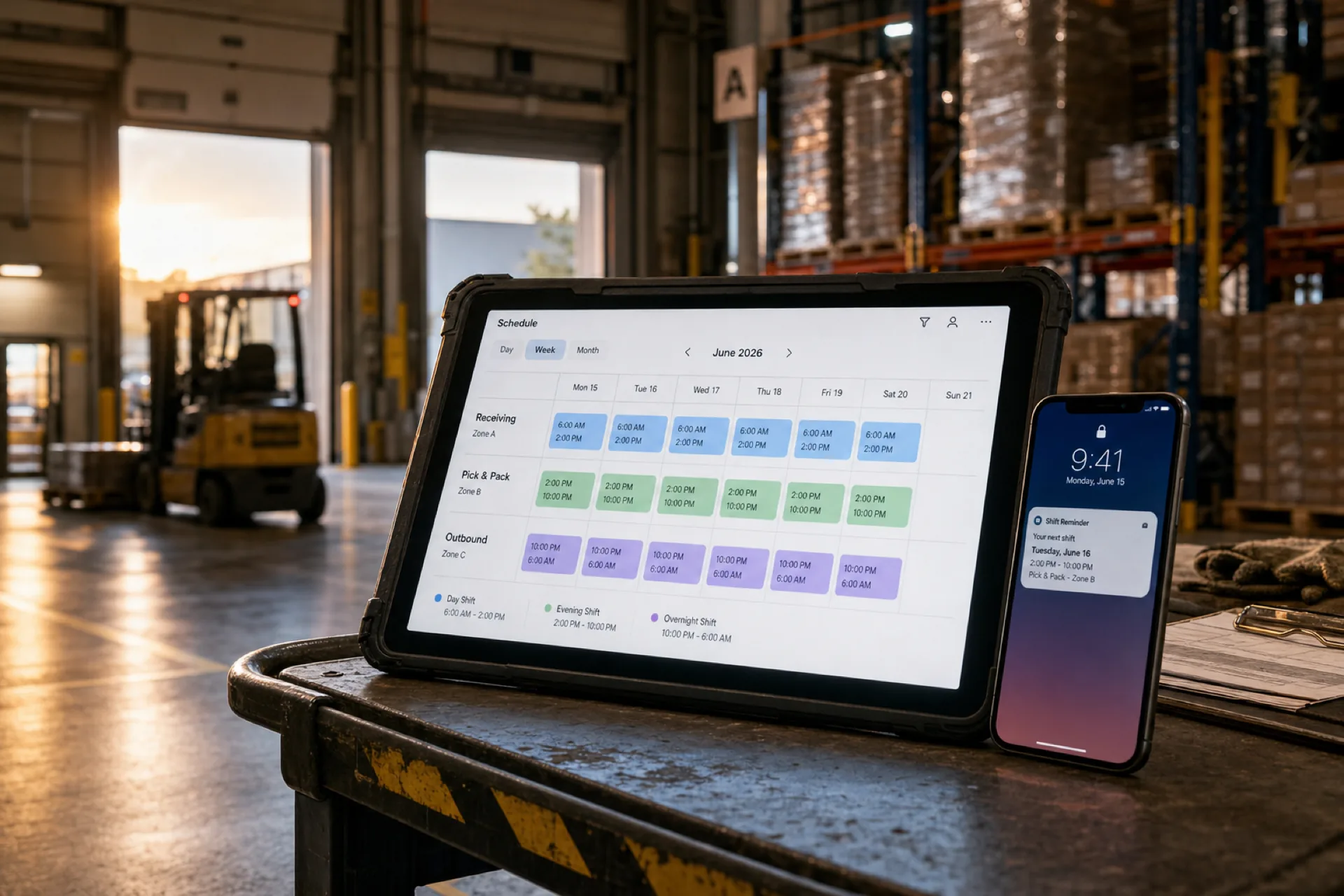
Heyshift helps warehouses manage employee schedules, attendance, leave, swaps, open shifts, communication, and reporting from one platform.
Key features
- Role-based schedules (receiver, picker, packer, forklift operator, supervisor)
- Zone or department templates (receiving, pick-pack, outbound)
- Publish-first week views on desktop for supervisors
- Mobile app for floor staff on every plan
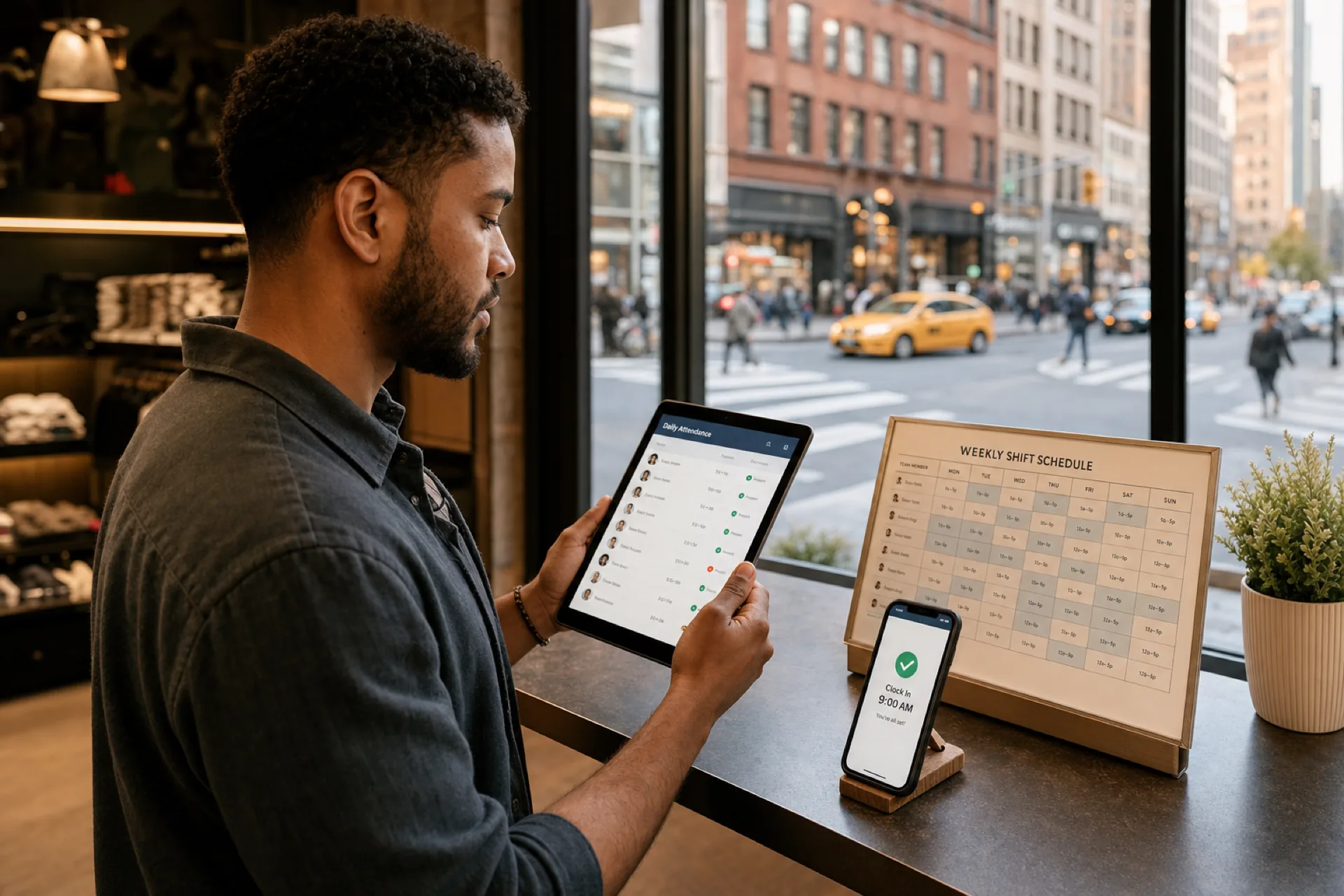
- Attendance tracking tied to published shifts
- Open shifts and swap approvals on the official roster
- Multi-location areas for multiple DCs
Pros
- 30-day free trial with all features unlocked
- Built for shift-based and multi-shift operations
- Attendance included, not a separate bolt-on
- Staff mobile access included without billing every hourly associate as a mobile seat
- Multi-warehouse support on paid plans
Consider
- Advanced geo-fencing, payroll integrations, and enterprise reporting scale on higher tiers (pricing)
Ideal for: distribution centers, e-commerce fulfillment warehouses, manufacturing warehouses, logistics providers, and wholesale distributors.
Start 30-day free trial or book a demo for multi-site DC rollouts.
2. Deputy
Best for: operators prioritizing scheduling automation and compliance tooling.
Pros
- Automated scheduling options
- Labor compliance tools on higher plans
Cons
- Total cost often rises with larger warehouse headcount and shift volume
See Deputy alternative.
3. Connecteam
Best for: mobile-first warehouse teams that prioritize communication alongside scheduling.
Pros
- Strong mobile employee experience
- Team communication on higher tiers
Cons
- Advanced reporting and multi-warehouse roll-up may require upgrades
4. Homebase
Best for: small warehouse teams with simple weekly patterns.
Pros
- Fast setup
- User-friendly for small hourly teams
Cons
- Better suited to smaller operations than large DC networks
See Homebase alternative.
5. Sling
Best for: budget-conscious warehouse operators needing core scheduling and messaging.
Pros
- Affordable entry pricing
- Shift scheduling and messaging basics
Cons
- Workforce analytics and multi-warehouse roll-up can feel limited
See Sling alternative.
Comparison table
| Software |
Scheduling |
Attendance tracking |
Shift swaps |
Multi-warehouse support |
| Heyshift |
Yes |
Yes |
Yes |
Yes |
| Deputy |
Yes |
Yes |
Yes |
Yes |
| Connecteam |
Yes |
Yes |
Limited |
Limited |
| Homebase |
Yes |
Yes |
Yes |
Limited |
| Sling |
Yes |
Basic |
Yes |
Limited |
Score vendors on a real warehouse week: shift-band coverage, call-off volume on pick lanes, mobile adoption by floor staff, overtime before payroll, and multi-DC roll-up clarity.
Benefits of scheduling software for warehouses
Improve shift coverage: ensure every shift band has the right headcount for receiving, pick-pack, and outbound work.
Reduce overtime costs: monitor staffing levels and hour totals while building the week.
Improve attendance visibility: identify trends and respond to no-shows before lanes fall behind.
Improve communication: keep warehouse employees informed about schedule changes through the official app.
Scale operations: add shifts, zones, or distribution centers without new unofficial tools.
Read why spreadsheets fail for workforce scheduling and employee scheduling software pricing guide.
Why warehouses are replacing spreadsheets
Manual scheduling breaks as headcount, shift bands, and seasonal volume grow. Modern warehouse workforce management software provides:
- Real-time schedule updates on mobile
- Attendance tracking beside published shifts
- Approved swap and open-shift paths
- Workforce communication without radio-and-text drift
- Multi-location visibility for operators running several DCs
See workforce scheduling software vs Excel.
How Heyshift helps warehouse teams
Heyshift helps warehouse managers:
- Build multi-shift schedules faster by zone or department
- Track attendance accurately on the published roster
- Manage leave and swap requests with approval paths
- Improve workforce communication without group chat drift
- Reduce overtime with hour visibility while planning
- Coordinate multiple warehouse locations from one account
Instead of spending hours updating spreadsheets, supervisors can focus on throughput, safety, and meeting customer demand.
Frequently asked questions
What is warehouse scheduling software?
Software that helps warehouse managers create employee schedules, track attendance, manage shifts, handle swaps and open shifts, and improve workforce communication across distribution operations.
Why do warehouses need scheduling software?
Warehouse operations involve multiple shifts, seasonal demand, large hourly workforces, and zone-based coverage. Manual tools do not scale when call-offs and overtime hit the same week.
Can scheduling software reduce overtime?
Yes, when supervisors see hour totals, thin coverage, and overtime risk while building the week, not only after payroll closes.
What features matter most for warehouses?
Employee scheduling with publish discipline, attendance tracking, mobile access, shift swaps and open shifts, workforce communication, overtime visibility, and multi-warehouse support.
How is warehouse scheduling different from office scheduling?
Warehouse teams work fixed facilities across day, evening, and overnight bands with zone-based roles (receiving, pick-pack, outbound). Coverage density, call-off fill rate, and floor mobile adoption matter most.
Final thoughts
The best employee scheduling software for warehouses in 2026 is the platform supervisors publish every week and floor staff actually open on mobile before their shift starts.
Warehouse workforce scheduling affects throughput, labor cost, overtime, and retention. Moving beyond spreadsheets and whiteboards delivers better coverage, cleaner attendance, and faster response when schedules change on the floor.
One line to keep: one published roster for the floor, one mobile view associates trust before clock-in.